
Bali Scuba diving is one of the most adventurous things to do with your time in Bali, ‘the island of the gods.’ From beginner to Divemaster, there are Bali dive sites for divers of all skill levels.
This scuba diving Bali guide includes tips on the best diving sites and dive shops we know of in Bali that we have used ourselves and/or would recommend. But, it also includes some handy tips on what sort of prices you should expect in certain places and where is best for those that want to do dive courses, from beginner to advanced or dive masters.
Whilst most of the best diving locations in Bali are a bit a distance from the tourism centers of Canggu or Kuta, we have made a list of our favorite scuba diving spots around Bali that we would recommend, from nearby to farther away.
If you have time to check out some scuba diving areas a bit further away like Nusa Lembongan or Menjangan Island, we would highly recommend it. Or if you are on a shorter trip, places like Amed and Tulamben or a fast boat to the Gili Islands are great ideas too.


The Best Time of Year for Scuba Diving in Bali
- The best diving season is from May to November when the rainy season is fully over, and it is drier with better visibility underwater.
- The worst time to dive is during the monsoon season from December to February. During these months, very heavy rain makes visibility quite poor on the East and North coasts of Bali. The visibility is still not great into March and April sometimes.
- Check out the section about Nusa Lembongan below to see the best time of year to see the Mola Mola and Manta Rays.

Scuba Diving in West Bali: Menjangan Island and Gilimanuk
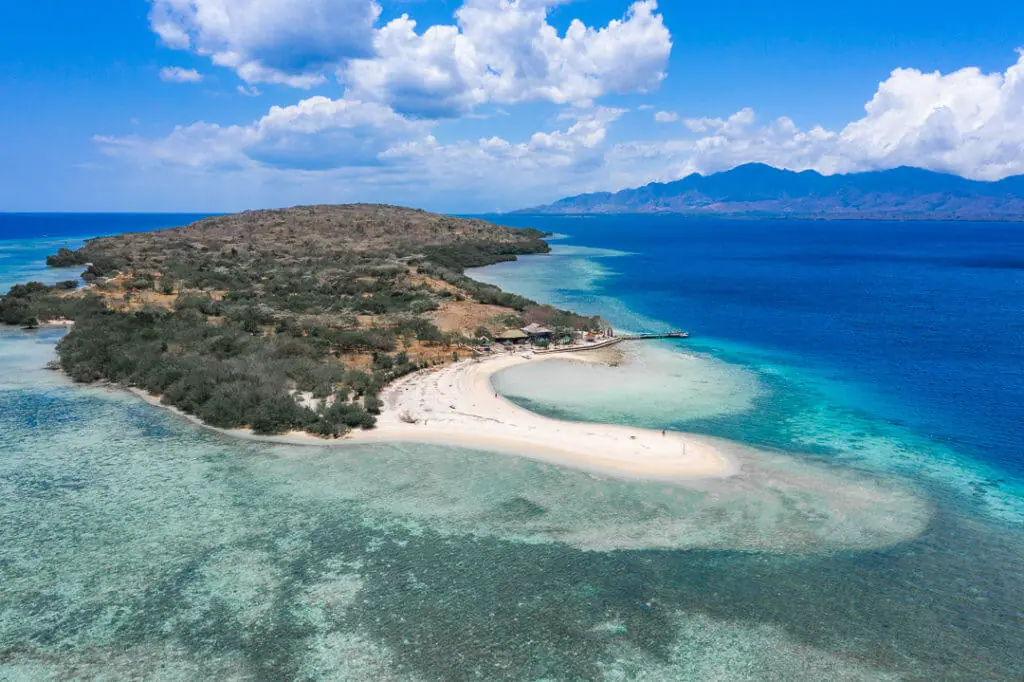
Scuba diving in West Bali is a must for anyone with a bit more time on their hands while visiting Bali. West Bali National Park is a truly diverse place, both above and below the surface. With large shelves, bright coral, untouched reefs, and pristine clear water, it has the feel of being a true hidden gem… and it really is one, because few people make the journey out that far to dive!
Best Dive Sites in Menjangan
Dive sites in West Bali we would recommend are Ankor Wreck and Garden Eel Point. We dove both sites and loved them. Garden Eel Point was a huge vertical coral shelf, going down some 40m or so, and covered with fish and cool little ledges to search for sea life in. Angkor wreck was great also; it had a strong current when we dove, making it quite an epic drift dive. There is also no actual wreck to see here sadly; we were told it had fallen further down a shelf and was now over 50m below.
Gilmanuk also has another dive site called Secret Bay. It’s a little different from Menjangan Island in terms of vegetation, and it’s not ideal to dive at low tide, but it still has an amazing array of sea life and vegetation.
Menjangan Island Dive Shops
We dove out of Dive Concepts in Pemuteran (after diving with them in Amed) and highly recommend them. They are quality and also cheaper than some others in the area. However, it’s important to consider that there are a lot of dive shops closer to Pejarakan (also referred to as Menjangan, as it’s closer to the island). We would also recommend Blue Corner, which is in this area.
Final Diving in West Bali Tips
One thing to note about scuba diving in West Bali is that diving is a little more expensive out this way. This is because of the cost of fuel to hire a boat (which takes a while to get to the Island), and you also need to pay a 200k IDR entry fee per person.
You’d be looking on average to pay 1m-1.4m IDR per person for a two-dive day – we found that Dive Concepts had the best price at the time.

Bali Scuba Diving in Tulamben
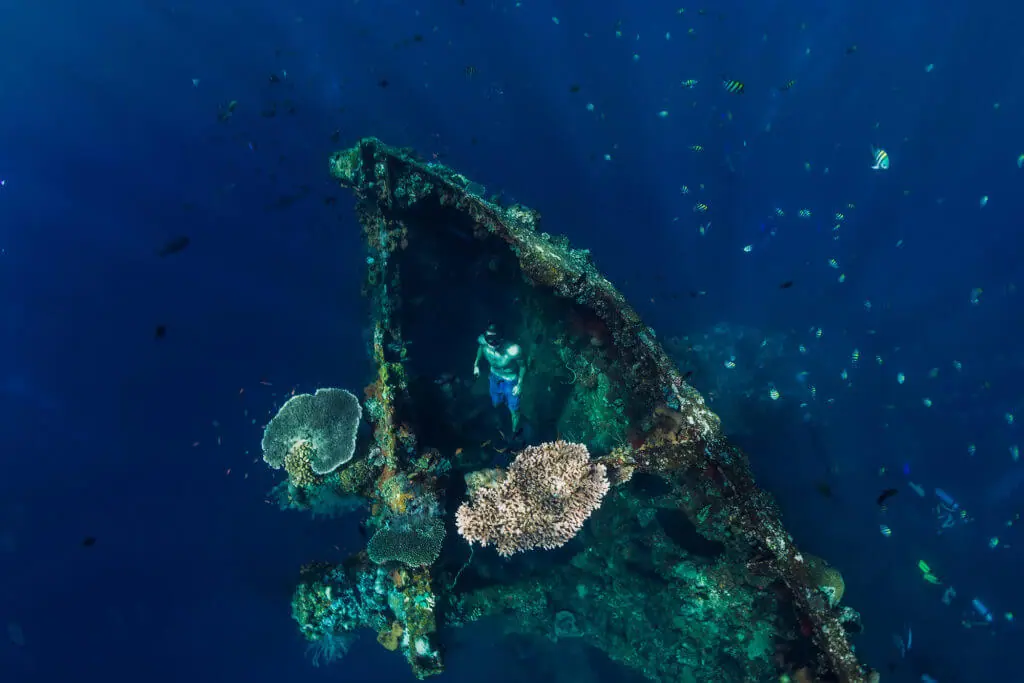
Tulamben is a famous Bali diving location because of the USS Liberty, a wreck that was hit during the Second World War by a Japanese submarine. There are heaps of dive shops and a few other places to dive, but the Liberty wreck is honestly one of the most well-known and coolest dive sites in all of Bali.
The boat lay beached for 20 years before an earthquake pushed it out into the ocean and down by about 40m. Whilst it can be done as a snorkeler or freediver, it’s most accessible from around 25m, so we’d recommend this site for divers who have at least an advanced diving certificate. If you have a wreck diving certificate, this would also be a plus; the boat is around 120m long and has plenty of room to explore.
Dive Shops and tips for Tulamben Diving in Bali
There are plenty of dive shops in Tulamben and it is well worth doing your research – it is possibly the most popular place to scuba dive in Bali – but we would recommend Dive Concepts. We also dove with them in Menjangan and Amed, and they were a great group of mostly French guys who were knowledgeable, helpful, and again more reasonably priced than some other places.

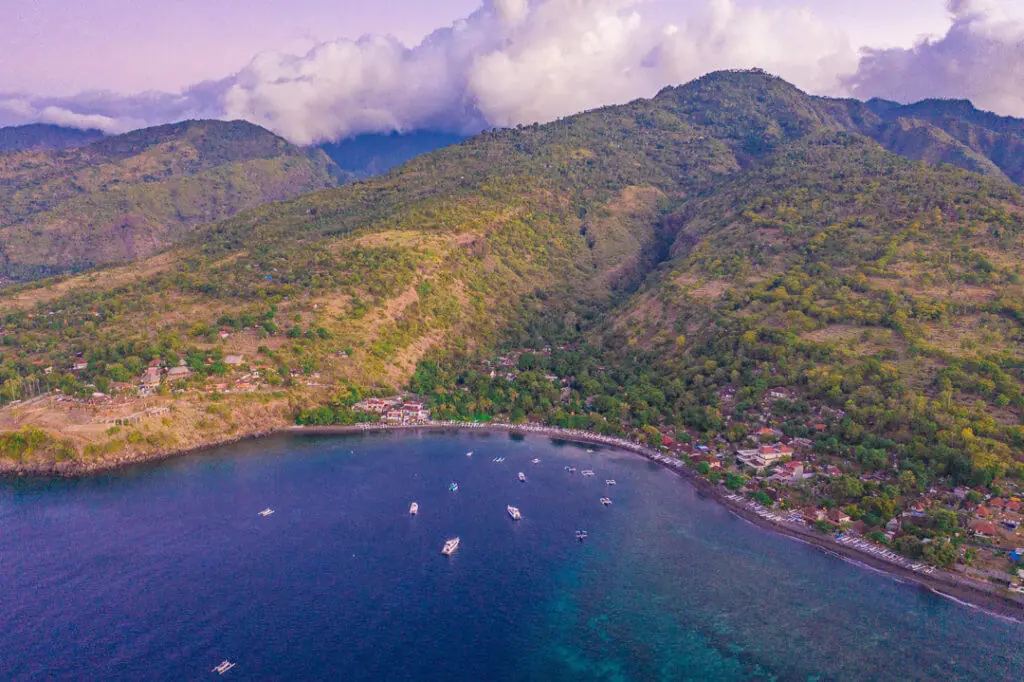
Bali Scuba Diving in Amed
Amed has some of the best scuba diving in Bali for beginners and has some of the cheapest open water certification courses. I did my open water and my advanced for around $400 USD with a great deal at Dive concepts (I promise they didn’t sponsor this post – we just had multiple great experiences with them haha).
There are many locations in Amed to dive straight from the beach, which is a rarity around here! I didn’t even have to do a pool session; we just walked right into the water from out the front of the dive shop and it was calm enough to learn skills in. We recommend staying longer in Amed: check my Amed travel guide for more recommendations on food, accommodation, snorkeling, beaches, and more.
Amed Dive Sites
The Japanese wreck is a great spot in Amed for beginner divers to explore a wreck site. It’s quite close to the beach and can be reached by walking straight out. The site is also popular and accessible for snorkelers (I also have a guide to snorkeling in Amed), so you may run into a few in the shallower parts – it sits less than 3m below the surface down to around 20m.
Lipah Bay is the beach above I mentioned when doing my open water. This beach, and a lot of the area, are famous for pygmy seahorses. These tiny little guys are 1-2cm and are sadly listed as Endangered by the IUCN (International Union for Conservation of Nature). So not only are they rare, but so small you’ll struggle to see them.
Dive Shops and Tips for Scuba Diving in Amed, Bali
There are many dive shops in both Amed and Tulamben, which are very close to each other. If you are looking to take a dive course, out of all the places in this list, we recommend doing it in Amed with Dive Concepts. I did my open water and advanced course here with Jordan, and he was an absolute legend, but most of the guys there were great too.

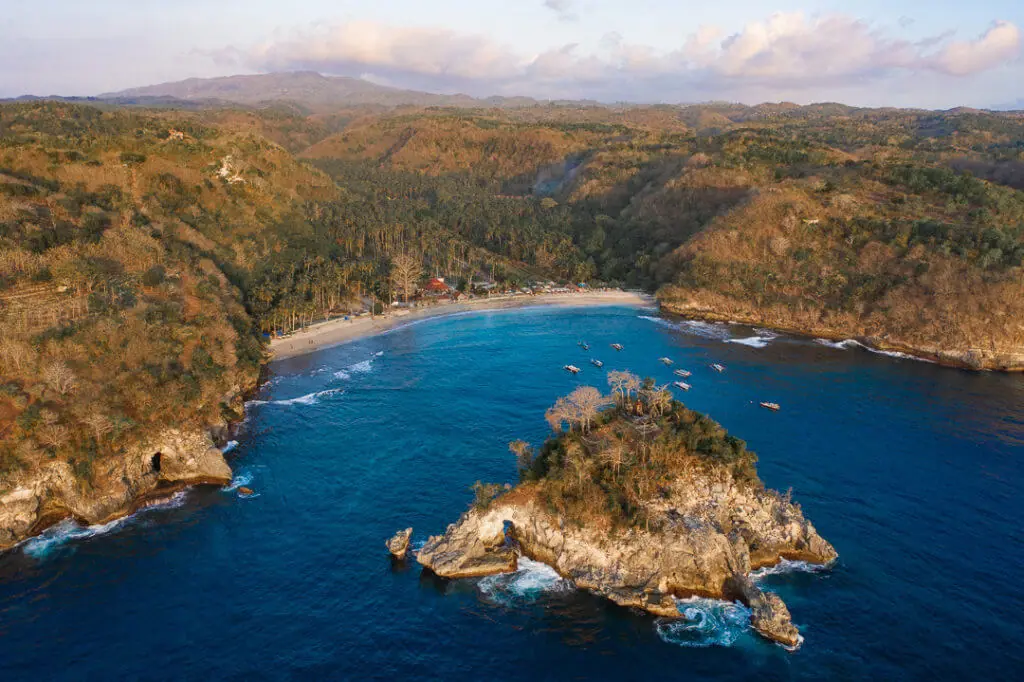
Bali Scuba Diving in Nusa Penida + Nusa Lembongan
Nusa Penida and Nusa Lembongan are some of the best in all of Bali for scuba diving, for many reasons. The islands are surrounded by fast-flowing water, which can lead both to great drift dives and to the seasonal migration of different animals. Our divemaster told us there had even been a great white shark spotted once! The manta rays and the Mola Mola are the absolute highlights of the Nusa Islands, though.
Make a trip of it and don’t miss some amazing Nusa Penida Beaches while you’re at it… especially Kelingking Beach, and if you’re adventurous, the Nusa Penida Treehouse.
Nusa Islands Scuba Dive Sites and Sea Life
Manta Point is an amazing little cove where you can spot Manta rays almost year-round, but the best time of the year is April and May. You don’t need to scuba dive; you can easily snorkel around the West coast of Nusa Penida and see the mantas. They don’t go too deep, and tend to float around in packs near the surface. They can also move quickly when frightened, so scuba divers may have difficulty catching up to them. Be warned: during the high tourist season, this area sees hundreds of people and is one of the busiest places to snorkel.
Another animal people come here to look for is the Mola Mola. These are amazing creatures, at the very least bizarre-looking, and can weigh up to 1,000kg each. Also known as the ‘sun fish’, these guys swim deep but come up to the surface to bask in the sun and warm themselves.
Crystal Bay is one of the best locations to scuba dive in Bali to see them, more likely from August to October. But be warned, it’s rare to see one! These guys are almost mythical creatures of the ocean, and dive instructors we made friends with who had been in Bali for many years said they hadn’t even seen one in the hundreds of dives they had done. Lastly, for prolific and colorful coral, the dive site called ‘SD‘ is amazing.
Nusa Islands Dive Shops
Although there are tons of dive shops on Nusa Lembongan, it’s important to note that most of the actual dive sites are off the coast of Nusa Penida. So, if you dive from Lembongan, you can expect some longer boat trips (which, in my opinion, are really nice).
We dove out of Blue Corner in Nusa Lembongan, but dove both of the above sites in Nusa Penida. Again, we would recommend these guys – we had some local Indonesian divemasters who really knew the sites and where we could find mantas and Mola Mola (not that we saw any Mola Mola, unfortunately).
For moe about Nusa Lembongan, check out my guide to things to do in Nusa Lembongan and Cengingan here.

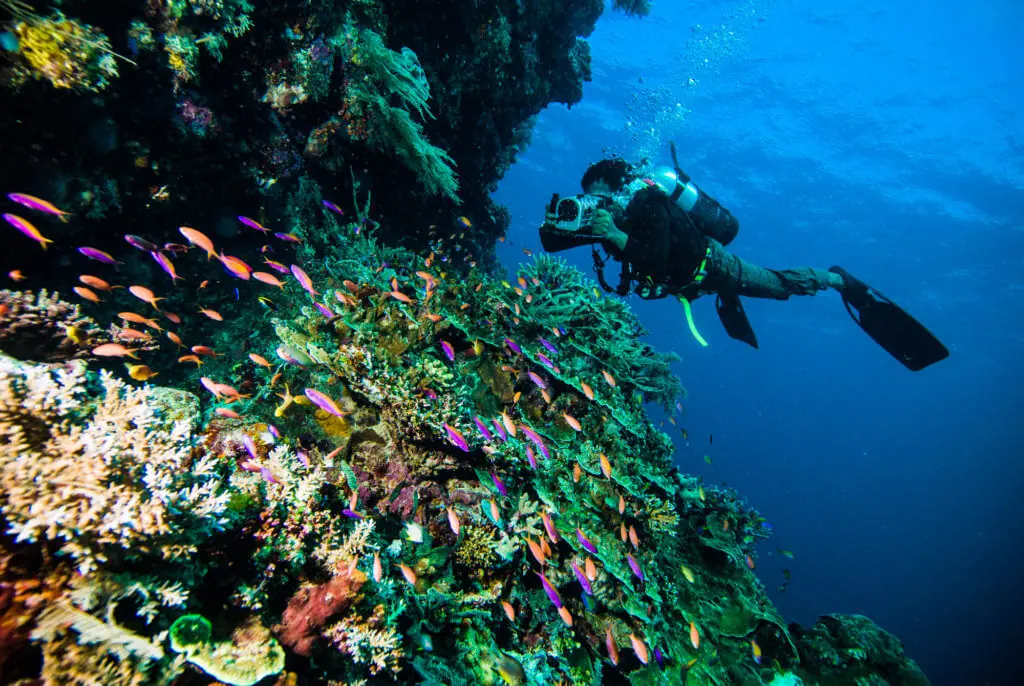
Scuba Diving Bali in Padangbai and Sanur
Padangbai is a great place to dive in Bali. It is the port town where the fast boats to the Gili islands and the public ferry to Lombok leave from, so it’s quite a transit town. You can also dive in Padangbai from many dive shops in Sanur via boat.
We found Padangbai a little strange compared to the rest of Bali; locals were rather pushy, and we got a weird vibe in general, so it might be a better idea to experience some of the dive sites from a different area or just transit here. I’m not saying don’t go; it just wasn’t the place for us.
Padang Bai Dive Sites
There are a few major diving places in Padangbai we recommend. Blue Lagoon is a major well-known dive site starting off rather shallow 3-5m that can also be snorkeled, and then there is another area where it gets down to almost 20m off a wall, with an amazing reef known as Tanjung Sari.
Another amazing site we recommend, only for advanced, experienced divers, is Ferry Channel. There are larger animals here, but the issue is that it slopes down a wall of coral and, as the name suggests, actually is in the ferry channel, so it can only be dived at certain times and during certain tides. But there are sharks of all kinds, turtles, and Giant Travelli that can be found here.
Padang Bai Dive Shops and Tips
We recommend Geko Dive Bali as one of the top dive shops in the area, and also Absolute Scuba Dive Padangbai. From Sanur, check out Joe’s Gone Diving Shop.
Whilst you don’t have to stay in Padangbai (and we wouldn’t recommend it), you can stay in Sanur, and the boats from shops there will take you out to the sites here. We checked out a few of the dive shops in Sanur, and they seemed super professional and friendly, which, in our opinion, is not quite the same as Padangbai.

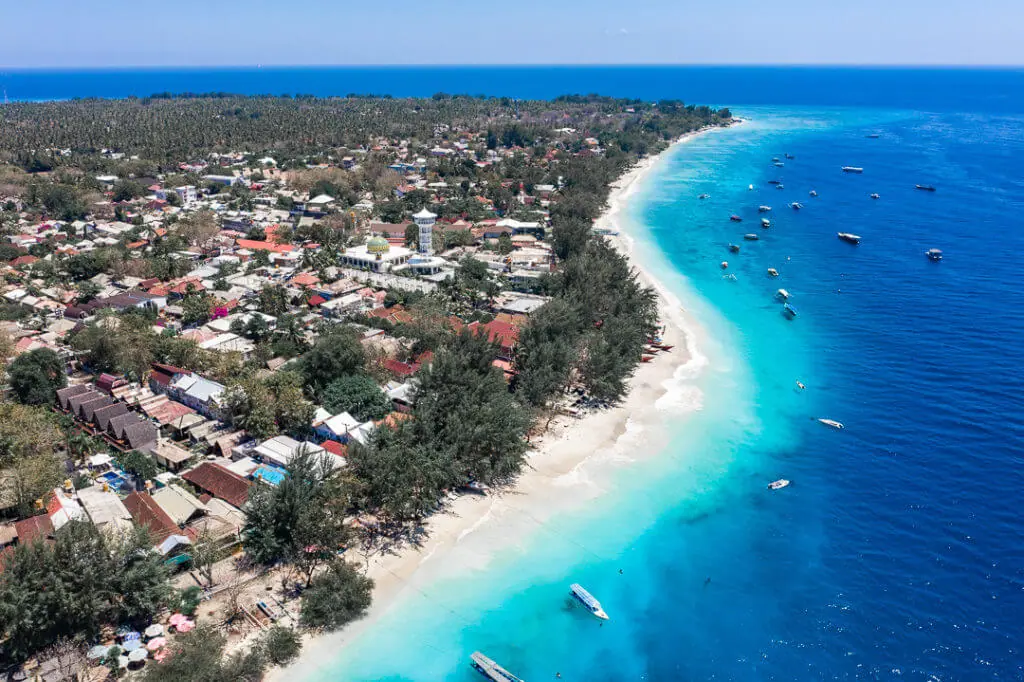
Bali Scuba Diving in The Gili Islands
Scuba diving in the Gili Islands technically isn’t scuba diving in Bali, as it’s technically in Lombok… But we put it on this list anyway because the Gilis are very popular to visit from Bali, they are easily accessible, and it was honestly one of our favorite places to dive in the area.
Gili Trawangan is the main island you should visit as it has all the major dive shops, places to eat, and hotels. But you can and should dive Gili Air and Gili Meno if you have time. There are more turtles than you’ll ever see anywhere in Bali, reef sharks, large tuna, octopus, and all other forms of life.
Gili Islands Dive Sites
Turtle Heaven, north of Gili Meno, deserves a whole section to itself- we saw more than 15+ green turtles the size of a fully grown human being. These guys are so friendly, and gracefully swim right by you as if they’re flying and coming in for a landing. We were lucky as the dive sites were not very busy when we visited, but during peak season, this is one of the busiest sites to Dive in the Gili’s.
The insta-famous The Nest underwater sculptures are right around the corner, and if you’re lucky, you can check them both out. The Nest is not that deep and doesn’t require you to scuba dive; however, just get a snorkel (or a kayak, as we did), and you can experience it.
Gili Trawangan’s Shark Point is another amazing wreck dive site where a tugboat was scuttled, and a reef has now begun to grow on it. There are various types of sharks that can be found around the area, and with a wreck diver certificate, you can even enter the boat.
Deep Turbo is another site we would recommend in between Gili Trawangan and Gili Meno. With massive underwater rolling coral hills, it literally feels like you are flying over mountains with 10-20m drops in between them. Great fun.
Best Dive Shops in Gili Trawangan
I have dove out of Trawangan Dive, one of the main dive shops on Gili T, quite a few times. I did my rescue diver course here and could not recommend the instructors more. Manta Dive and Blue Marlin are two more large dive shops on Gili T; both are very trustworthy and have great instructors.
Gili is so full of divers that you’ll actually find dive photographers on the island if you’d like some pictures. Our friends we recommended actually moved away, but there are plenty of them around if you just ask!
A few quick things to note before scuba diving Bali that we would recommend you know:
- Never dive out of your skill level. Period. Diving is fun, but not a competition. If you can’t do something, are scared, or don’t remember how, you should speak up.
- Sometimes the cheapest shops really aren’t the best. Talk to people, check equipment, and see reviews. No one wants to be anything but confident with their instructor and their gear.
- Don’t be hungover or sick. This isn’t so much a requirement as a suggestion that may or may not be from personal experience 😛 Diving can be stressful, and being hungover or unwell makes you a danger to yourself and others. Can you imagine the fear of needing to vomit 20m below the surface?
That wraps it up for the best Bali Scuba Diving! Let us know in the comments what your favorite shops, sites, and destinations are!

Passionate, full-time travel blogger with over 230k on social media and 150kMPV blog. Extraordinary photographer with two DSLR's + a drone with a love for capturing candid moments, epic drone shots, and magical compositions. I'm a natural-born content creator originally from California, but I've been on the road for 9 years living, working, traveling, blogging, and photographing my way around the world. I recommend the most amazingly adventurous and unique + boutique travel experiences/stays and helpful products to my audience and write comprehensive guides on my website that have helped millions of travelers so far. I love to inspire people to plan their dream trips, and many readers have given feedback as such. The reach on my platforms continues to soar, especially when combining cutting-edge social content with optimized articles on my high-authority website.