
These facts about Sri Lanka are more than just for your entertainment; they are a fascinating learning experience, too! There’s so much to learn about this tiny country in the Indian Ocean that has so many unique features.
These Sri Lanka fun facts will also prepare you to plan a trip there, too! Here we’ll cover Sri Lanka facts that surround the country’s history, culture, nature, and even food – all from my travels around the country.
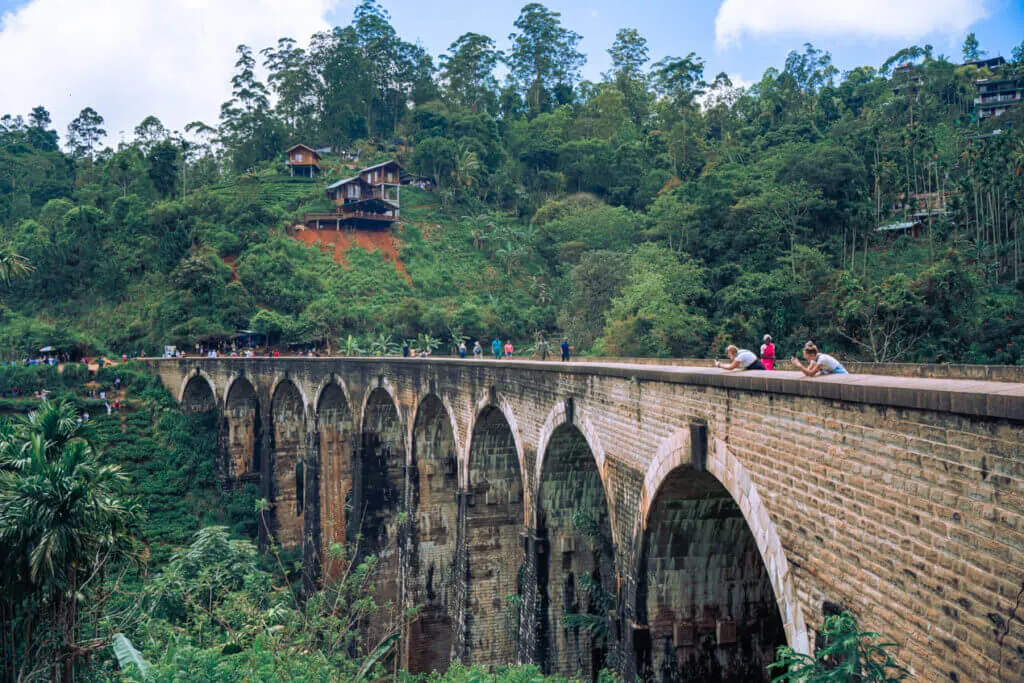
If you are looking to learn a bit more about Sri Lanka, these interesting facts will give you your next talking point at a party OR educate you on this beautiful and diverse country before you go! I didn’t learn many of these until I went there myself – so hopefully there are a few you will find extra impressive (and I hope you like my photos from the trip, too)!

Top 10 Facts About Sri Lanka
Here are our top 10 favorite Sri Lanka fun facts! Keep reading if you are only after a bit of interesting fun, or check out more Sri Lanka Content:
- Is Sri Lanka Worth Visiting? Reasons to Go + Things to Know
- 10 Day Sri Lanka Itinerary (Perfect for Your First Visit)
1. Sri Lanka Elected the World’s First Female Prime Minister
Leading the Freedom Party, Sirimavo Bandaranaike was elected the Prime Minister in 1960, making her the world’s first female Prime Minister. She served as Prime Minister twice more, meaning she served three terms in total, making this an irreplaceable Sri Lanka fact. This was one of my favorite and most memorable facts – girl power!
2. Hydropower is an Abundant Source of Energy in Sri Lanka
Hydroelectricity, which is electricity generated from falling water, was the primary source of electricity in Sri Lanka until the 1990s! As a country rich in rivers and waterfalls, Sri Lanka makes full use of this natural resource. Projects such as Resus have opened hydropower projects nationwide to utilize natural resources, promote sustainable energy, and fuel communities.
3. Sri Lanka’s UNESCO World Heritage Site, Sri Dalada Maligawa, is Home to One of Buddha’s Teeth
The “Temple of the Sacred Tooth Relic’ in Kandy is a site all Buddhists in Sri Lanka visit once in their lifetime and is, overall, a valuable site for Buddhists globally. The temple is not only impressive to visit and tour, but as the home of one of the teeth of the Buddha, it’s a unique place to visit in Sri Lanka.

4. Sri Lanka has 8 Impressive UNESCO World Heritage Sites
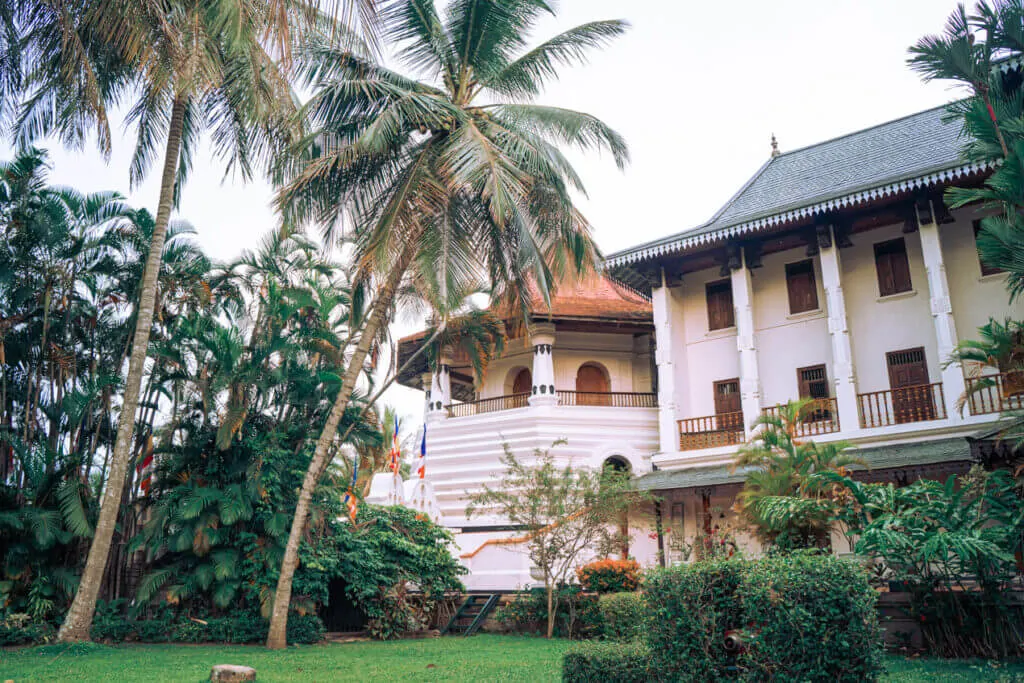
Despite being an island, one could drive from top to bottom in only ten hours; Sri Lanka is home to many UNESCO World Heritage Sites. These 8 UNESCO Sites sites include ancient cities, geographic marvels, and temples that will not only impress you but leave you appreciating the history and beauty of Sri Lanka.
The eight UNESCO World Heritage Sites in Sri Lanka are: the Ancient City of Polonnaruwa, the rock fortress of Sigiriya, the Ancient City of Anuradhapura, the Sacred City of Kandy (home to the Temple of the Tooth!), the Old Town of Galle with its Dutch colonial fortifications, the Sinharaja Forest Reserve (a biodiversity hotspot), the Rangiri Dambulla Cave Temple with its stunning Buddha statues, and the Central Highlands which include the Peak Wilderness, Horton Plains, and Knuckles Range. I visited four of these on my trip and honestly, each one was SO different but equally impressive.
Sri Lanka’s 8 UNESCO World Heritage Sites
Ancient City of Polonnaruwa · Ancient City of Sigiriya · Ancient City of Anuradhapura · Sacred City of Kandy · Old Town of Galle and its Fortifications · Sinharaja Forest Reserve · Rangiri Dambulla Cave Temple · Central Highlands of Sri Lanka
5. People Shake Thier Head to Say “Yes”
I love this Sri Lanka fun fact! Typically, a head shake means “no,” but in Sri Lanka, shaking one’s head can mean many things. Overall, it’s a positive sign and can mean “yes,” or that one understands.
It can take some time to get used to the side-to-side head bob used in both Indian and Sri Lankan culture, but it’s significant in communication. It will help you navigate Sri Lanka, from connecting with people to understanding the culture.

6. Sri Lanka is where the Largest Elephant Spectacle Occurs in Asia
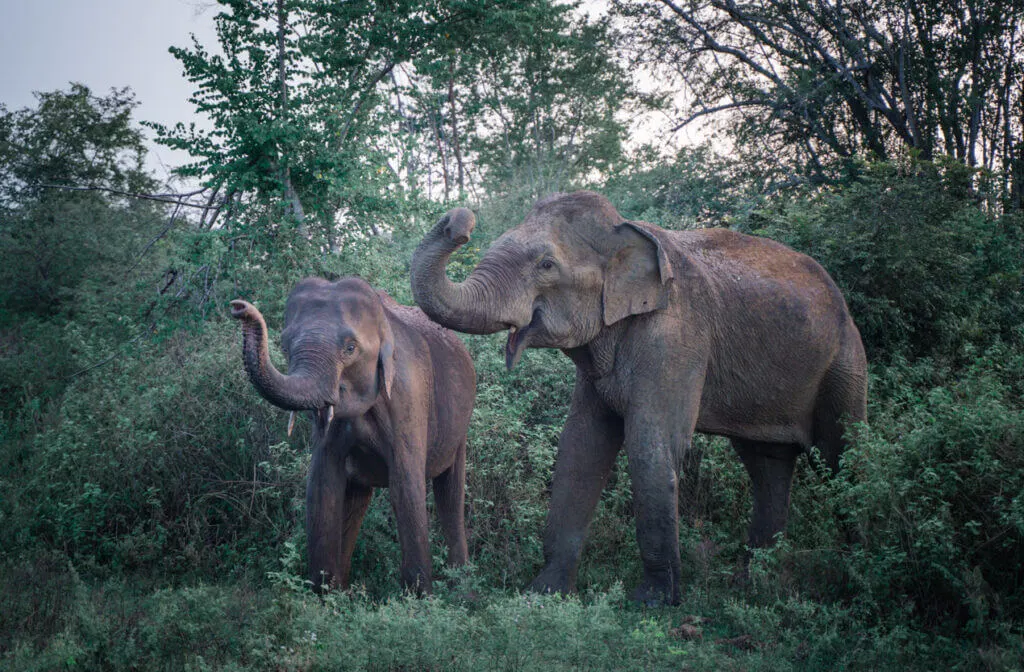
This one’s for the elephant lovers out there. Come to Sri Lanka between July and October, and you can witness the gathering of the elephants in Minneriya National Park, where they graze, play, rest, and drink. It’s said this happens because as parts of Sri Lanka enter their dry season (which is different in the north and the south), the elephants migrate here to where they have a reliable water source.
7. Sri Lanka was Named “Ceylon” Under Colonial Rule
Like the unfortunate history of many countries, the colonial rule in Sri Lanka didn’t only mean the taking and changing of one’s original culture and history but even the changing of a nation’s name. It’s a fact about Sri Lanka that during British rule, the country was called “Ceylon,” derived from “Celiao,” the word the Dutch named Sri Lanka when they arrived in 1505 and the word that has come to refer to its famous type of tea.
This colonial name stuck around until 1972, and it’s still the name you’ll see on those famous Ceylon tea packages. When Sri Lanka gained independence in 1948 from the British, they renamed the country in 1972 as Sri Lanka, meaning “resplendent island.”


8. The National Flower Has a Complicated History
One of the most interesting Sri Lanka facts with a unique story is this one. In 1986 Sri Lanka announced the blue water lily flower as its national flower, but what happened next set up decades of confusion.
Upon the declaration of the national flower, postcards, stamps, images in the news, and so forth didn’t feature the photo of a blue water lily flower but another lily, the purple water lily. As a result, there are calls to change the national flower entirely, as the imagery still does not always represent the actual national flower.
Sri Lanka at a Glance – Quick Reference Table
| Category | Details |
|---|---|
| Official Name | Democratic Socialist Republic of Sri Lanka |
| Capital | Sri Jayawardenepura Kotte (legislative), Colombo (commercial) |
| Population | Approximately 22.2 million (2024) |
| Official Languages | Sinhala, Tamil, English (link language) |
| Currency | Sri Lankan Rupee (LKR) |
| Main Religions | Buddhism (70%), Hinduism (13%), Islam (10%), Christianity (7%) |
| Time Zone | UTC +5:30 (Sri Lanka Standard Time) |
| Best Time to Visit | December to March (west/south coasts), April to September (east coast) |
| Visa Requirement | ETA (Electronic Travel Authorization) required for most nationalities |
| Driving Side | Left |
9. Sri Lanka is the 2nd Largest Exporter of Cinnamon in the World
In countries such as the United States, when people think of cinnamon, they might think of the fall season, despite one of the top producing countries of cinnamon being hot year-round. Sri Lanka’s cinnamon, known as Ceylon cinnamon, is known to be some of the best quality in the World, and Sri Lanka was the world’s second-largest exporter of cinnamon in 2021 and continues to rank 2nd-4th.
‘True’ Ceylon cinnamon is different from the cassia cinnamon you might find in grocery stores – Ceylon cinnamon has a sweeter, more delicate flavor that’s worth seeking out when you’re there.

10. Sri Lanka is an Ideal Destination For Whale Watching
While there’s unending history and culture to absorb in Sri Lanka, nature cannot be overlooked. There are multiple locations around Sri Lanka for whale watching and seeing a variety of species, including sperm and blue whales. If you’re keen to see a particular species, this guide will provide all the information you need to know in regard to when and where to go.
Best Times for Wildlife Watching in Sri Lanka
- Elephant gathering at Minneriya: July-October (dry season)
- Blue whale watching: November-April (southern coast)
- Sperm whale watching: March-April and December-January (Trincomalee area)
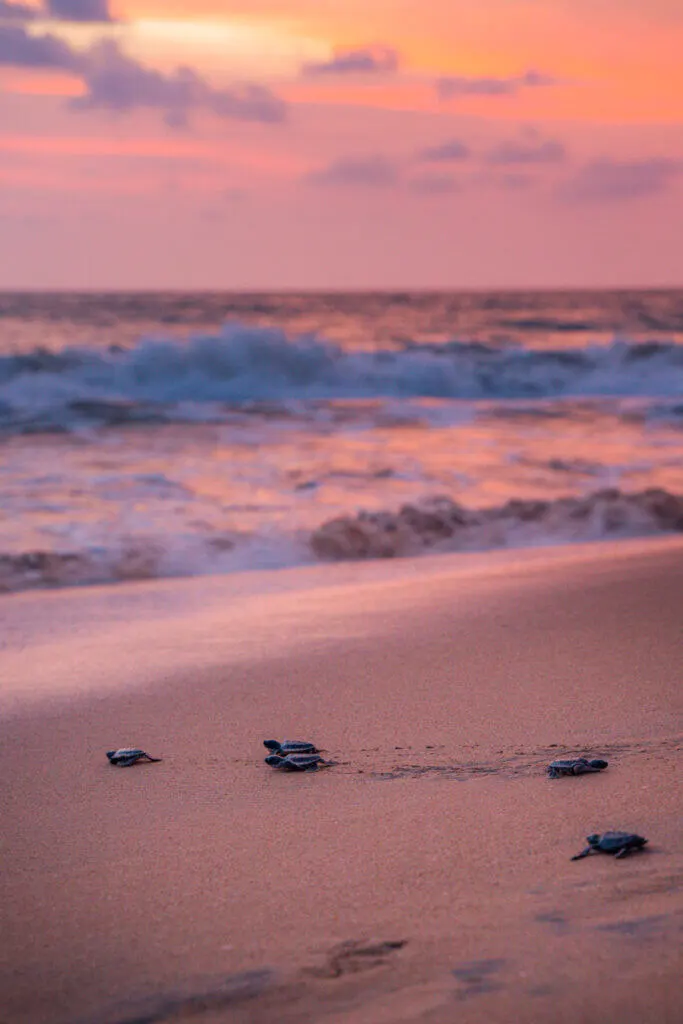
- Sea turtle nesting: Year-round at various beaches
More Fun Facts About Sri Lanka
Which of these did you know already?
11. Four Major Religions are Practiced, with Buddhism the Most Common
Religious freedom is in the constitution of Sri Lanka, protecting the right to practice one’s religion freely. 70.2% of the population identifies as Buddhist, while the majority of the remaining population identifies as Hindu, Christian, or Muslim.
In general, ethnicity is tied to one’s religion, but this is not exclusive, and people can practice religions outside the faith that typically coincides with their ethnicity. For example, Tamil people in Sri Lanka are primarily Hindu, but some identify as Christian.

12. Venues Might Have “Hotel” in Their Name, But Not Actually Be a Hotel
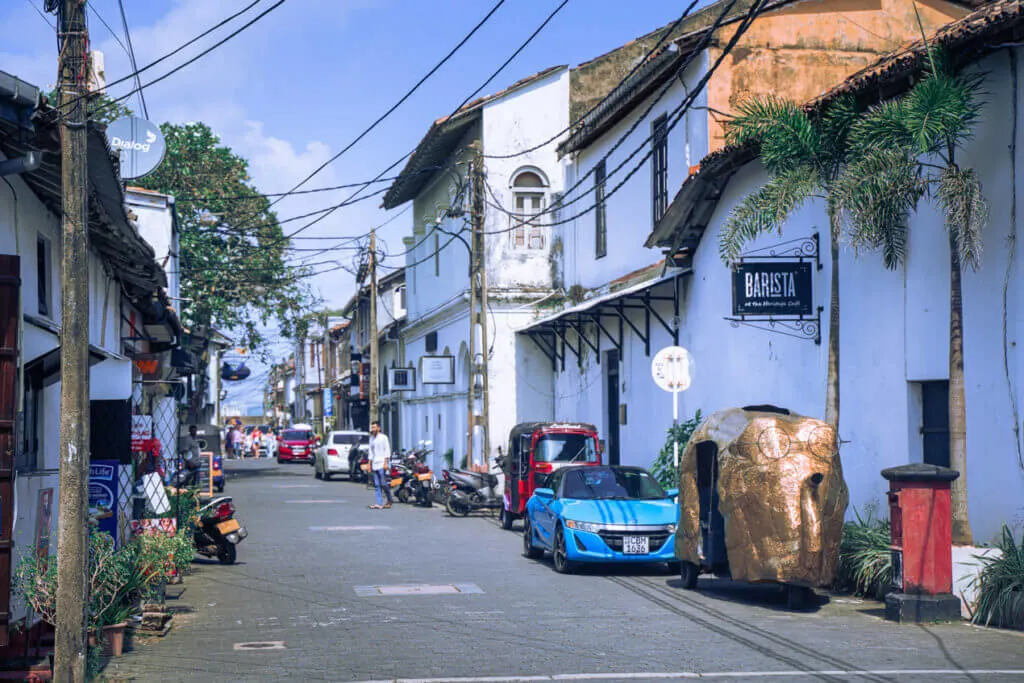
This is undoubtedly one of the unexpected fun facts about Sri Lanka. At one point in time in Sri Lanka, it became trendy to call restaurants, bars, and cafes to be named a hotel. So if you pass by somewhere in the street with hotel in the name, it might be your next meal rather than a place to stay!
13. Sri Lanka is Home to Three Classical Dance Forms
If you love performance, music, and dance, it’s a must to see classic Sri Lankan dancing. The three forms include Uda Nata Ratum (Kandyan dances), Pahatha Nata Ratum (low country dances), and Sabaragamuwa Natum. The dances differ through their costumes, movements, and drums unique to each dance form.
The three main classical dances have a variety of dances that stem from them, and each carries its own purpose, such as telling stories, celebrating, and worshiping.


14. It’s a Cultural Norm to Eat with your Hands
If you’re coming from a country where a fork and a spoon are typically used for eating a meal, seeing people eating with their hands may be a culture shock, but in Sri Lanka, it’s an everyday thing no one bats an eye over and is actually considered a more eared way to eat where you connect with your food.
Of course, you can ask for cutlery if you’re eating out, but don’t be afraid to try this if it’s not your everyday experience. The “rules” apply like this: use your right hand to pick up food and your left for cleaning or holding the plate.
15. Sri Lanka produces the most Coconut Arrack – or Toddy – in the World
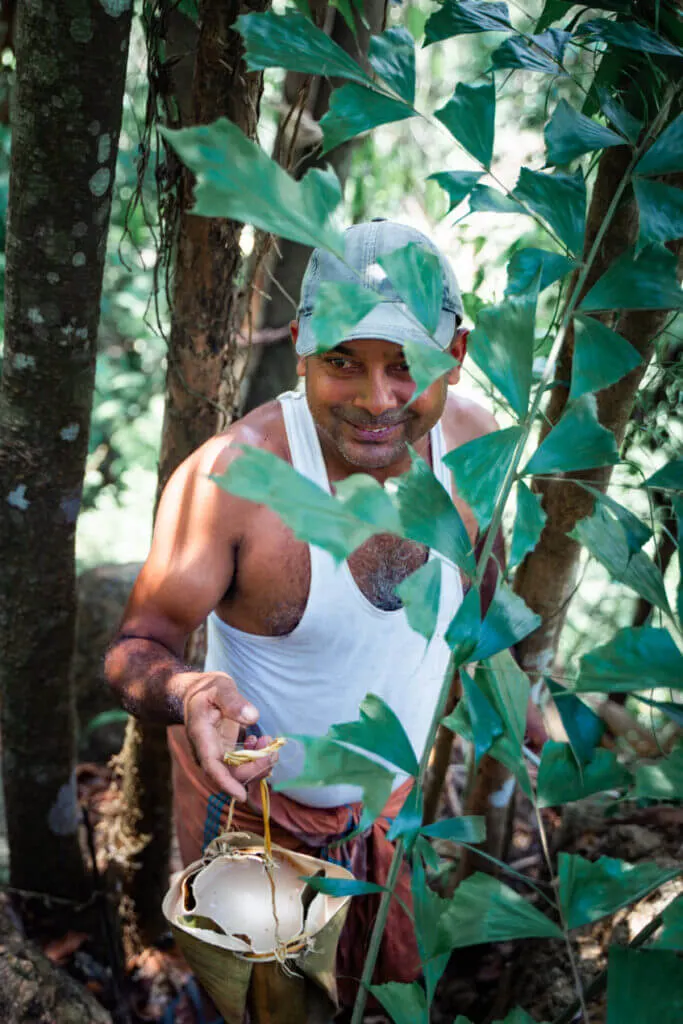
Coconut Arrack is a spirit primarily produced in India and South East Asia, and Sri Lanka is the largest producer in the world. Coconut arrack, or toddy, is harvested in a process known as ‘toddy tapping’ where skilled climbers slit open a coconut flower and collect the naturally distilled sap. It tastes comparable to rum.
This totally surprised me the first time I learned about it and saw someone scaling a palm tree to toddy tap – I didn’t even know it was possible! So if you love trying new spirits or even natural ones, add Toddy to your list in Sri Lanka!

16. The Traditional Dyeing technique is called “Batik”
Batik dyeing has deep roots in human history; from prints found in the tombs of Egypt to being deemed an Intangible Cultural Heritage by UNESCO. The art of Batik dyeing lives on through Sri Lankan artists and craftspeople. The art of Batik dyeing involves creating a design on fabric using wax, dyeing the material, and later melting off the wax to reveal a final result (or to continue onto the following pattern!)
17. Tea is the Largest Export in Sri Lanka
There’s a chance that, if you have Ceylon black tea in your cabinet at home, it’s from Sri Lanka. Tea holds an important significance in Sri Lankan trade. It was the 2nd largest tea exporter in the world in 2021, and tea was the largest export of all Sri Lankan products. While the tea is exported around the globe, in 2020, Turkey, Iraq, and Russia were the top three buyers. Ceylon tea is widely considered some of the best in the world.
18. South Asia’s Tallest Tower is in Colombo
There’s nothing quite like witnessing the world’s tallest buildings and towers in person, and in Colombo, you can see the tallest tower in South East Asia. Called “The Lotus Tower,” and standing at 350 meters (1,150 feet), the stunning green and purple tower will grab your attention with its beautiful lotus-like design. You can also take an elevator up to the top and drink in one of the best views in the city!


19. Lipton Tea Was Founded in Sri Lanka
More than likely, you’ve heard of the Lipton brand, but perhaps you didn’t know the tea originated in Sri Lanka’s colonial history. The Scotland native, Sir Thomas Lipton, bought his first tea plantation in Sri Lanka in the late 1800s and exported it to the UK to be sold.
The Most Interesting Facts About Sri Lanka
Here are our final fun facts about Sri Lanka. If you haven’t found the most interesting ones yet, you surely will here!
20. The word “Serendipity” Originates from Sri Lanka
The English word “Serendipity” was created by English writer Horace Walpole and is defined by the Cambridge dictionary as “finding interesting or valuable things by chance.” Yet, the origin of the word actually comes from the Sri Lankan term as “Serendib,” which was the country’s former name in ancient times. The word actually means “island” but was adapted by the British author.

21. The World’s Oldest Human Planted Tree is in Sri Lanka
The Sacred Fig Tree, known as Sri Maha Bodhiya, is the oldest tree planted on earth with a recorded date. Planted in 288 BC, the tree is more than just a Guinness Book of World Records holder, but is the longest-known living being connected to the Buddha, as it’s said he gained enlightenment under the parent tree of the Sri Maha Bodhiya. How’s that for a mind-blowing fact?
22. The Country Uses Two Different Electrical Plugs
Because Sri Lanka is a former British colony, the electrical outlets accommodate either G or D-fitting plugs. Both of these are UK electrical plugs, although today, G is the standard. Type D was phased out of use in the UK by the 1940s, yet remains in former colonies such as India and Sri Lanka. Sri Lanka has now made type G the standard, with the goal of replacing all the old type D sockets by 2038.
23. There are Musical Bread Vans
Rising to popularity in the early 2000s along with the tuk-tuk in Sri Lanka, the musical bread trucks brought fresh baked goods to distant neighborhoods and villages by stacking it in the window of a tiny can and playing music to announce its arrival.
They were losing popularity due to bakeries for a little while, but due to the pandemic, they became essential for transporting bake goods door to door. So if you hear Beethoven coming to the street, it’s time for some freshly baked goodies – it’s basically like the ice cream truck of Sri Lanka!
After some economic unrest in 2022, Sri Lanka has been welcoming visitors with open arms and there’s nothing to worry about safety-wise. It’s hospitable, kind, and affordable, and absolutely worth visiting.
I hope you have enjoyed these Sri Lanka fun facts! Let us know which one was your favorite in the comments.
