
There is a pervasive myth about travel in Italy that persists despite decades of infrastructure investment: the idea that to see the “real” Italy (like, the Italy of hill towns, slow food, and quiet corners) you must brave the roads in a rental car. And I’m here to debunk it!
This narrative suggests that the train is only for the rush between Rome, Florence, and Venice, leaving the countryside accessible only to those of you willing to navigate narrow switchbacks and aggressive local drivers.
This is simply untrue. The rail network in central Italy is a dense capillary system that cuts through the Apennines, skirts volcanic lakes, and deposits travelers in the center of medieval walled cities. For the solo traveler, the couple seeking romance without road rage, or the group of friends wanting to share a bottle of wine rather than a designated driver duty, the regional train is the ideal mode of transport – and the places below are some of the most amazing hidden gems in Italy you can discover by train!
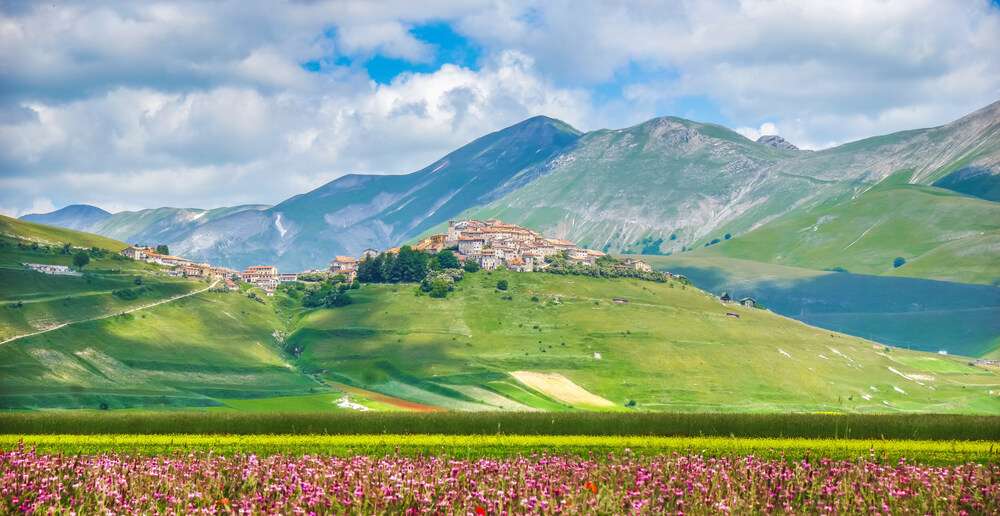
An Overview of Central Italy’s Regions
When we talk about the hidden gems in central Italy, we are looking at a cross-section of the peninsula that moves from the Tyrrhenian Sea to the Adriatic, passing through the rugged spine of the country. This means five distinct regions:
- Tuscany needs little introduction, yet its rail-accessible secondary cities remain surprisingly quiet compared to the fever pitch of Florence.
- Umbria, the landlocked “green heart” of Italy, offers a more mystical, forested vibe.
- Lazio, often reduced simply to “the region containing Rome,” holds volcanic landscapes and papal retreats that rival anything in the north… worth exploring beyond Rome!
- Further east, Marche and Abruzzo offer a wilder, more austere beauty, where the mountains crash into the sea and the tourism infrastructure feels refreshingly stuck in the 1980s (in a low key refreshing way).
The beauty of exploring these areas by rail is the shift in perspective, as you watch the landscape evolve as you gaze out the train window. You see the cypress trees of Val d’Orcia give way to the rugged limestone of the massive Abruzzese Apennines mountains. By train, it’s a stress-free journey that is purely experiential.
The following locations represent the hidden villages and secondary cities that offer an authentic slice of Italian life. They were chosen primarily for their beauty, but also because they are extremely accessible.
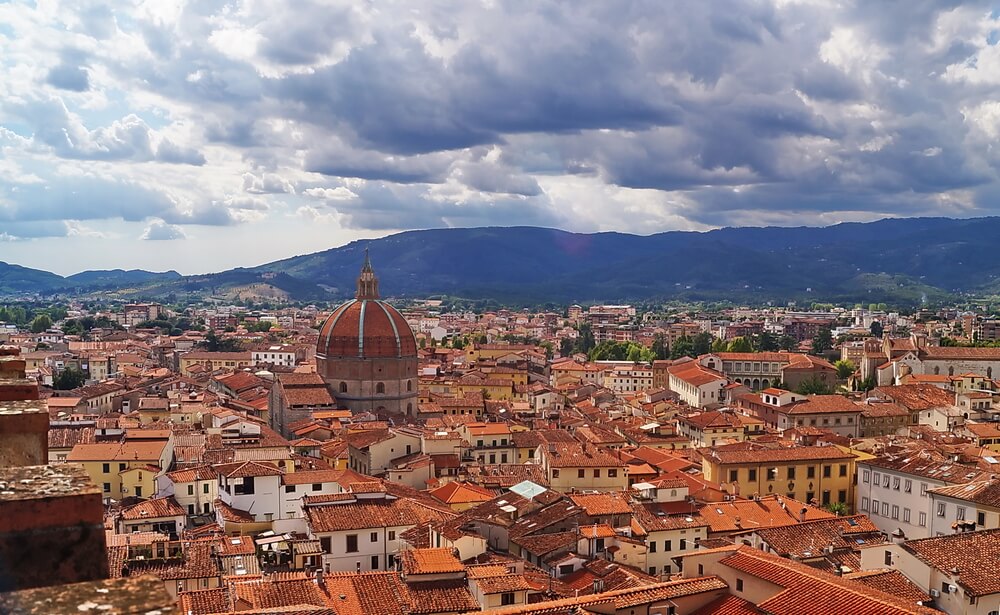
Pistoia
Often bypassed by tourists rushing toward Lucca or Pisa, Pistoia might be Tuscany’s most underrated provincial capital. It has LOADS of art and architecture that would be the pride of any other nation, yet here it sits quietly in the shadow of Florence.
The Piazza del Duomo is a medieval masterpiece of striped marble, and the city has a vibrant, unpretentious nightlife centered around Piazza della Sala, where locals buy vegetables by day and drink Spritz by night.
Train travel logistics: Pistoia is very accessible, sitting on the main line between Florence and Lucca. From Florence Santa Maria Novella (SMN), take a regional train toward Lucca or Viareggio: the journey takes between 35 and 50 minutes. Trains run frequently, often two or three times per hour, making this an effortless day trip from Florence or an excellent overnight base.
Tuscany is also great to explore by bike if you have more time in the area – check out my itinerary for 3 Days in Tuscany for more inspo.
Orvieto
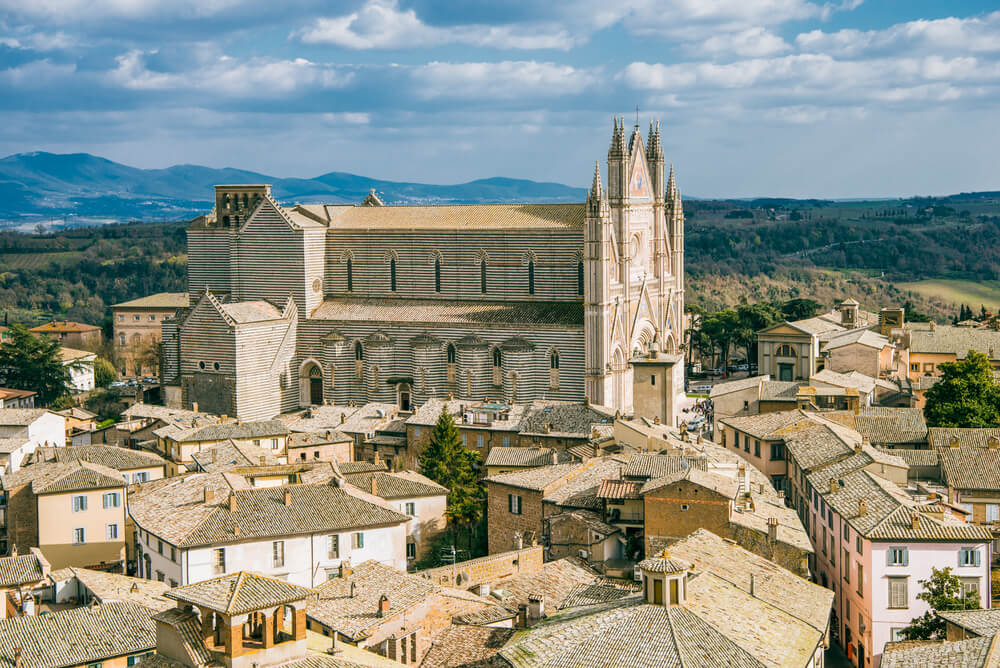
Rising dramatically from the flat bottom of the Paglia valley on a volcanic land bed, Orvieto is visually arresting from the moment you spot it from the train window, high high above you. This Umbrian city is famous for its funicular, andzing views, and its Gothic cathedral, whose facade is so intricate it looks like embroidery made of stone (trust me – look at it up close).
Below the city lies a labyrinth of Etruscan caves and wells, including the architectural marvel of St. Patrick’s Well. Explore these too to get deeper into history. This hidden gem town feels suspended in time, detached from the modern world below.
Train travel logistics: the station is located in the valley; from Roma Termini, take a regional train or an Intercity toward Florence/Perugia; the ride takes about 75 to 90 minutes. From Florence SMN, it is roughly two hours. Once you arrive at the Orvieto station, simply cross the street to the funicular station. The funicular whisks you up the cliff face to the old town in minutes.
Bracciano
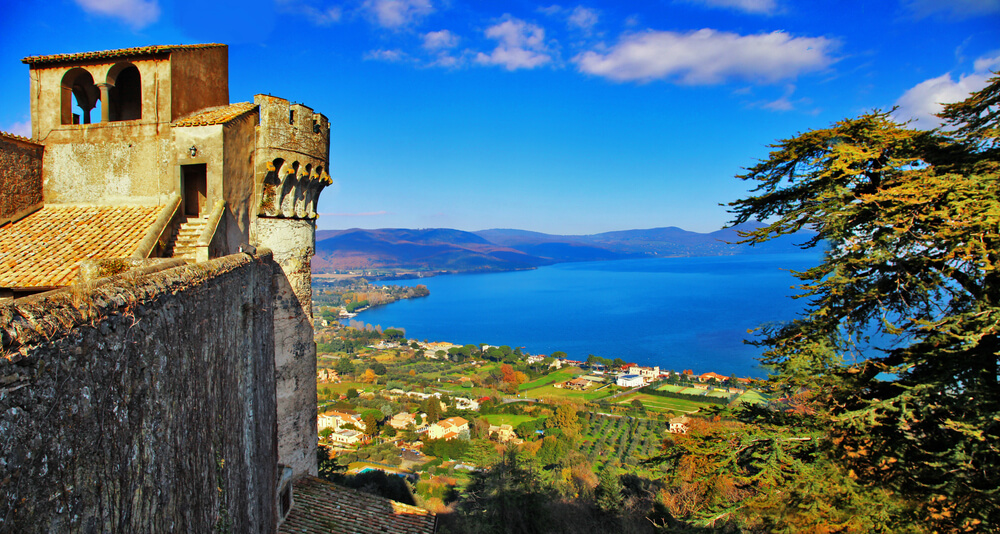
If you want to understand the Roman weekend lifestyle, go to Bracciano – only an hour away by train, but a totally different vibe.
Dominated by the massive Castello Odescalchi (a fortress that looks exactly how a child imagines a castle should look), the town overlooks a pristine volcanic lake. The historic center is a tight coil of cobblestone streets leading up to the fortress walls. It offers a slower pace and fresh air, serving as a cooling valve for the heat of the capital.
Travel logistics: Bracciano is on the FL3 regional line; from Roma Ostiense or Rome Valle Aurelia (both connected to the Metro), take the train headed toward Viterbo Porta Fiorentina. The journey to Bracciano takes about an hour, and the walk from the station to the castle is a steep but short 15-minute uphill hike (a worthwhile one).
Spoleto
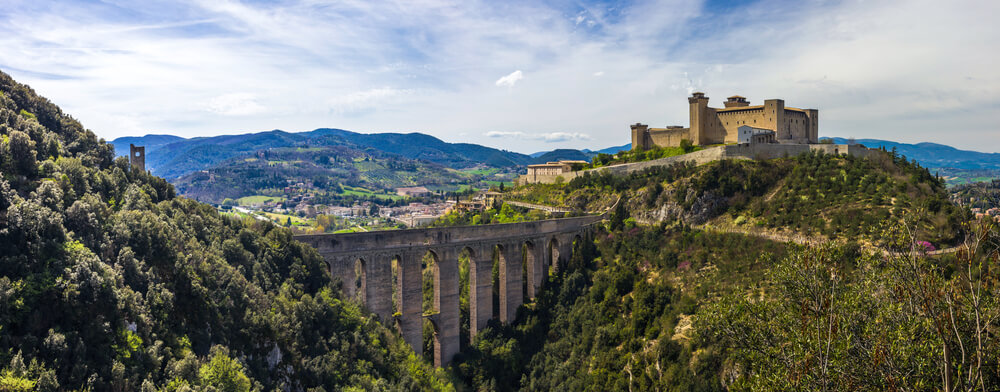
Spoleto is aristocratic, elegant, and steeped in history. Another true gem in southern Umbria, it’s framed by the Ponte delle Torri, a huuuge medieval aqueduct bridging a deep gorge that proves for one of the best photo ops… ever.
The town hosts the Festival dei Due Mondi in the summer, a world-class arts festival, but outside of July, it is a quiet, contemplative place. Reaching the upper town is a challenge for your legs, but a series of public escalators hidden inside the hill makes navigating the steep terrain surprisingly easy and very interesting too.
Travel logistics: Spoleto is well-connected on the Rome-Ancona line; from Roma Termini, direct trains take approximately 90 minutes. It’s a super scenic ride through the Tiber valley and the Umbrian hills – not a journey for a nap! The station is in the lower town, so use the local bus or the moving walkway system to reach the historic center.
Viterbo
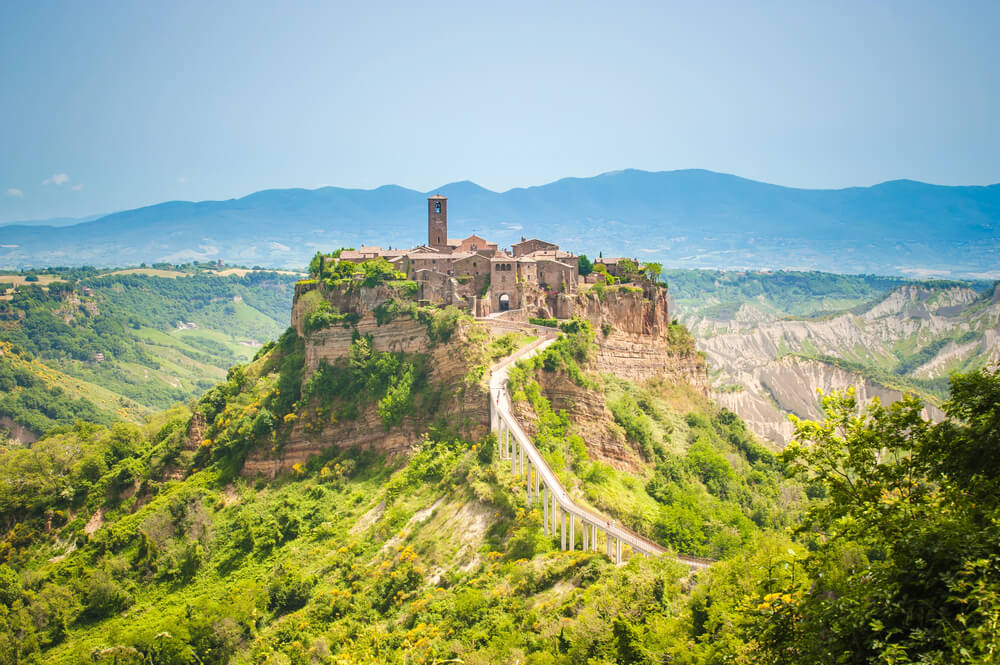
Known as the City of Popes, Viterbo was actually the papal seat for decades in the 13th century. Its historic quarter, San Pellegrino, is one of the best-preserved medieval neighborhoods in Italy… truly a film-set-ready district full of external staircases (profferli) and incredible stone arches.
Just look at the photo above; it’s something out of a real fairytale… and it feels far grittier and more real than the manicured towns of Tuscany! Nearby, natural thermal springs offer relaxation after a day of walking on cobblestones.
Travel logistics: from Rome, you have two train options: the FL3 line from Roma Ostiense is scenic but slow (nearly 2 hours) as it winds through the countryside; alternatively, catch a regional train from Roma Termini to Viterbo Porta Romana (approx. 1 hour 40 minutes). The Porta Romana station is just steps from the city walls.
Sulmona
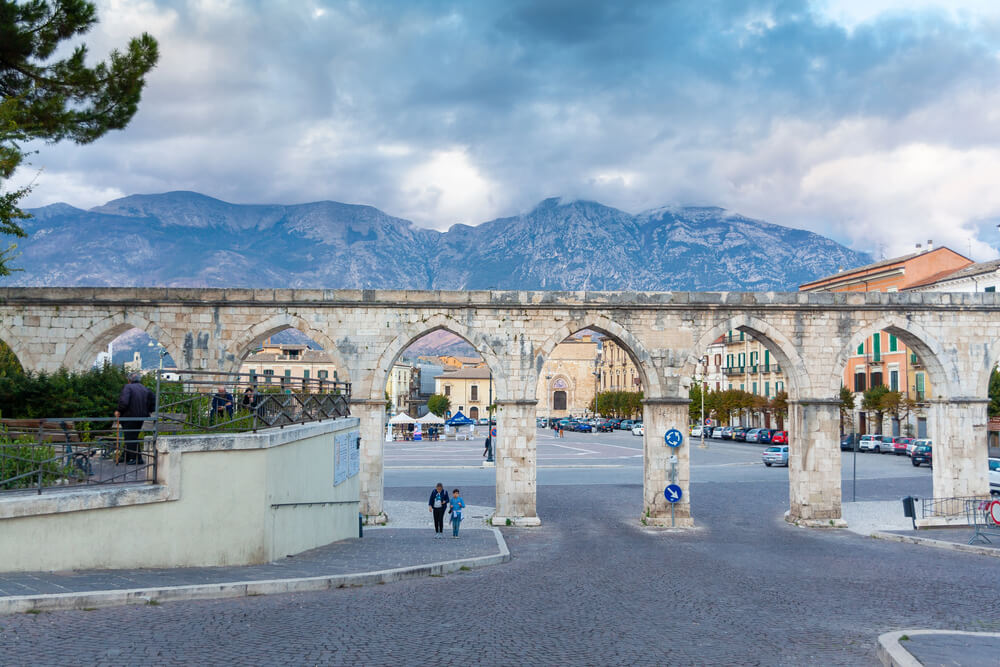
Deep in the Abruzzo region, surrounded by the imposing peaks of the Majella National Park (another gem worth checking out), lies Sulmona. It’s the birthplace of the poet Ovid, and interestingly enough also the capital of “confetti”, the sugar-coated almonds given at Italian weddings. The main Corso is FULLY lined with shops displaying elaborate flowers made entirely of these candies. Sulmona offers a glimpse into a mountain culture that is distinct and unique from the rest of central Italy… making it a gret hidden gem.
Travel logistics: this is an adventure for those who love landscapes. From Roma Tiburtina, take the trans-Apennine train toward Pescara; the journey takes about 2.5 hours and offers some of the most spectacular mountain rail views in the country. It is a longer trek, but isolation is part of the charm.
Castel Gandolfo
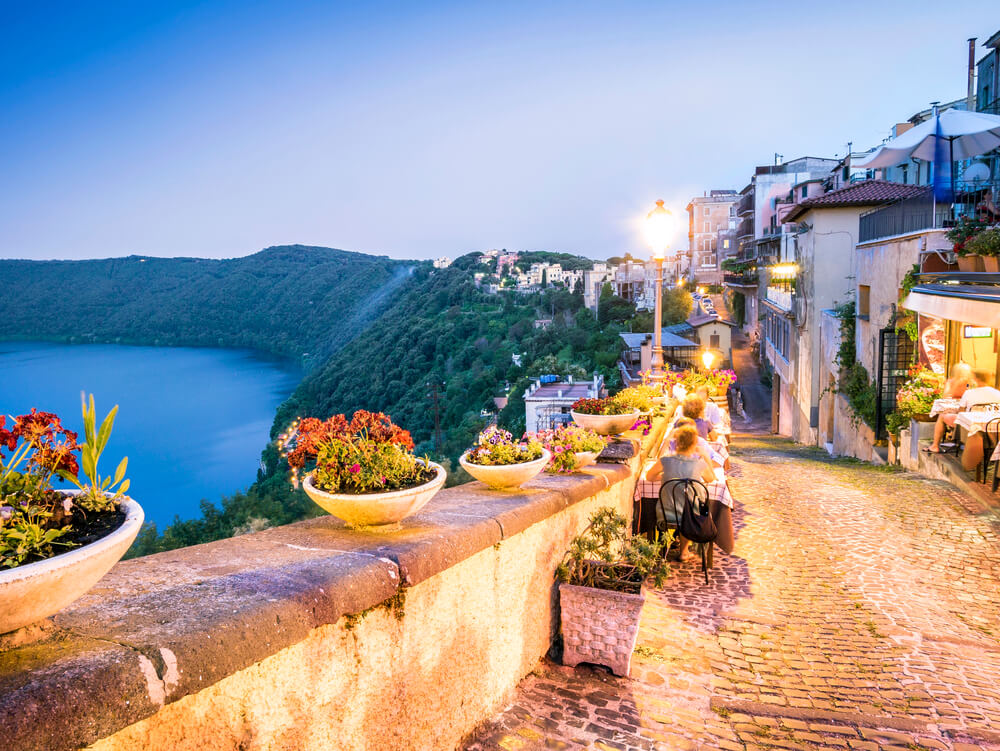
For centuries, when the heat of Rome became unbearable, the Pope fled to Castel Gandolfo for some respite. Perched on the rim of the volcanic crater Lake Albano, this town is refined, manicured, and totally gorgeous. You can visit the Apostolic Palace and the Barberini Gardens, which were only recently opened to the public. The view from the town square, looking down into the deep blue water of the lake, is other-worldly.
Travel logistics: This is one of the easiest excursions from the capital. From Rome Termini, take the FL4 line toward Albano Laziale; get off at Castel Gandolfo, the ride is only 45 minutes. Be warned: the walk from the station up to the town is very steep, though short. A taxi is a better idea if you have luggage or mobility issues.
Arezzo
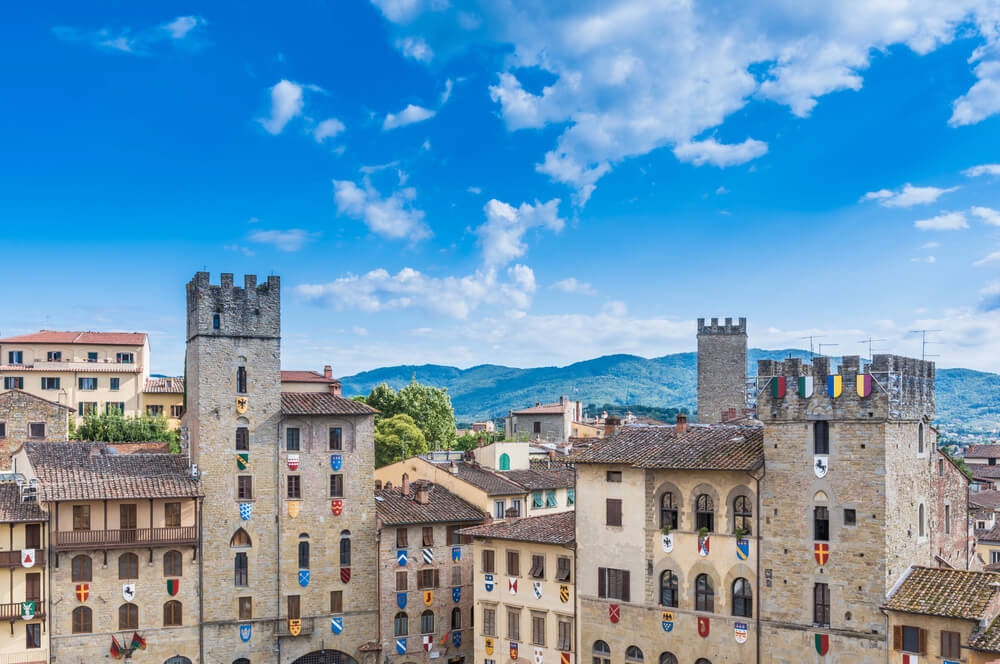
Arezzo is wealthy, proud, and packed with Etruscan gold. It even served as the backdrop for Roberto Benigni’s film Life is Beautiful! The Piazza Grande is a sloping, trapezoidal wonder surrounded by diverse architectural styles. Inside the Basilica of San Francesco, you will find the Legend of the True Cross by Piero della Francesca, one of the most important fresco cycles of the Renaissance. It feels less like a tourist hub and more like a living, breathing Tuscan city.
Travel logistics: Arezzo sits on the main slow line between Rome and Florence; from Florence SMN, it is a brisk 45 to 60 minutes on a regional train. From Rome Termini, “regionale veloce” trains get you there in about 2.5 hours, or you can take an Intercity, which is faster. The station is right at the edge of the historic center.
Fabriano
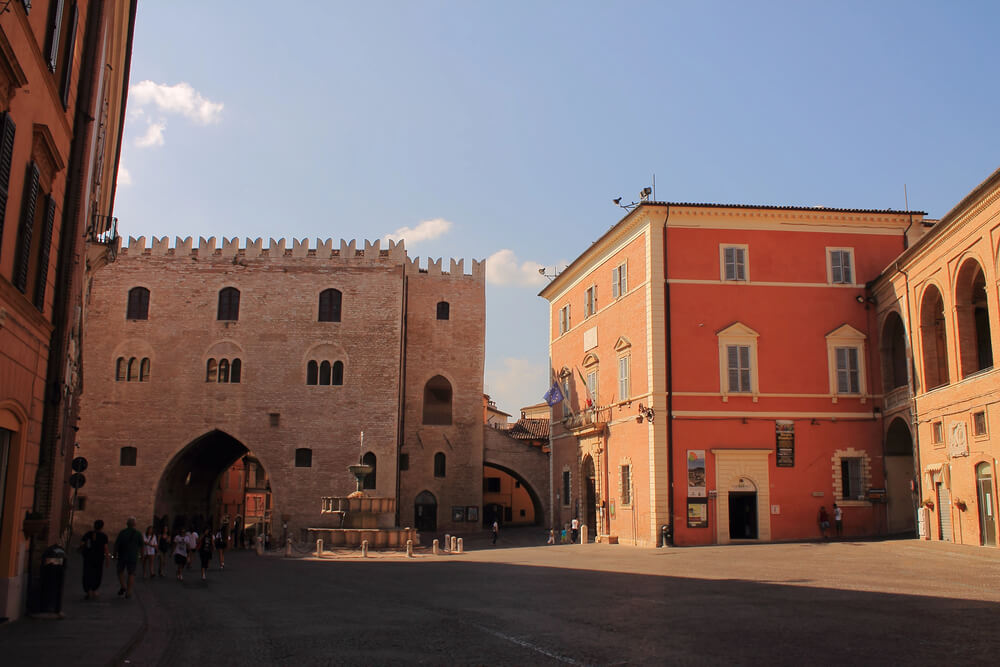
Located in the Marche region, Fabriano is a UNESCO Creative City known for one specific thing you may not expect: paper. Since the 13th century, this town has been the European capital of high-quality paper production. The Paper and Watermark Museum is fascinating, offering demonstrations of medieval machinery. Beyond the industrial heritage, the town center is a lovely, quiet example of Marche architecture, free from the crowds of the coast.
Travel logistics: reaching Fabriano requires heading toward the Adriatic side of the country; from Rome Termini, take the train headed to Ancona, the journey takes roughly 2 hours and 15 minutes. From the station, the town center is a manageable walk or a quick bus ride.
Frascati
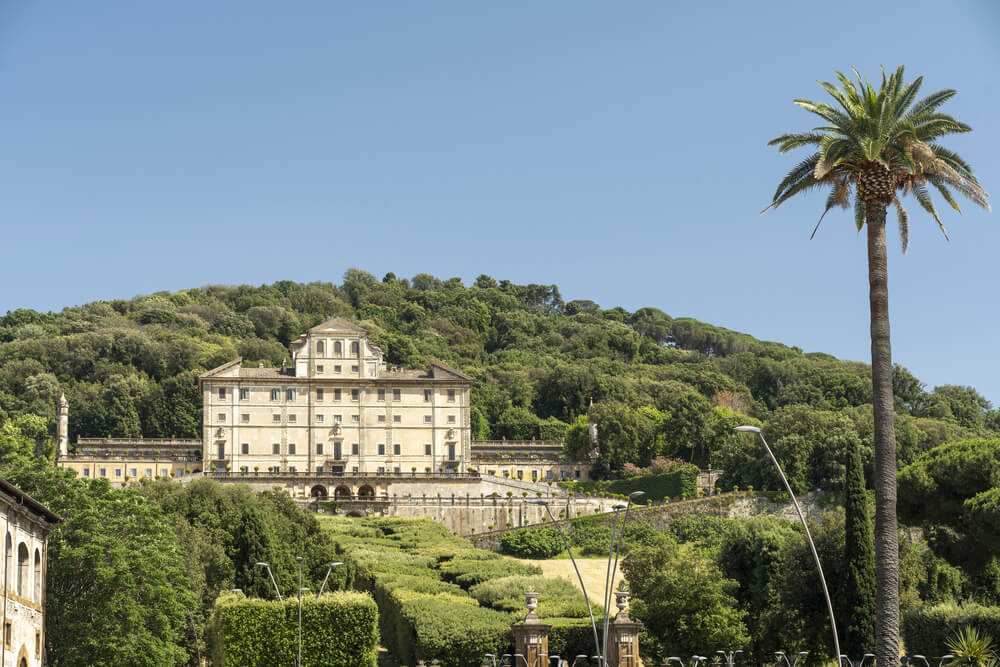
Synonymous with white wine, Frascati is the crown jewel of the Castelli Romani. It is a town of grand – and I mean GRAND – villas built by Roman nobility to escape the city, most notably the imposing Villa Aldobrandini. The town is famous for its “fraschette”, the casual taverns where you sit on wooden benches, drink local wine from carafes, and eat porchetta (roast pork) served on paper. It is lively, boisterous, truly Roman, and oh, so much fun.
Travel logistics: from Rome Termini, the train to Frascati takes only 30 minutes; the station is located at the bottom of a grand staircase that leads up to the main piazza. It is close enough to Rome for a dinner trip!
High-speed connections for the modern traveler
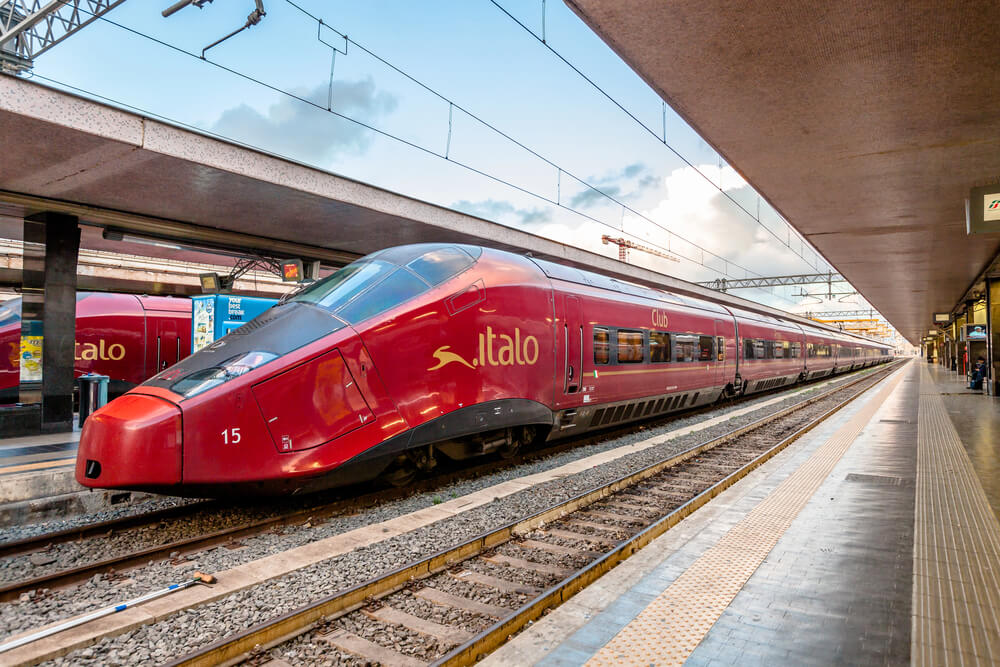
While the charm of these hidden villages lies in the slower pace of the regional trains (“Regionale”), the efficiency of your trip depends on how you bridge the gap between the major hubs. The high-speed trains, such as those operated by Italo, are useful for rapid travel between major cities, shooting travelers between major capitals at 180 mph. These are great for convenience, while slow (and I mean SLOW) regional trains provide access to smaller towns.
To maximize your time exploring the hill towns of Tuscany and Umbria and all the hidden gems in Central Italy no this list, you should establish a base in one of the major cities and explore outward. The most strategic approach is to split your trip between the two main cultural poles; for instance, you can easily use the high-speed rail link between Florence and Rome to relocate your base of operations in under 90 minutes.
This allows you to spend a few days hitting the Tuscan spots like Pistoia and Arezzo from Florence, then transfer rapidly to Rome to tackle the Lazio and southern Umbria locations like Orvieto, Spoleto, and Bracciano. Navigating the stations is straightforward: high-speed trains generally require a seat reservation included in the ticket price. In regional trains, it’s different: you simply buy a ticket, validate it at the green or yellow machines (or check in via the app), and hop in any available seat. There’s a time and a place for both!
There is no need to book your trip weeks in advance; you can wake up, check the weather, and decide over a cappuccino where the tracks will take you that day.

Passionate, full-time travel blogger with over 230k on social media and 150kMPV blog. Extraordinary photographer with two DSLR's + a drone with a love for capturing candid moments, epic drone shots, and magical compositions. I'm a natural-born content creator originally from California, but I've been on the road for 9 years living, working, traveling, blogging, and photographing my way around the world. I recommend the most amazingly adventurous and unique + boutique travel experiences/stays and helpful products to my audience and write comprehensive guides on my website that have helped millions of travelers so far. I love to inspire people to plan their dream trips, and many readers have given feedback as such. The reach on my platforms continues to soar, especially when combining cutting-edge social content with optimized articles on my high-authority website.