
Small ship cruises in Croatia are one of my favorite ways to explore the country, and after working six summers as a sailing tour guide, I’ve gotten to know quite a lot about what makes a good week on the water. The boat, the route, and the people you’re traveling with all make a difference!
Split and Dubrovnik deserve their popularity, but there’s a lot more to Croatia’s coast than its two best-known sailing hubs. Smaller island ports give you somewhere to wander along the waterfront, find a little restaurant for dinner, and spend an afternoon without a huge sightseeing agenda.
These five ports stretch from Brač up to the northern islands of Kvarner, with stone villages, walking trails, and a few interesting reasons to get off the boat along the way.
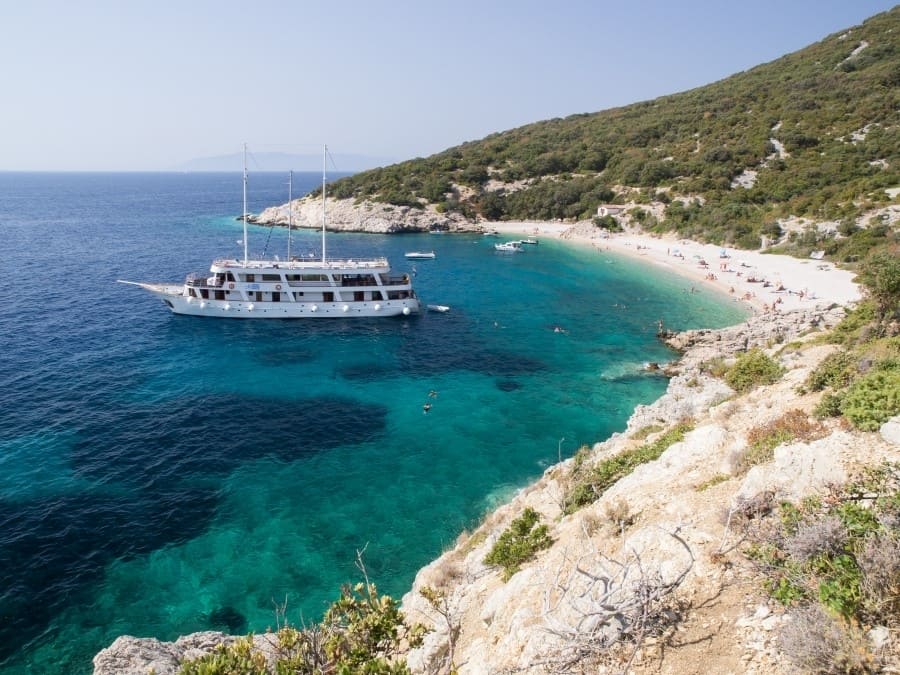
Things to Know About Visiting These Small Island Ports
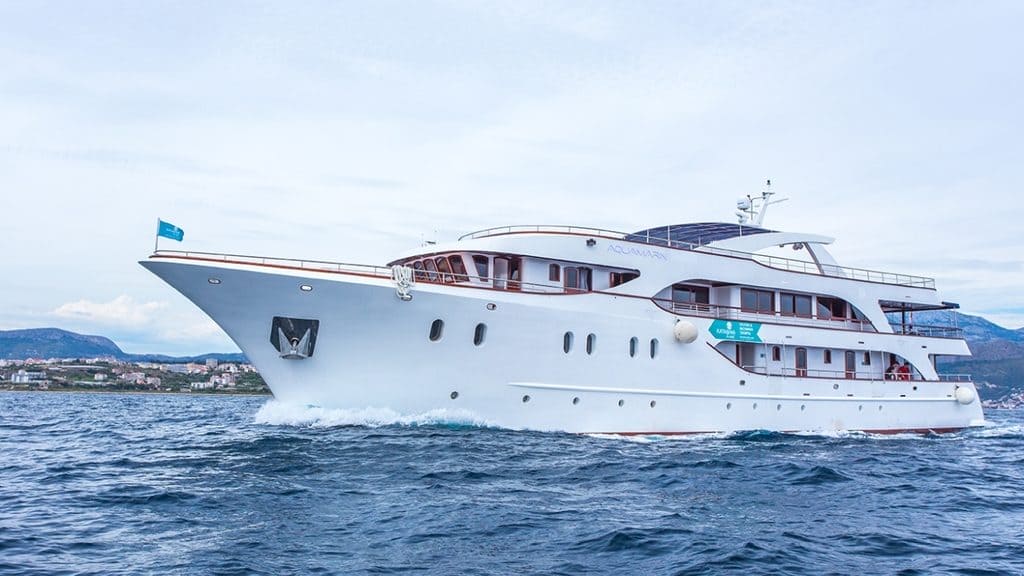
Smaller harbors have limited space, and a ship’s size and draft (how far it sits below the water) affect where it can dock. That’s part of the appeal of small ship cruises in Croatia: smaller vessels can include ports that aren’t practical docking stops for a huge cruise liner, along with swim stops between towns.
You don’t need a cruise to reach these islands, but having your accommodation travel with you makes hopping between them much easier. Where you dock still depends on the boat, available berths, and conditions, so a small ship doesn’t automatically mean a private waterfront spot, but you have a lot more options (and honestly, it sometimes does)!
From my time guiding sailing tours, I’d also put some thought into what “small ship” means for YOUR trip. A little yacht with a handful of passengers feels very different from a crewed boat with a few dozen people, a chef, and more deck space. I’m partial to a comfortable boat with ensuite cabins and air conditioning, especially for a whole week!
Look at the actual itinerary, too. These five ports are spread across different parts of the coast, so don’t assume you’ll see them all on one standard Split-to-Dubrovnik trip. I go into the different boat styles and trip options in my Croatia sailing tours guide.
1. Sali (Dugi Otok)
Sali is a fishing town on Dugi Otok (literally “Long Island”), with houses gathered around the harbor and olive groves nearby. Fishing is part of the town’s history, and the waterfront still has working boats alongside visiting yachts.
This is a good stop if you want to spend some of your time walking or cycling, with Telašćica Nature Park nearby. You can have a fairly active day here and still come back to the harbor for dinner.
Why Visit Sali: The main draw is access to Telašćica, known for its sheltered bay, salt lake, and high sea cliffs. It’s worth allowing enough time to get beyond the waterfront rather than treating Sali as a quick coffee stop.
What to Do Here: Explore the olive groves of Saljsko polje or arrange a trip into Telašćica for walking, viewpoints, and time by the water. If you’re considering a bike-and-boat cruise, look for an itinerary that includes riding on Dugi Otok so you have time set aside to explore.
Things to Know: August brings Saljske Užance, a local festival with music, food, and a donkey race. Its Tovareća mužika tradition involves horns and drums, so the sponsor’s description of a permanently sleepy fishing village doesn’t quite apply that weekend! It’s the perfecttime to plan to be here.
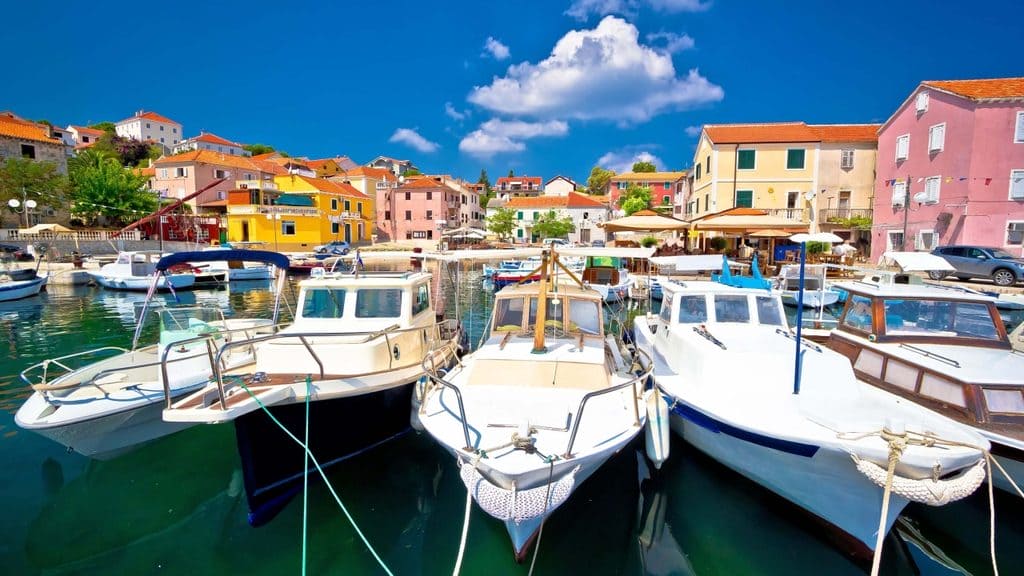
2. Pučišća (Brač Island)
You’ve probably seen photos of famous Zlatni Rat, the pointed beach near Bol that appears in seemingly every collection of Croatia travel photos. But over on the northern side of Brač, Pučišća sits at the end of a long inlet, with white stone houses climbing up from the harbor.
Brač is famous for its limestone, and this little town is FULL of it. Brač has a long quarrying and stonemasonry tradition – supplying stone to old towns all around the country and even as far as some European palaces and, apparently, the White House – and Pučišća is somewhere you can see both the finished buildings, the craft behind them, and even little white stone souvenirs.
Why Visit Pučišća: The waterfront is the main attraction, with white limestone houses, terracotta roofs, and boats moored along the bay. For anyone who likes photographing little coastal towns, there’s plenty to work with here before you’ve even left the harbor.
What to Do Here: Visit the local Stonemasonry School, one of the last in Europe where students still use traditional Roman hand tools to carve the local stone. Grab a drink on the shore, shop for souvenirs, or eat dinner on a patio. I used to take my groups around the souvenir shops here, as it’s such a unique feature of Brač.
Things to Know: The stone from this area is so famous that local legend proudly claims it was used to build parts of the White House in Washington, D.C., and it was definitely used to construct Diocletian’s Palace in Split!
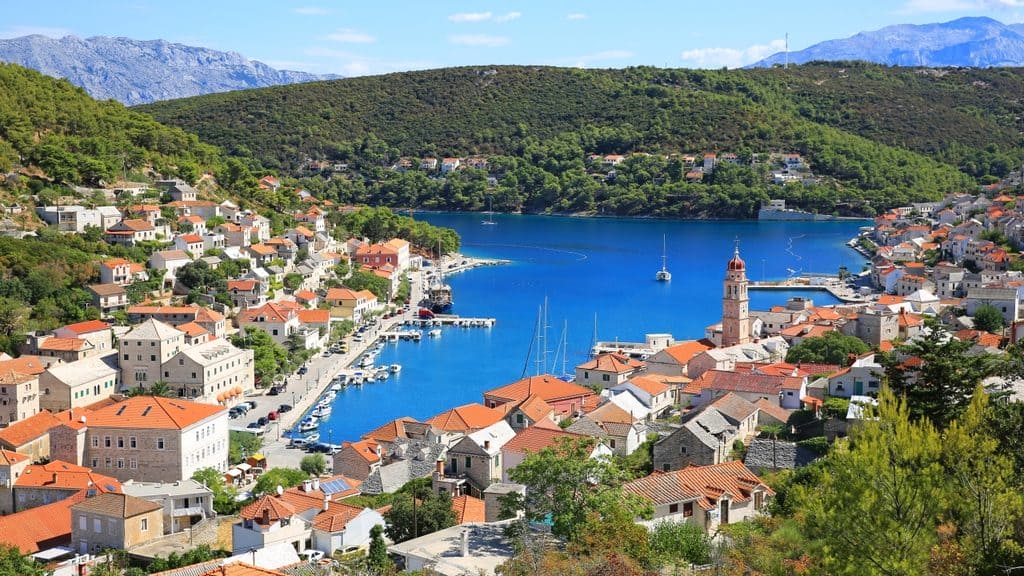
3. Rab Town (Rab Island)
Rab Town has quite an entrance from the water, with four bell towers rising above a narrow peninsula of old stone buildings. You can see the shape of the town as you approach, with the sea running along both sides and sections of its old walls still standing. It’s pretty magical.
Rab is up in Kvarner, away from the usual southern Dalmatian sailing circuit. The island also has pine forests and sandy beaches – actual SAND, which is a welcome change if you’ve been hopping between Croatia’s rocky swimming spots in Dalmatia.
Why Visit Rab: The old town has little lanes, churches, and squares packed into a walkable area, with those bell towers appearing above the rooftops as you explore. There’s a lot to look just in the harbor itself!
What to Do Here: Wander through the old streets and along the walls (I never get tired of old town walls in Croatia), then continue into Komrčar Park beside the town center. The shaded paths make a lovely extension to a walk around town, especially on a hot summer afternoon.
Things to Know: You absolutely cannot leave the island without trying Rapska torta (Rab cake). It’s a traditional spiral-shaped cake made with almonds and Maraschino liqueur, created for the Pope in 1177 – giving your afternoon cake a rather impressive backstory.
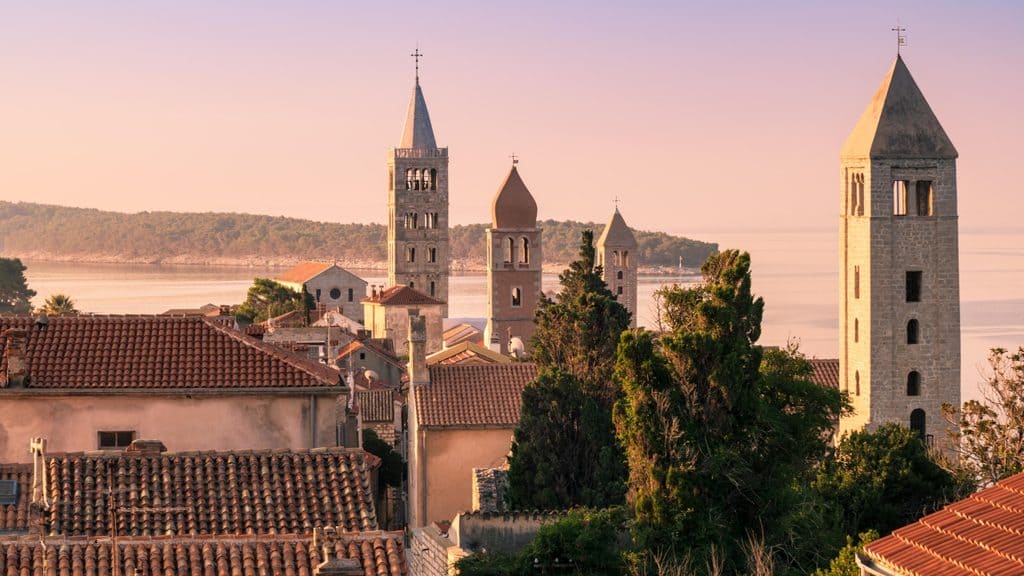
4. Cres Town (Cres Island)
Cres is Croatia’s wild, untamed frontier. It is one of the largest islands in the Adriatic, yet one of the least populated. The island’s landscape is rugged and covered in ancient oak forests where endangered Griffon vultures still nest in the sea cliffs.
The main port, Cres Town, is a hidden gem tucked into a deep, protective bay. Because mega-ships bypass this northern route, the harbor has retained an impossibly charming, authentic atmosphere. There’s plenty of Venetian influence in the architecture, making it look a little different from the white-stone waterfront of Pučišća.
Why Visit Cres Town: This is a good port for an afternoon of exploring without much transport involved. You can walk between the harbor, little squares, and old streets, then settle in somewhere overlooking the boats.
What to Do Here: Explore the pedestrian-only town (I absolutely adore walking-only towns in Croata as they have swuch a special charm), relax by the harbor, or venture out to see freshwater Lake Vrana (legend says a submerged castle lies at the bottom, and on windy days you can still hear its bell ringing!).
Things to Know: Cres is famous throughout Croatia for its incredible, free-roaming lamb. Pair a local lamb dish with a glass of native wine in a seaside tavern for the ultimate slow-travel meal that you will definitely never forget!
5. Mali Lošinj (Lošinj Island)
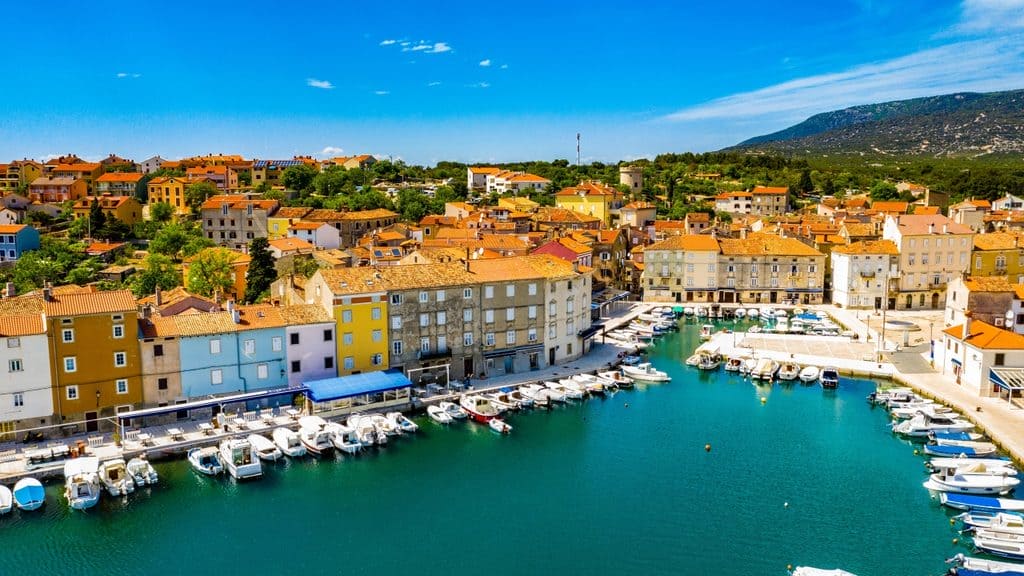
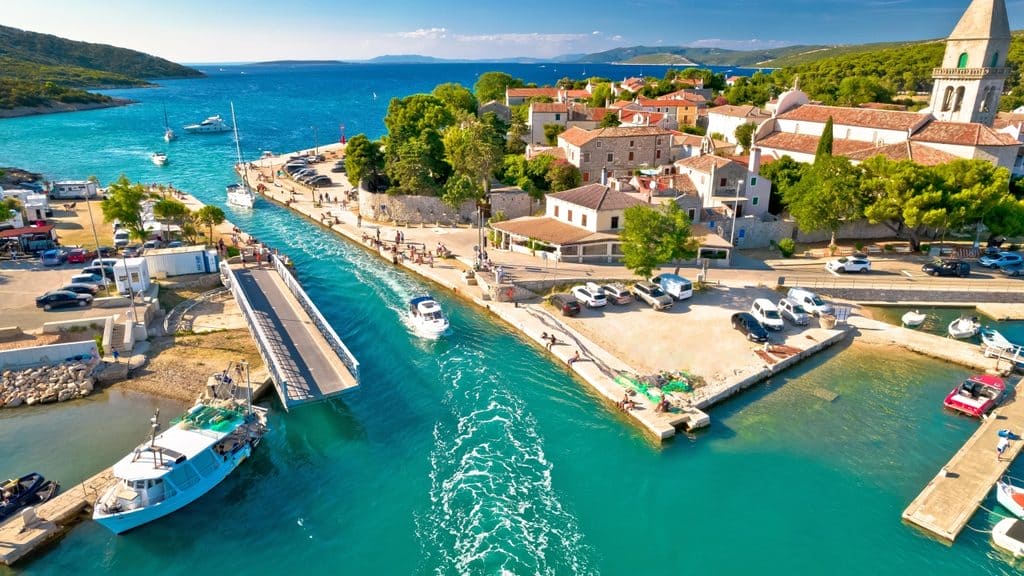
Connected to Cres by a small bridge, the island of Lošinj is known as the “Island of Vitality.” Since the 19th century, Austrian and Hungarian aristocrats have traveled here for the healing properties of its pristine air, dense pine forests, and over 1,000 plant species that grow wild on the island.
Mali Lošinj translates to “Little Lošinj,” although it’s actually the island’s largest town. Its long harbor has rows of colorful buildings and former sea captains’ houses, with plenty of waterfront to wander along.
Why Visit Mali Lošinj: You can combine a proper town visit with coastal walks and swimming, which makes it an appealing sailing stop. The surrounding waters are also home to bottlenose dolphins – a lovely thing to keep an eye out for while you’re up on deck! I only saw dolphins a few times in my years in Croatia, but it jsut made every sighting even more or a core memory.
What to Do Here: Explore the harbor and coastal paths, or visit the Lošinj Aromatic Garden to learn about the island’s herbs and plants. The pine trees and gardens give you plenty of greenery between all that blue water; it’s really the perfect combination. I always used to say, I can tell why the Austro-Hungarian aristocrats loved it!
Things to Know: The Museum of Apoxyomenos houses an ancient bronze athlete found on the seabed near Lošinj in 1996 and brought to the surface in 1999. Imagine going for a dive and finding THAT! The statue underwent years of conservation and now has a museum dedicated to it right on the waterfront.
Why Explore These Ports by Small Ship?
Visiting these historic ports is nearly impossible on a standard ocean liner. Trust me, the beauty of a small-ship cruise is its flexibility and intimacy.
After six summers working on Croatia sailing tours, I’m still a big advocate for seeing the islands from the water. Being able to travel between towns, stop for swims, and come back to the same cabin makes a sailing week a very easy way to explore, and you literally wake up to a new destination each morning. There aren’t many places you can say that – Croatia is truly perfect for it.
Have you ever explored these smaller island ports in Croatia, or are you planning a trip soon? Let me know your favorite Adriatic hidden gems in the comments!

Passionate, full-time travel blogger with over 230k on social media and 150kMPV blog. Extraordinary photographer with two DSLR's + a drone with a love for capturing candid moments, epic drone shots, and magical compositions. I'm a natural-born content creator originally from California, but I've been on the road for 9 years living, working, traveling, blogging, and photographing my way around the world. I recommend the most amazingly adventurous and unique + boutique travel experiences/stays and helpful products to my audience and write comprehensive guides on my website that have helped millions of travelers so far. I love to inspire people to plan their dream trips, and many readers have given feedback as such. The reach on my platforms continues to soar, especially when combining cutting-edge social content with optimized articles on my high-authority website.