
So, you are planning a trip to Croatia and don’t know where to start?! I’m glad you have stumbled upon my site! After living and working as a tour guide in Croatia for 4 summers I have prepared some mostly-bite-sized tidbits of useful info that you can use to make the most of your trip.
It’s no joke that Croatia has shot to the top of many peoples’ destination lists over the last few years, and isn’t quite the ‘hidden gem’ that it used to be. But that doesn’t mean you can’t plan your ideal trip to Croatia full of beautiful coves, adventurous activities, boutique accommodation, and a cheeky drink here and there.
You might just be starting to plan your trip to Croatia, so I’ll keep this one short and sweet but link to MANY extra resources, destination guides, and more throughout this post.
Quick Facts About Croatia
Population: 4m
Currency: Euros (since 2023)
Language: Croatian (but most usually speak English, especially in tourist areas)
Driving Side: Right
Drinking Age: 18
Tipping Culture: Usually round up or 10%
Emergency Number: 112
Can You Drink Tap Water: Yes


Quick Tips for Planning a Trip to Croatia
- You will need cash at some places – in the local curency. Visit a bank ATM to get cash out, or try to exchange cash at a bank for the best rates. Always compare rates from a few places before choosing the best.
- You will need the same “Type C” 2-prong plug here as the rest of Europe. Get an adaptor if you don’t have one already. Get a couple adaptors that also have USB slots to maximize efficiency.
- In terms of prices, Croatia often has comparable prices to most of Western Europe these days. It’s not quite the cheaper hidden gem it used to be, but with good reason!
- Croatia IS in the EU and in the Schengen region. Croatia just joined the schengen region on January 1st 2023 and adopted the euro as currency after the Croatian kuna, previously.
- Visas here are free for most countries. US Citizens can stay for up to 90 days without a visa (the normal schengen visa) and Croatia also has a few types of digital nomad visas, too.
When to Travel to Croatia
The most important thing I’ll say in terms of WHEN to plan your trip to Croatia is to AVOID PEAK SEASON! Peak season is pretty much all of July and August these days- or maybe the 6 weeks in the middle of the two.
Peak season is incredibly busy. You will have longer wait times, busy streets, full venues, and oftentimes ruder staff than other times too! If you are coming to Croatia for a festival, you might not be able to avoid this, but it’s good to keep in mind when planning a trip to Croatia.
Most blogs will tell you that the best time to go to Croatia is the ‘shoulder season’ in April/May and September/October. I would agree with that but raise it one; let me explain:
Most Croatians ONLY work seasonally – so they make ALL of their money for the year in the tourist season. We have often found them MUCH more easygoing once they had made their money for the season – in September/October – and MUCH more uptight and rude at the beginning of the season – May/June. So I will decidedly say that the BEST time to visit Croatia is in September – after peak season but before the big venues close and before it gets colder in October.


Weather in Croatia
The weather in Croatia of course depends on WHERE you are going and WHEN. But generally, I will say that Croatia has a warm Mediterranean climate on the coast. If you are visiting anywhere in summer (besides the inland mountains) you will be able to get away with shorts and a light cardigan.
If traveling during the beginnings and ends of shoulder season, you might want something warmer, but nothing more than pants and a heavier jacket. Always have swimsuits, sunscreen, hats, and sunglasses – there is a LOT of sun in Croatia every year no matter what region you are in.
Deciding Where to Go in Croatia
You can have a million different kinds of trips to Croatia. You can have a nature trip, a party trip, a (relaxing OR party-filled) sailing trip, a romantic or honeymoon couples trip, a biking trip, a wine-tasting trip, a historic trip…. or a mixture of all of the above.
If you have a long time – you might want to spend as long as you can here. If you don’t? You’ll have to choose your destinations wisely and make sure they are easy to get to from one another. For more info on each destination and what it is best for, check out my guide to the best places to visit in Croatia.
I recommend at least 7-10 days in Croatia, if not more. Most sailing trips (which are a fabulous way to see the country) are 7 days, and there are plenty of destinations outside of the islands.
If you want to sail, read up on my guide to how to choose a Croatia sailing tour. If you are a young professional who loves affordable luxury, check out my very own sailing company, Fjaka Sail. I along with my 2 business partners run this company offering affordable luxury for young professionals (and young at heart) and we have had a few successful seasons now.

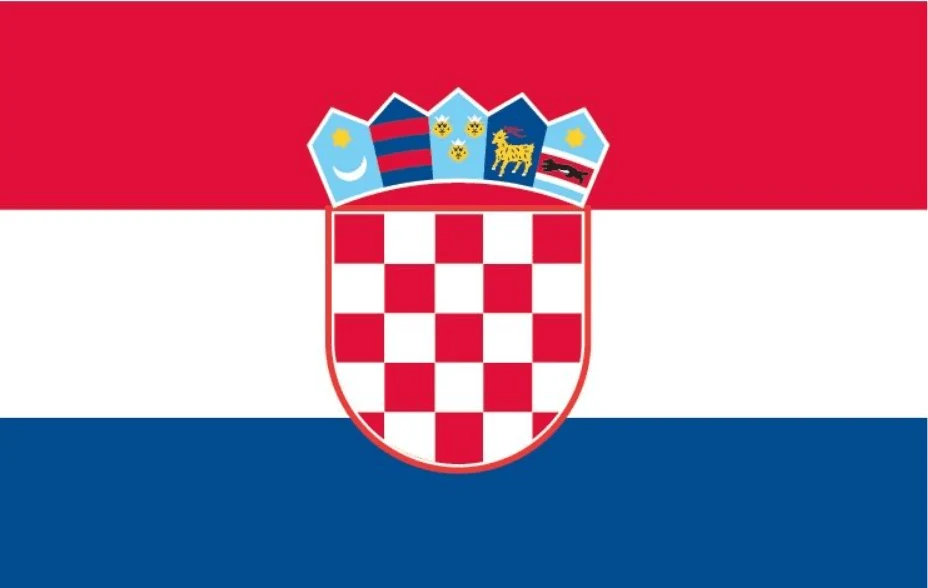
Regions of Croatia/Croatian Flag
Croatia has four main regions, but most people only visit ONE (Dalmatia). If you look closely at the Croatian flag, you will notice five symbols above the coat of arms—representing Central Croatia, Dubrovnik, Dalmatia, Istria, and Slavonia.
Central Croatia – also called The Mainland or Croatia Proper, is home to Croatia’s capital, Zagreb. This part of Croatia has a COMPLETELY different ‘personality’ than the coast and feels much more like eastern Europe.
Dubrovnik – Isn’t its own region but deserves its own section on the flag. Dubrovnik is the ‘Pearl of the Adriatic’ and was actually an independent republic for 450 years. Read the history section below!
Dalmatia – the Croatian Coast. Most of you will go here. It has a more Mediterranean food and climate, amazing water and islands.
Istria – A big peninsula on the northern coast, Istria is ‘The Tuscany of Croatia.’ It’s known for wine, truffle hunting, beautiful rolling hills, and coastal towns too.
Slavonia – This is the inland part of Croatia, closer to Serbia and Bosnia. It’s a bit colder here and is known for wine and meats. Not particularly a tourist destination.
Where to Stay in Croatia
If you are concerned about accommodation options in Croatia, don’t worry… they have it ALL. Croatia has tons of options from cheap hostels to trendy hostels to one-room rentals to basic mid-range hotels to adorable boutique hotels to massive villa rentals to HUGE luxe resorts. If you have a taste for it, you can find it in this country.
My blog tends more toward the unique and boutique accommodation options – lots of budget spots but with the occasional worthwhile splurge. Scroll to the bottom for links to my destination guides with accommodation recommendations.

Croatian Currency Information
Croatia uses the euro just like most of the rest of Europe! I assume I won’t need to break down the conversion of euros to USD, AUD, GBP, etc. You may find some vintage Croatian currency around, but they finally said ‘goodbye’ to the Croatian kuna in 2023.
Getting Around Croatia By Ferry
Croatia is very well connected by fast ferries – mainly the Jadrolinja line and the Krilo Star line. Timetables and tickets can very easily be found online, and you can purchase tickets in advance online also (recommended). Ferries are very affordable, too, and are the best way to get around the islands especially. in the south of Dalmatia.
You can ask about these in any tourist office. The southern coast ferries mostly run in between Split and Dubrovnik, but there are ferries in the north, too. There are also overnight/10 hour ferries from Split and Dubrovnik to to Ancona and Bari, Italy.


Getting Around Croatia On Land
Busses in Croatia
If you can’t get there by ferry in Croatia, you can certainly get there by bus. Busses in Croatia are fairly reliable too and will connect you with all the mainland parts of the country. You can book literally any route in advance on Bookaway. Do you need to book in advance? In peak season, yes.
Trains in Croatia
Now that I have your attention, DO NOT TAKE A TRAIN IN CROATIA! Well, they might be better in the north near Zagreb, but any train from Split is a surefire ticket to uncomfortable-town.
Croatia is still catching up with Western Europe in regards to railway transport, and trains are not as good. One of the worst experiences of my life was an overnight train from Budapest to Split. Opt for a bus to be safe (and to ensure you dont have to share a flat bed with strangers).
Renting a Car in Croatia
I have rented a car in Croatia many a time – from Split, Dubrovnik and even some of the islands. On an island, you can usually find car rental in the main areas of town quite easily. In the past, I have used rentalcars.com to compare prices and also found good prices from Sixt Croatia in Dubrovnik and Split.
Transfers in Croatia
If you want to feel extra safe, transfers in Croatia are reliable and bookable in advance. You can book transfers from any airport or even between cities. I always compare prices and book Croatia transfers on GetYourGuide.
Taking Sailing Tours in Croatia
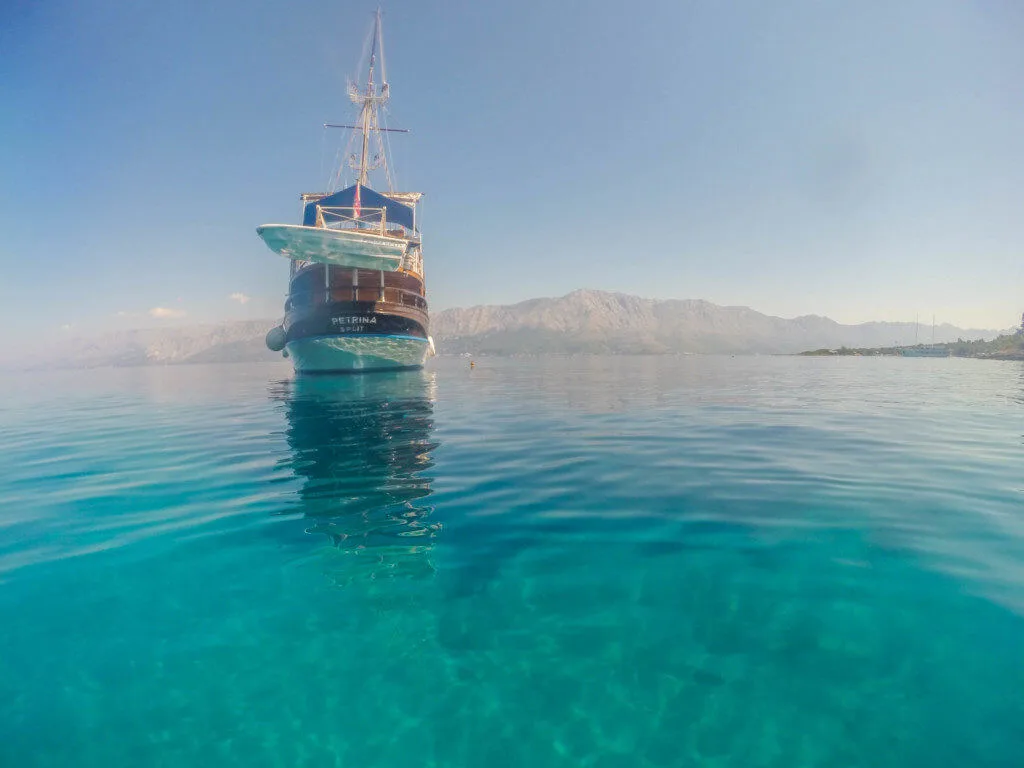
Sailing is probably THE best way to see Croatia – it is fun, effortless, and beautiful! And, you don’t need to pack and unpack at all to see 8 amazing destinations. Sailing Tours are what I lead for a few summers and now own my own. And no, I did not work for The Yacht Week. There are DOZENS of companies that do Croatia sailing!
I worked for a company called Topdeck Travel that does 7-day boat tours around the islands, for 18-39-year-olds. Lucky for you, I actually wrote an ENTIRE GUIDE just to Croatia Sailing Tours, linked here! In that guide, you can read about all the companies, their reputation, their boats, and more.
If you are younger, opt for a cheaper party tour company (Topdeck, Travel Talk, Contiki). If you are older but still fun, opt for a tour for young professionals like Fjaka Sail. Read my post linked above for everything you need to know.

How the Croatian Alphabet Works
Here’s just a wee lil’ lesson on Croatian letters and pronunciation! It can look VERY confusing at first but this should give you a basic understanding.
J is pronounced exactly like a “y” in English. Someone named Daria or Mariana would be Darija or Marijana here, pronounced the same.
You’ll see lots of ‘carrots’ above letters, like ‘ž’ ‘č’
Š is pronounced like ‘sh’as in Škola is school
č is pronounced like ‘ch’ as in ‘čips’ means ‘chips’
Ž is pronounced like ‘zh’ as in MasaŽ mean massage
Ð – like a ‘G’ so here “Georgia” looks like “Ðorđa”
C – pronounced here like ‘tz.’ So Someone whose name is Braco is pronounced like “Bratzo” and the rakija “Medica” is pronounced “Meditza.” So any name in English that would have a ‘c’ would have a ‘k’ here since it’s pronounced differently… like ‘Marco” would be “Marko.”
Let’s put a bunch of them together. In Croatia, a currency exchange is called a “Mjenjačnica.” So, using the rules above, you pronounce it “Myen-yach-neet-zah.”
So, while you’re there, just sound everything out with these rules above and you should be golden!

A Brief Intro to Croatian History
Croatia has LOTS of really incredible history – recent and ancient. History is one of the most interesting parts of Croatia and reasons to visit the Balkans in general – so read this brief overview before planning your trip to Croatia!
Cavemen inhabited the area for tens of thousands of years, and artifacts from even 20,000 years ago can be found in various archaeological sites around the country. You can even find dinosaur footprints in a few places in this country! Fun facts, right?
Ancient Greek sailors colonized Hvar island in 385BC – the same year Aristotle was born! Lots of Croatia became part of the Ancient Roman empire during the early AD years; namely, Split is the site of some of the most well-preserved ancient Roman ruins in the entire world!
The Slavic people came to present day Croatia in the 7th century, and the first King of Croatia, Tomislav, came to power from 925. Croatia became part of the Hungarian empire after a defeat in 1091, keeping its autonomy but being ruled by the Hungarian-Croatian King.
Medieval Period
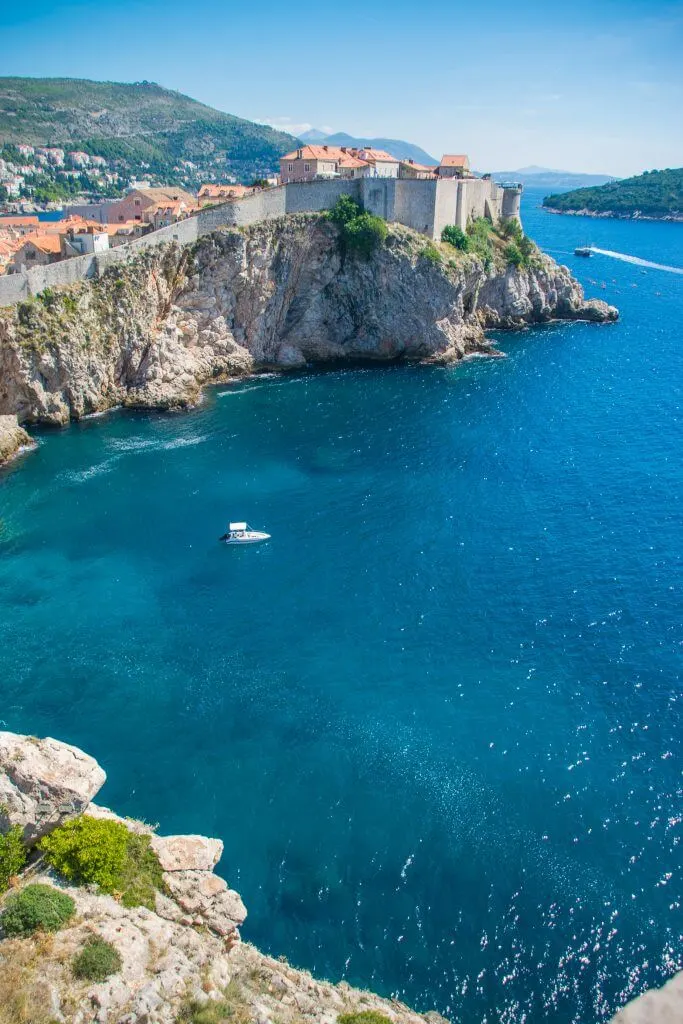
From the late 1300’s to the late 1700’s, all of Croatia was basically constantly sought after by both the Venetian Empire and the Ottoman Empire, with many fortresses built, battles fought, and transfers of power during that time. This is when the current Dubrovnik and Korculan walls became the way you can still see them today, and when many fortresses you can visit today were constructed.
Dubrovnik, however (known as Ragusa at the time) was the only part of Croatia that was able to maintain its independence during that time (for 450 years!) due to the intelligence and diplomacy of its people. They were constantly making deals with other empires and even sold some land to the Ottoman Turks to prevent a Venetian attack (which is why a tiny bit of Bosnian border reaches the coast north of Dubrovnik – super fun facts).
Napoleon and the French army came through and conquered the entire coastline in the early 1800’s (including Ragusa/Dubrovnik), until being defeated by the Austro-Hungarian Empire also in the early 1800’s. This is where Croatia remained until after WW1 when it united with many other Balkan countries to become the communist Yugoslavia.

Yugoslavia
Long story short, and attempted biases aside, Yugoslavia was a forced union of three very different groups of people – Croats/Slavs, Bosnians/Muslims, and Serbs. The country was kept together very well under leader Marshall Tito until he died in the early 80’s, leading the country into a downward spiral. The power was very imbalanced, with Serbians holding most of it (the capital was Belgrade – the current capital of Serbia).
Croats were sick of sending all their hard earned tourism money from the Dalmatian coast to Belgrade and not getting much back. Eventually it became too much for the very proud Croatians, who voted and declared independence in 1991 starting a multi-year civil war. Dubrovnik was one of the places hit the hardest in this war, and was under siege for 8 months in ’91 and ’92 although its old walls had been an UNESCO World Heritage protected site for over 11 years.
Present Day
Croatia gained its independence in 1992 – not really that long ago! There is lots of recent history in the whole country, especially Dubrovnik, which I have outlined in my Dubrvnik guide. There is still a lot of tension and even racism between the Serbs, Croats, and Bosnians, which is tough to this day. Croatia has been independent for nearly 30 years and became part of the EU in 2013, and its tourism has been exponentially increasing each year (which has been pretty crazy for me to witness first hand!).
Hope this has helped you gain insight for planning your trip to Croatia! Don’t forget to check out my Best Places to Visit in Croatia article to find destination-specific info or any of my guides below for inspo!

Passionate, full-time travel blogger with over 230k on social media and 150kMPV blog. Extraordinary photographer with two DSLR's + a drone with a love for capturing candid moments, epic drone shots, and magical compositions. I'm a natural-born content creator originally from California, but I've been on the road for 9 years living, working, traveling, blogging, and photographing my way around the world. I recommend the most amazingly adventurous and unique + boutique travel experiences/stays and helpful products to my audience and write comprehensive guides on my website that have helped millions of travelers so far. I love to inspire people to plan their dream trips, and many readers have given feedback as such. The reach on my platforms continues to soar, especially when combining cutting-edge social content with optimized articles on my high-authority website.