
It’s hard to name the best sunsets in Western Australia with a state so vast and full of incredible coasts, deserts, and everything in between. But after traveling a lot of WA – which takes up nearly half of Australia itself – I think I can make a pretty good start.
Western Australia has sunsets that make hundreds of stops worth the drive. Along the Coral Coast, the light meets red cliffs and clear water in a way that feels unreal. You can stand on the beach or at a lookout and see the whole horizon turn to color.
While the west-facing coasts are a big contender for the best sunsets in WA, the countryside and deserts can’t be discounted here. From the incredible rock formations to red sand deserts, inland sunsets can actually end up just as magical, too.

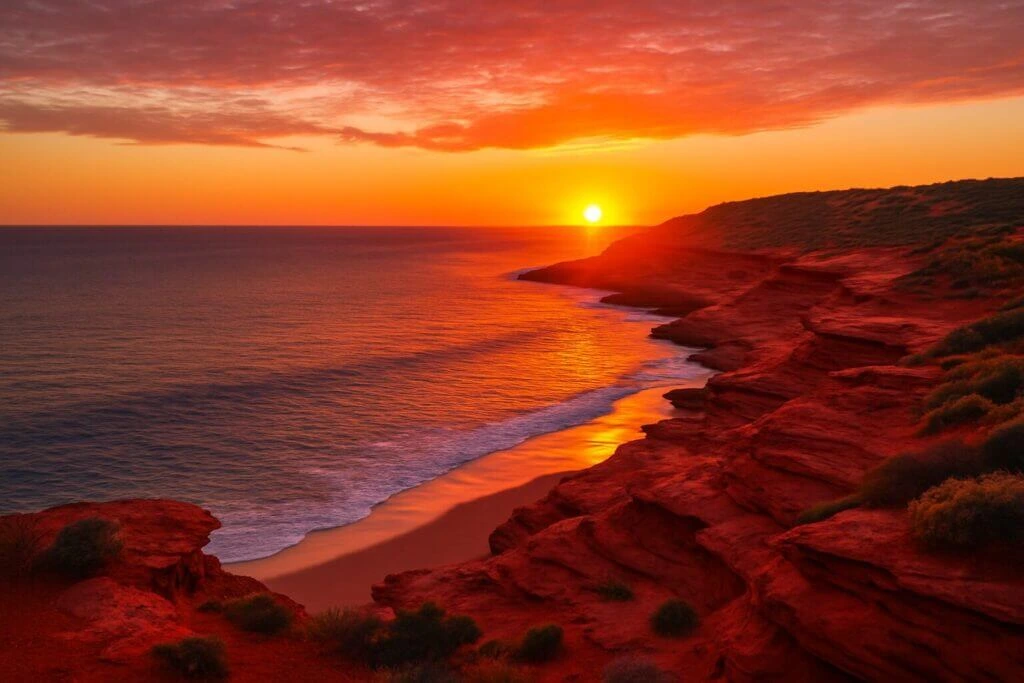
Coral Coast – Where the Ocean Turns to Fire
Since it, of course, faces West, each part of the coast has its own view. From calm bays to high rock edges, coastal sunsets are epic everywhere. The best thing is how slow everything feels when the day starts to fade.
Some eager visitors stay out for dinner near the water, while others relax online to check their latest casino bonuses that stretch a bit of fun into the evening (gambling is big in WA). The point is that Western Australia is the kind of place that makes you stop for sunset, a wine, a life memory, even when you think you are in a hurry.
Start your trip north from Perth and you’ll reach the Coral Coast before you realize how far you’ve driven. This stretch between Kalbarri and Exmouth is one of the most rewarding drives in Western Australia. The roads are smooth, towns are easy to reach, and every stop has its own sunset worth pulling over for.
Exmouth and Vlamingh Head Lighthouse

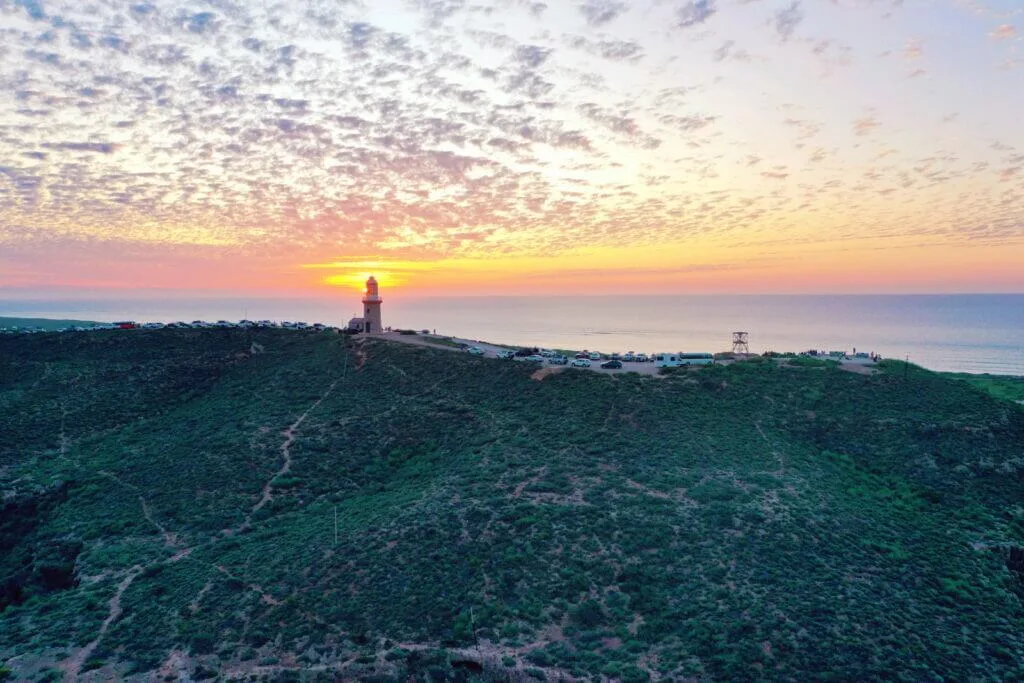
Exmouth is small, friendly, and built for travelers who like nature without crowds. It’s got a young and artsy vibe with tons of fun restaurants, cafes, and outdoor activities – including sunset chasing!
The Vlamingh Head Lighthouse, a 12-meter-high structure commissioned after a cattle steamer SS Mildura, shipwrecked in 1907, is the spot everyone visits for sunset… and it is easy to see why. The road from town takes twenty minutes, and there is plenty of parking. Arrive early, bring a drink or takeaway dinner, and watch the reef and ocean change color.
If you visit between May and September, keep an eye on the horizon. You can often spot humpback whales passing close to shore. The wind cools fast after sunset, so a light jacket makes the wait more comfortable.
Coral Bay
Coral Bay is smaller again, but that is its charm. Everything is within walking distance, from cafés to the lookout above the beach. You can spend the day snorkelling in Ningaloo Marine Park, home to whale sharks, manta rays, turtles, coral gardens and over 500 different species of fish, and then head to the lookout at dusk. The sea turns flat and reflects the sky perfectly. It is one of those places where time seems to stop for a few minutes.
If you prefer to stay out longer, local tour boats run short evening trips with glass-bottom viewing. They are calm, quiet, and ideal for seeing coral when the last light hits the water.
Kalbarri and the Coastal Cliffs

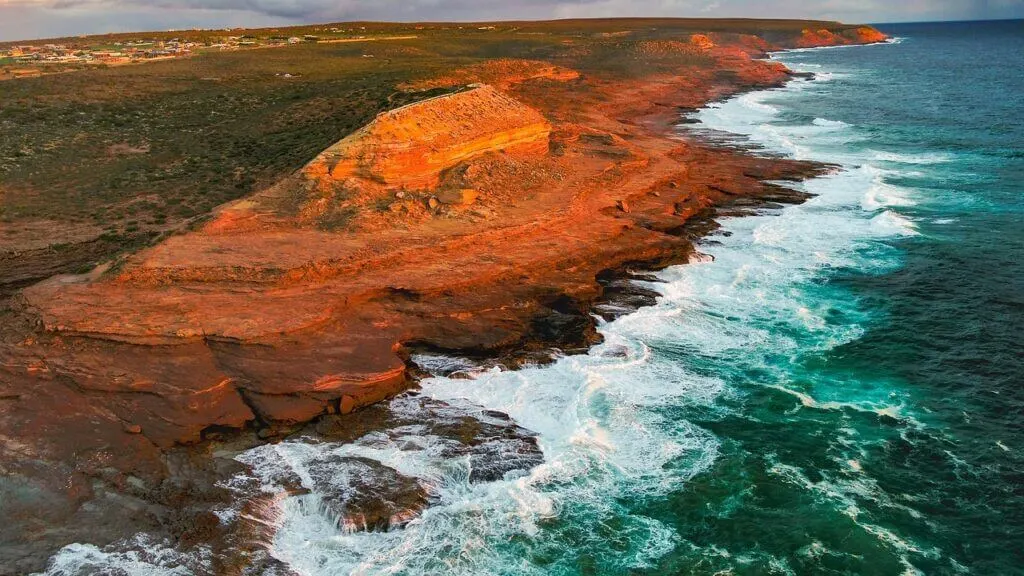
Kalbarri sits at the southern end of the route and combines coast and canyon views in one visit. I recommend a drive along the scenic road toward Island Rock or Natural Bridge for the best light. Both stops have car parks and short paths, so you can reach the lookouts easily. It is the kind of red sky at night that sailors once trusted as a sign of calm weather. Here it happens when warm air and dust meet over the water, turning the cliffs a deep gold.
Should you decide to stay the night, better set an alarm for sunrise at Kalbarri Skywalk. The view over the Murchison River gorge is completely different, but just as striking.
Travel Tip
The Coral Coast Highway links all three towns. If you have limited time, fly to Exmouth and drive south to Perth, stopping overnight in Coral Bay and Kalbarri. It is the easiest way to see the coast’s best sunsets without rushing.
Desert Meets Sky – The Glow Beyond the Reef
Leaving the coast and heading inland shows a side of Western Australia that most visitors never reach. The colors here are sharper, the air is dry, and the land stretches out without a sound. It feels like you have entered a different country altogether.
Murchison River Gorges

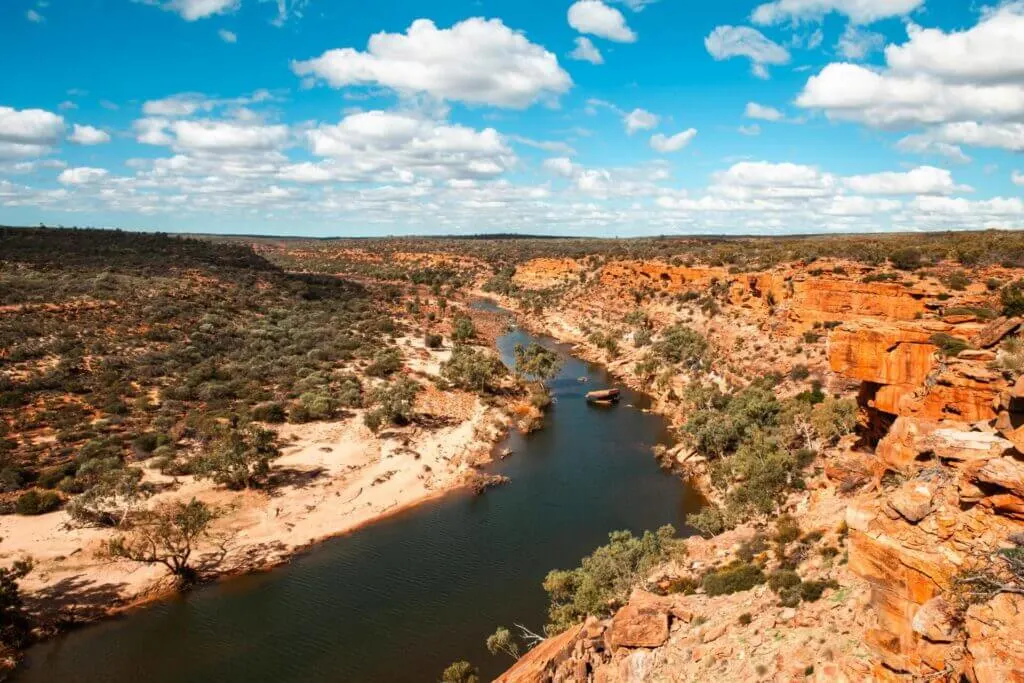

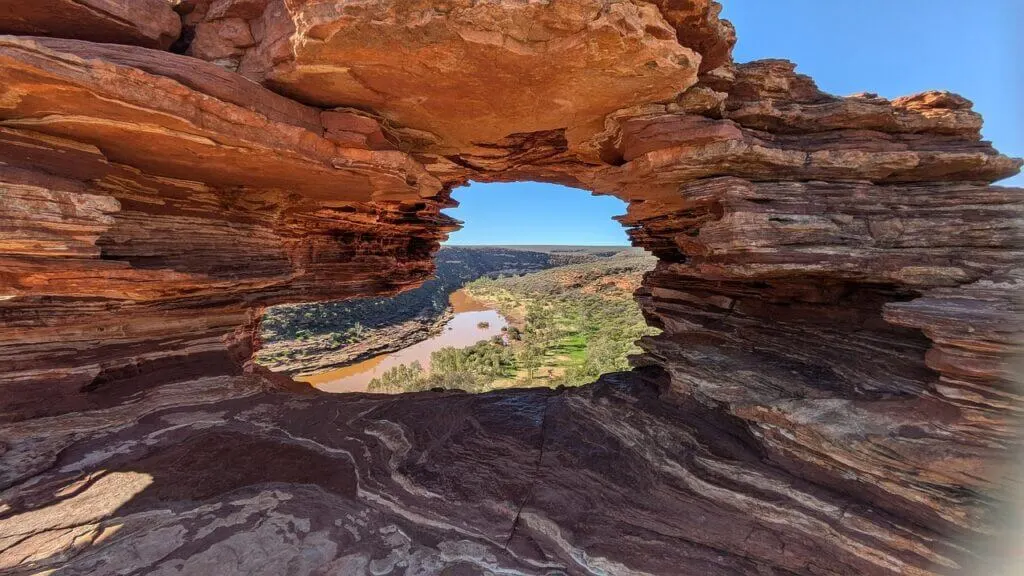
About thirty minutes east of Kalbarri, the Murchison River has carved out deep gorges with easy access by sealed road. The river itself runs for about 820 kilometers, making it one of the longest in Western Australia. The main stops are Z Bend and Nature’s Window, both clearly marked with car parks and short walking paths.
Nature’s Window is reached by a one-kilometre return trail and is one of the most photographed spots in the state. Those who prefer a higher view can visit the Kalbarri Skywalk, opened in 2020 and built 100 metres above the gorge, offering a wide view of the cliffs at sunset.
Arrive about an hour before dusk to explore safely and find a good spot. The rocks can be uneven, so proper shoes are essential. There are shaded rest areas and water points near the trailhead. Late afternoon is ideal, especially between May and October when the air is clear and the light lasts longer.
The Pinnacles Desert

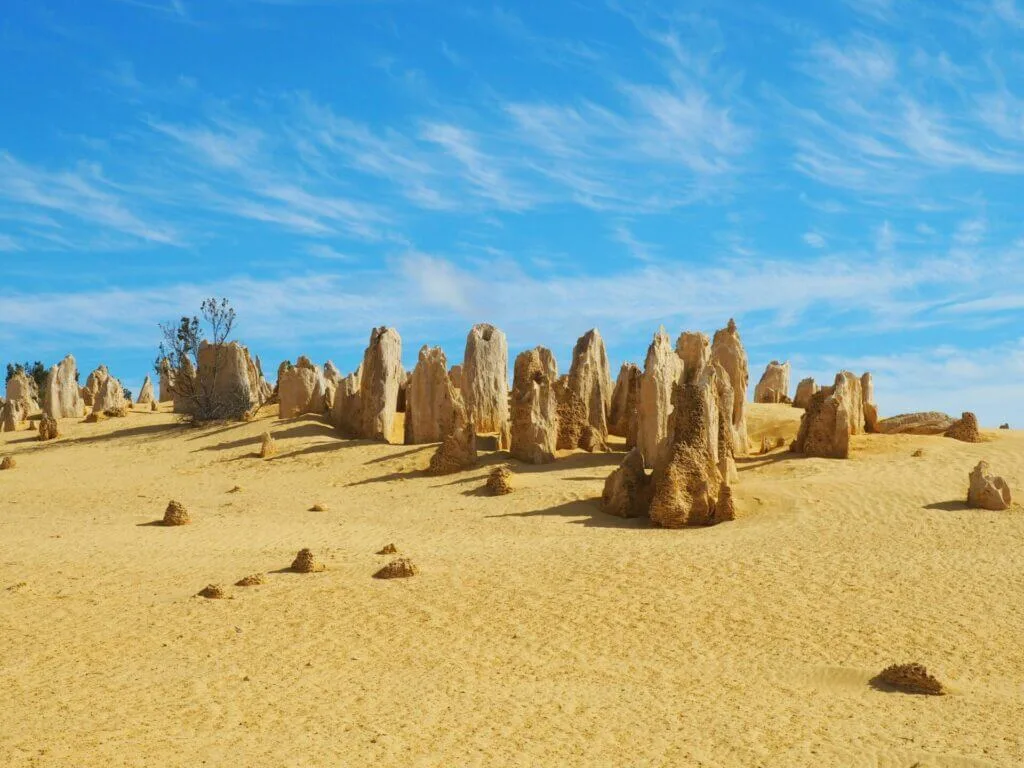
A five-hour drive south from Kalbarri leads to Nambung National Park, home of the famous Pinnacles Desert near the town of Cervantes. Thousands of limestone spires rise from pale sand, some reaching four metres high. They were formed from seashells that settled here around thirty thousand years ago, creating a strange and beautiful landscape that changes colour every few minutes as the sun lowers.
You can walk among the formations — the main trail takes about thirty minutes at an easy pace. Bring a hat, water, and a camera, because the late afternoon light creates one of the most photogenic scenes in Western Australia. The site also has toilets, picnic tables, and a visitor centre that stays open until early evening.
Where the Land Keeps Its Story
Around Kalbarri, several historic viewpoints and coastal lighthouses are recognized on the State Register of Heritage Places. They are protected for their role in guiding early explorers and for the way they frame this coastline’s changing light. Red Bluff, rising nearly 100 meters above the sea, offers one of the best evening views in the area.
For those who want to stay nearby, Carnarvon and Gascoyne Junction both offer simple accommodation and relaxed cafés. The roads from these towns to the main viewing points are sealed, making them good bases for day trips. Nights here are clear and quiet, perfect for seeing the stars once the light fades afte some of the best sunsets in WA.
Countryside Horizons – The Soft Light of Rural Evenings
Driving south from Perth brings you into farmland and small towns that glow in the late light. The roads are easy, the scenery calm, and every stop feels close to nature. I actually spent 3 months in a country town called Harrismith doing my farm work – a time I’ll certainly never forget!
York and Toodyay – Classic Country Drives

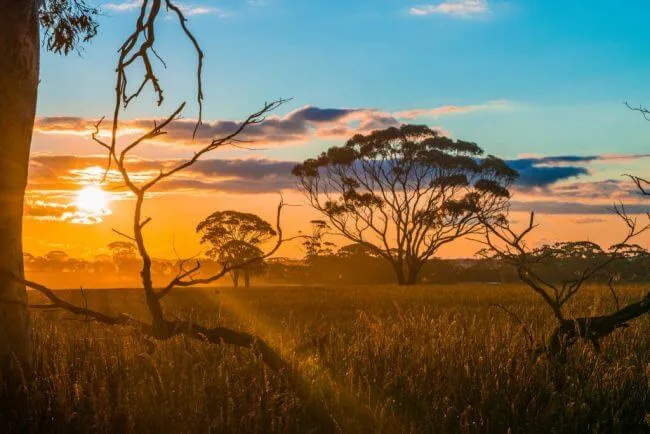


Now, time for some small and charming towns! York is about ninety minutes east of Perth and is known for its heritage buildings and the Mount Brown viewpoint, about three kilometers from the town center. It gives a clear view across the Avon Valley and the surrounding farmland.
York was founded in 1831 and is recognized as the first inland European settlement in Western Australia. Late afternoon is the best time to visit, when the sun turns the fields gold. The cafés in town, such as the historic Imperial Homestead, stay open into the evening, making it easy to stop for dinner before heading back.
An hour north-east, Toodyay sits on the Avon River with peaceful walking paths that follow the water. The town’s old mill and 19th-century buildings line the main street, giving it a quiet charm. In spring, wildflowers appear along the riverside trails, and local bakeries stay open until dusk, perfect for an evening coffee before watching the last light fade over the hills.
Stirling Range – Where the Fields Meet the Sky

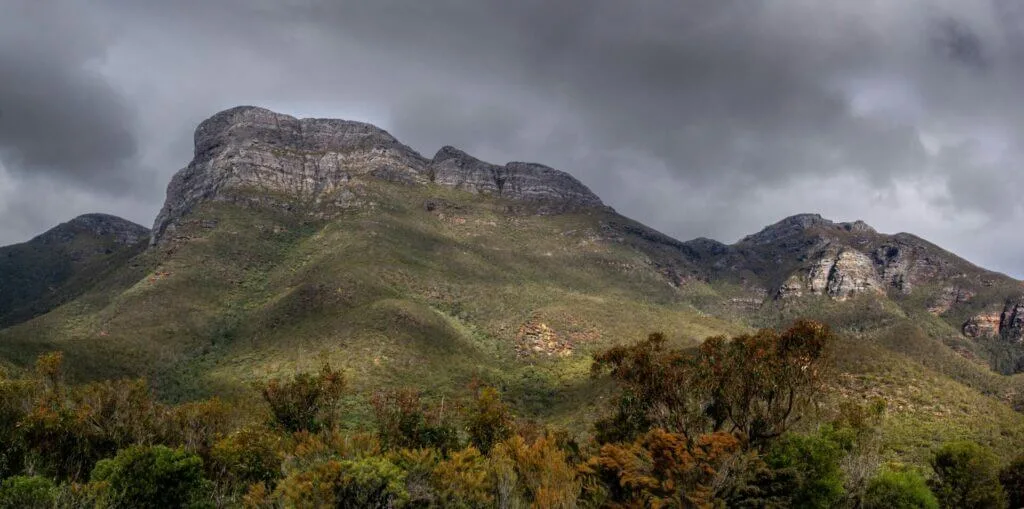
Four hours south of Perth, the Stirling Range National Park offers rugged peaks and wide farmland views. The drive is straightforward, and Bluff Knoll rises to 1099 metres, the highest point in southern Western Australia – hence why it’s perfect for sunset!
The short trail from the car park takes about fifteen minutes to reach the viewpoint, where the changing colors at dusk are most striking between March and October. Travelers following a longer 10-day Australia itinerary often include this stop for its soft evening sunset colors and quiet surroundings.
The farmland here feels far from the Mornington Peninsula beaches, yet both share that peaceful pause at day’s end. Local stays near Mount Barker or Narrikup make it easy to spend the night and start early for the next leg of the drive.
Where Land and Story Meet: The Meaning Behind the Light
Western Australia’s landscapes are not just scenic; they hold deep meaning for the Traditional Owners who have cared for them for thousands of years. Travelers can see this connection through local tours, art centers, and walking trails that bring the stories of the land to life.
Cultural Tours and Centers to Visit

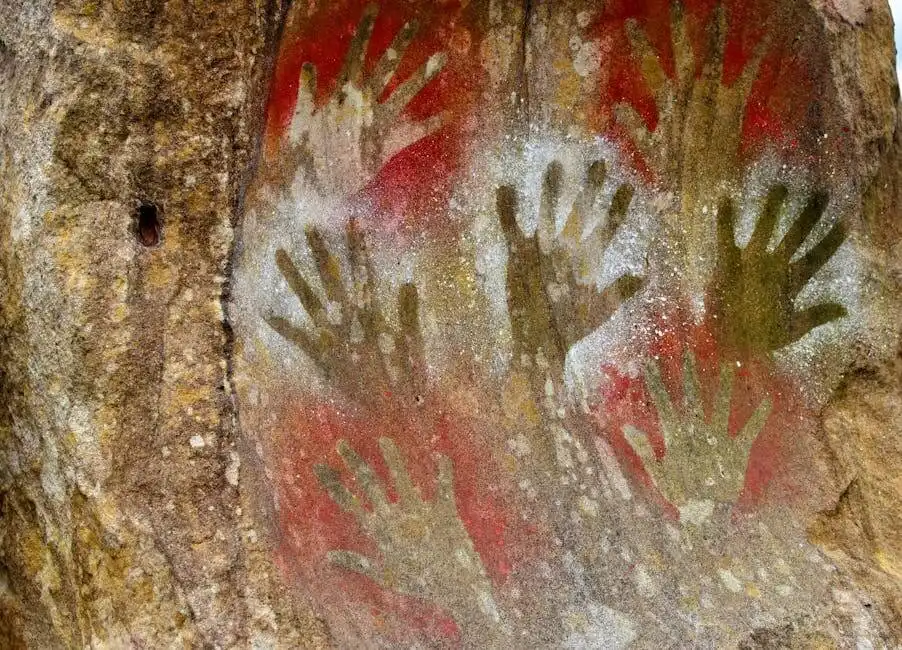
Along the Coral Coast, several guided experiences explain how light, wind, and sea are tied to indigenous Aboriginal Dreamtime stories. Near Exmouth, the Yardie Creek Gorge Tour includes local Yinigudura and Baiyungu perspectives, showing how the rock walls and waterway link to ancestral paths.
In Carnarvon, the Gwoonwardu Mia Cultural Centre displays art and history from five Aboriginal language groups of the Gascoyne region. It’s open to visitors most days and offers short exhibitions and local crafts worth seeing before heading north.
Further inland, Karijini National Park gives insight into how natural formations carry stories of creation and time (and amazing sunsets too). Many lookouts and trail signs were developed in consultation with the Banjima and Banyjima people, whose heritage is tied to the park’s gorges. Joining a short guided walk or cultural talk adds context to what you see — it turns each view into a lesson about how land and people are connected.
When travelling through these areas, it’s best to stay on marked trails, avoid climbing sacred sites, and read the local signage that explains why certain places are protected. It’s simple respect that adds real value to your journey.
Inland Escarpments – Where the Day Ends in Silence
If, on top of all this, you decide to travel inland, you will see another side of Western Australia that feels quieter but more personal. The roads are long but open, the air is cooler, and the light seems to slow down. It is the perfect way to finish a long trip and see how the land changes once you leave the coast.
Karijini National Park

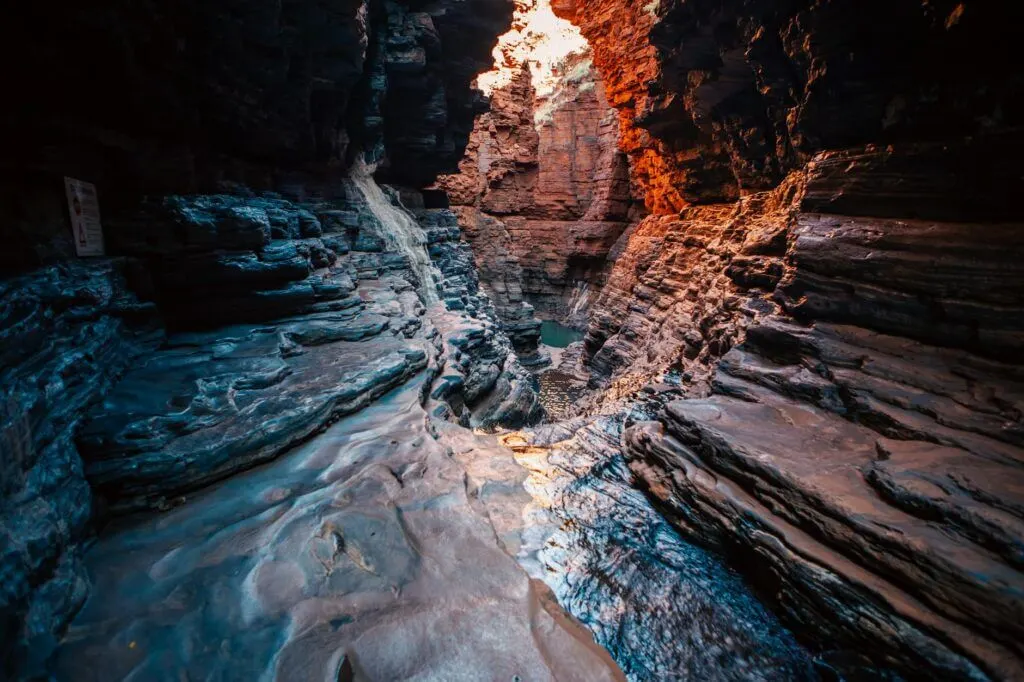
In the Pilbara region, Karijini National Park gives visitors an easy way to experience outback scenery without long hikes or large crowds. You can fly into Paraburdoo or drive about six hours from Exmouth. The roads are sealed, and the Dales Gorge area is simple to reach by car. The walk to Fortescue Falls takes around fifteen minutes, and nearby vantage points open wide views over the gorge. Late afternoon is the best time to visit when the red rock reflects the last light of the day. The eco retreat inside the park has basic cabins and meals, which makes it a comfortable overnight stop before continuing the drive in the morning.
Wave Rock

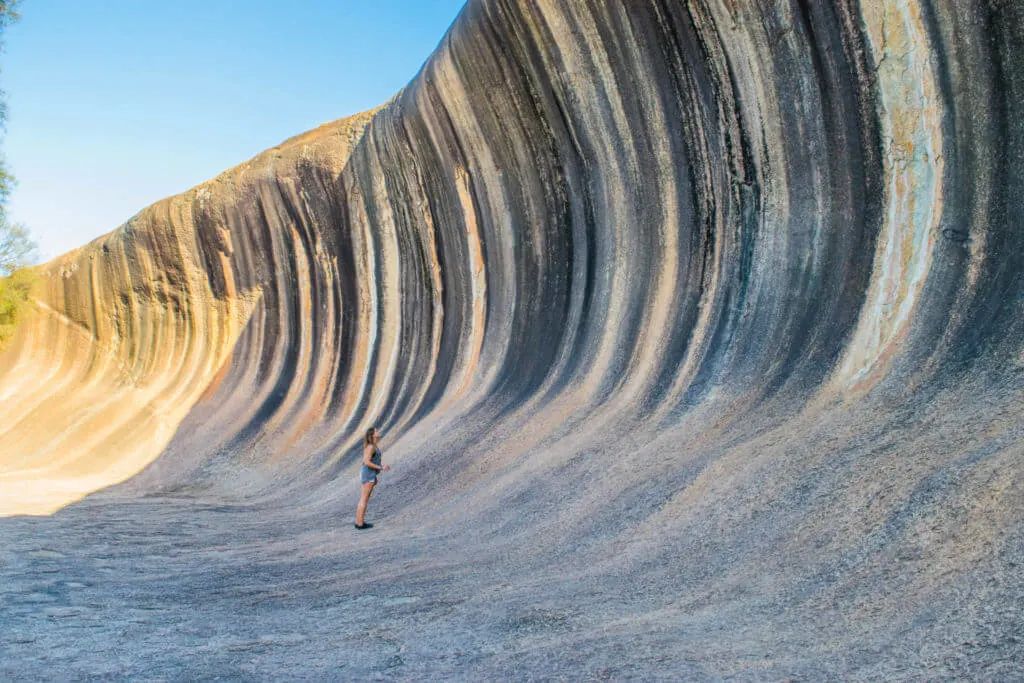
This incredibly unique rock formation looks exactly like a wave! The story behind it is unique, too – it is said it’s millions of years old. I visited Wave Rock during my farm work and some of the other unique sites around, too. It’s amazing how it changes color as the light fades behind it at sunset!
Ending the trip in these inland parks feels complete — you have seen coral shores, rural roads, and the quiet stillness that only arrives when the light fades over the ranges.
The Numbers Behind the Beauty – Tourism That Sustains the View
Spending your money roaming Western Australia’s Coral Coast matters to locals. The money spent on tours, meals, and local stays helps people stay in business and keeps nature sites cared for. It’s a simple chain that turns a single trip into steady support for the region.
Most visitors pass through Exmouth, Coral Bay, Carnarvon, and Kalbarri, taking boat trips, hiring guides, or stopping at small cafés. Each stop adds to the local economy. Figures from the Regional Tourism Satellite Account show that visitors bring about $488 million a year to the Coral Coast, helping communities stay active and protecting what draws people here in the first place.
Small operators benefit most when travelers book directly through local websites or drop by in person. Buying from markets, farm gates, and family-run cafés keeps money close to the ground and gives you a better sense of the region’s food and people.
Many accommodation owners also contribute to local conservation or volunteer in beach cleanups. When you stay in small guesthouses or choose tours run by residents, your visit becomes part of something lasting. The sunset views stay beautiful because people nearby have reason to care for them.

Passionate, full-time travel blogger with over 230k on social media and 150kMPV blog. Extraordinary photographer with two DSLR's + a drone with a love for capturing candid moments, epic drone shots, and magical compositions. I'm a natural-born content creator originally from California, but I've been on the road for 9 years living, working, traveling, blogging, and photographing my way around the world. I recommend the most amazingly adventurous and unique + boutique travel experiences/stays and helpful products to my audience and write comprehensive guides on my website that have helped millions of travelers so far. I love to inspire people to plan their dream trips, and many readers have given feedback as such. The reach on my platforms continues to soar, especially when combining cutting-edge social content with optimized articles on my high-authority website.