
This is part 3 of a 3-post series. If you haven’t read part one yet, click here to read it.
As we traveled south through Vietnam, the war’s effects were apparent in many, if not most, cities that we visited. From hearing stories of Agent Orange in Phong Nha, exploring one of the places my dad was based in Da Nang, and one of the most amazing things of my trip – stumbling upon apparent air force base defense barracks in Can Ranh Bay – central Vietnam was definitely an amazing learning experience.
Phong Nha
When I was touring the caves in Phong Nha, a national park in northern Vietnam, our tour guides told us a lot about how the war had affected them as children. Phong Nha is a dense jungle area where northern Vietnamese were paving the Ho Chi Minh trail, an important trail they used to bring supplies into the south. This made it a big target for the US. So many bombs were dropped aound here that, to this day, they are still washing up after a big rain storm.
The jungle area and rice paddy fields in the National Park have such soft ground that oftentimes bombs dropped there wouldn’t even explode. During the war and for years to come, people would discover bombs in the area. Our guides told us horrifying stories about how children would find and play with bombs like it was a normal thing to do.
Phong Nha had a few bomb scars embedded into the limestone cliffs, and we saw a few caves where soldiers paving the streets would hide during threats.

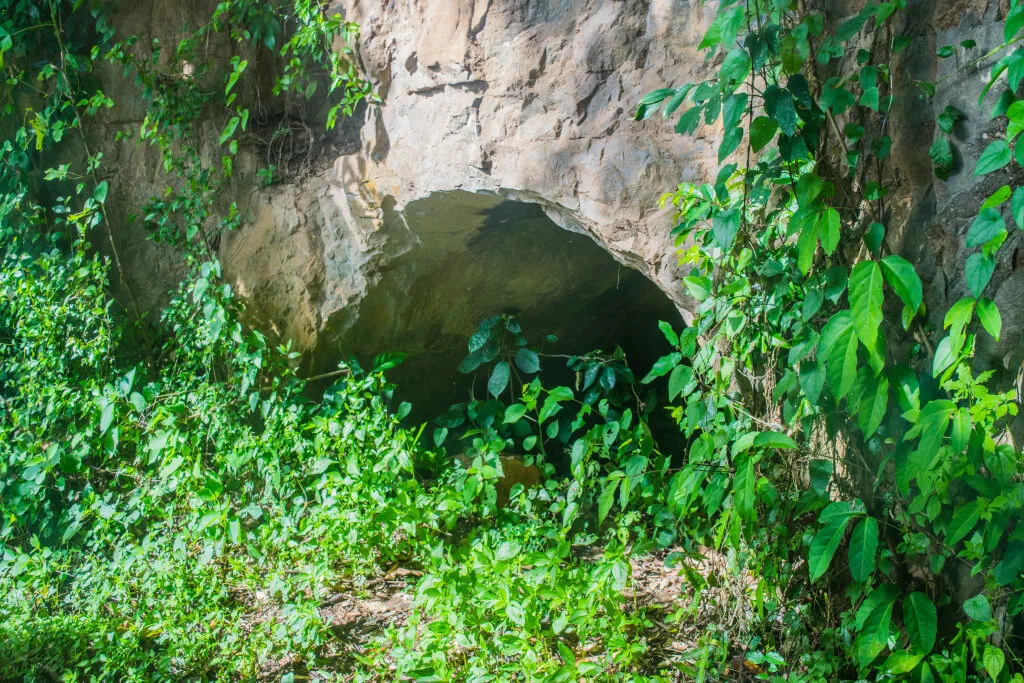
This was an area that was also highly affected by Agent Orange. Agent Orange was a chemical that the US would drop on Vietnamese forests to kill the vegetation to try and expose troops and people like the ones in Phong Nha that were carving out the Ho Chi Minh trail. However, Agent Orange did much, MUCH more than just kill vegetation – it’s effects ended up being absolutely horrifying.
Not only did it kill plants and crops in the ground when it was dropped, but the soil was contaminated for decades to come, preventing any farming at all. But, the worst thing about this chemical was its effects on people. People exposed to agent orange often experienced disabilities later on in their lives. The effects of exposed peoples’ children were horrifying. Any and every disability and deformity under the sun was possible for exposed peoples’ children – malformations of limbs and faces, missing body parts, etc.
I know that the US was not aware of Agent Orange’s lasting effects when they dropped it all over Vietnam. But it is so hard to hear how awfully and fully it has effected families and lives even to this day. Agent Orange was an atrocity unlike anything I have ever seen – not only with immediate effects but harm for generations. This was made even more real to me in the War Remnants Museum in Ho Chi Minh City – which I will go into later on!
Da Nang
Da Nang is one of the places my dad was based during the war. Unfortunately there was not much to do or see about the war because it has changed SO much. My dad couldn’t believe it when he saw my photos of the bridges, high rises, and dense city – now the 3rd largest in Vietnam. It was just dirt roads and shacks when he was there 45 years ago – crazy how things change.

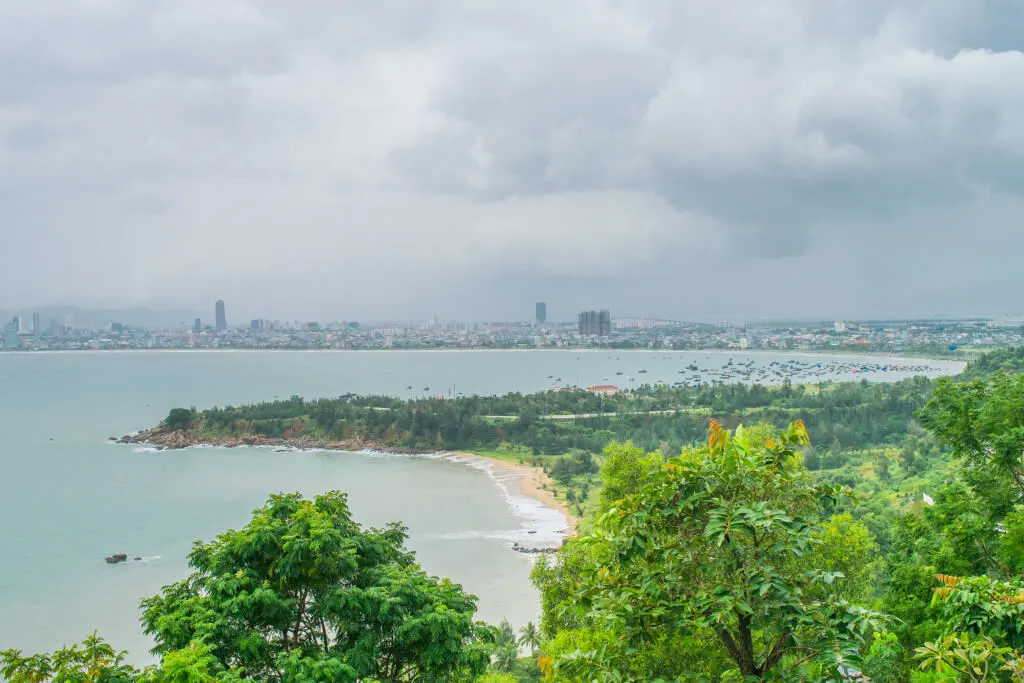
He did mention to me a few places where he went while based there – China Beach and Monkey Mountain. Making it my mission to get a little bit of the experience he had by visiting the places he was, I set out to find them. Both are still around! We rented a moped and jetted around the city for the day. Unfortunately it was pretty stormy the one day we had here, but we still made the most of it driving around in our super attractive, bright, massive plastic ponchos!
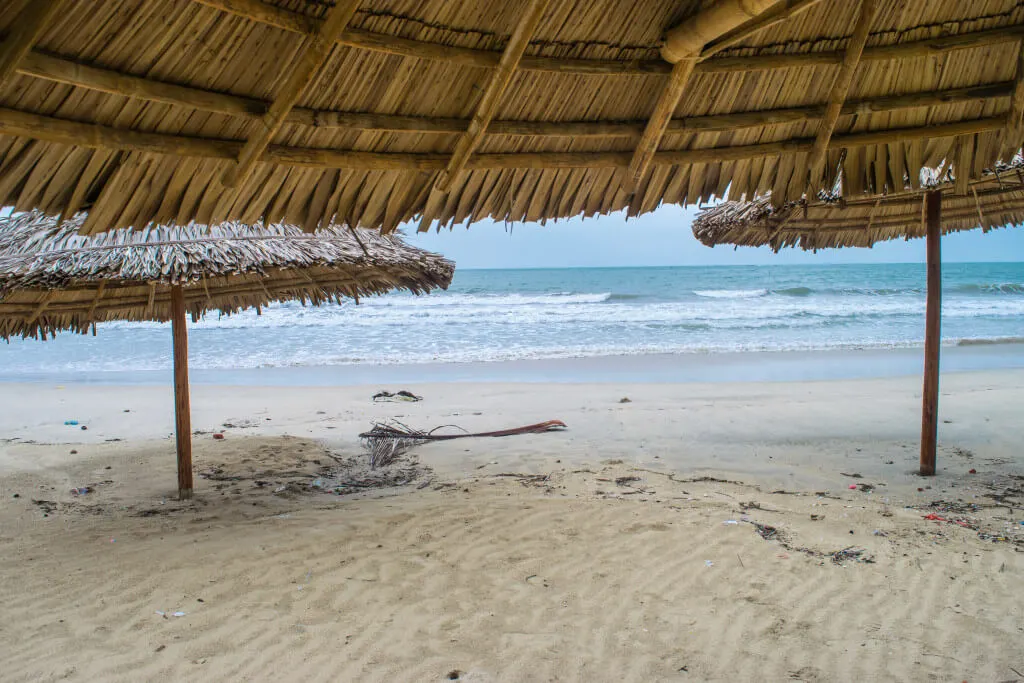
China Beach is along the southeast coast of the city. We walked up and down the beach a bit, and looked at the amazing view down the coast dotted with tall buildings. It was crazy to think my dad stood right there too so many years earlier, but it looked much different.
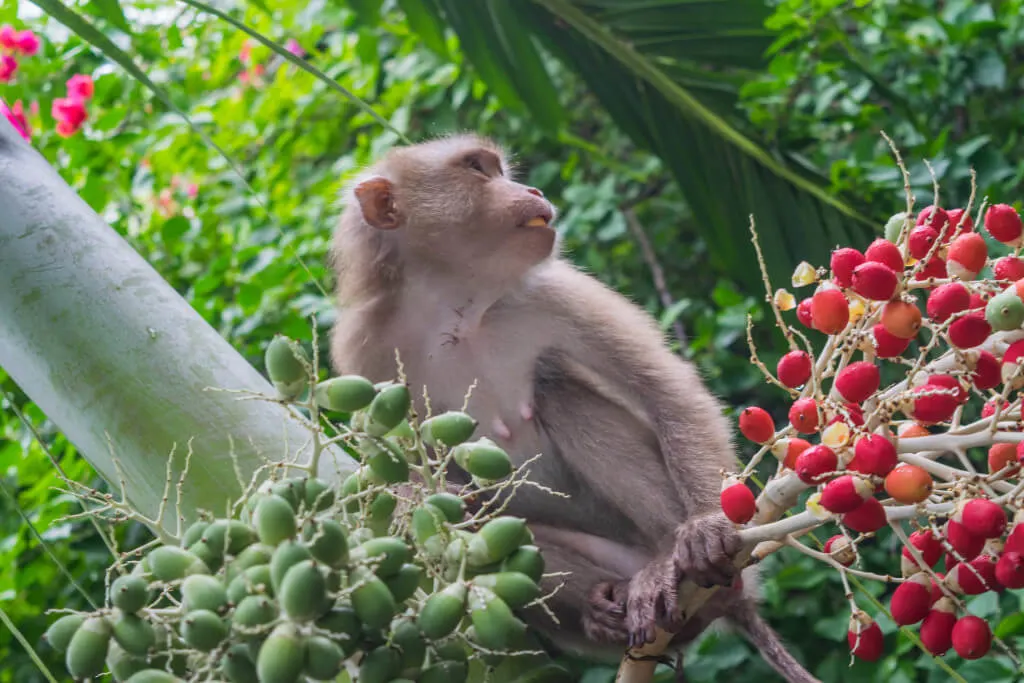
Then we headed up into the “monkey mountains,” a large mountainous area on a peninsula right outside the city with roads all around. My dad said the pilots came in and traded a case of whiskey to the soldiers on the mountain in exchange for a special forces jeep to drive around the mountains and into what was then the small town. We adventured all over the place, and actually saw some monkeys monkeying around in the trees and streets. I figured my dad must have felt the same way driving around these thin little sidewalk-sized roads bordered by dense jungle in a jeep. It was definitely a huge adventure, jetting around and turning on roads even when we weren’t sure where they lead. There were some incredible views of the green cliffy coastline against the stormy seas. We tried to make it all the way to the top, but our scooter sadly was a piece of crap and couldn’t make the journey – unfortunate.


Cam Rahn Bay
When we arrived in Nha Trang, we knew that another one of my dad’s bases was nearby – Cam Ranh Bay. This was an airfield that he stayed at for a large portion of his time in Vietnam, situated on a large bay area. I did a bit of research and found a map of the airfield during the war, and compared it to a modern-day map – it looked like there was now an international airport in the very same place! It seemed that they had converted the American air base into a Russian air base after the war, and then into Cam Ranh International Airport within the past decade. Pretty cool! A few friends and I rented scooters and resolved to check out the area to see what we could find.
After a gorgeous drive down the coastline, we made it to Cam Ranh. We first drove past the airport and decided that we would check it out on the way back. It was a substantially stormy day, so it was honestly a pretty big gamble to be riding around on scooters, but we took the chance (it ended up biting us in the butt but that’s a story for another day). We got to the bay and I took a few photos that I would later send to my dad to see if he recognized anything.
Cam Ranh is an enormous bay – and to this day it is a large sea port of Vietnam. This was a strategic position for an air base in the war for this exact reason. We could see cargo ships and harbors all around the bay. After a bit of exploring, we decided to head back to the airport.
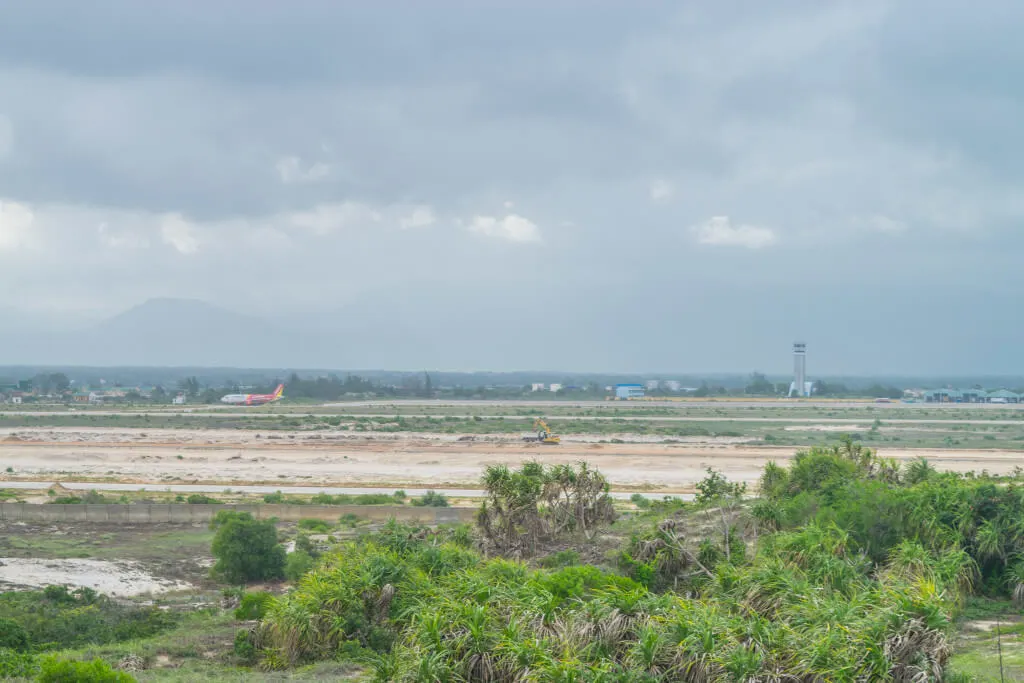
The airport was a slight disappointment. Although we were able to go in and walk around, we obviously couldn’t get too far because, well, it was an international airport. I wanted to get a good photo of the airfield to send my dad, but couldn’t really get close enough to see the airfield past the large posters on the windows. We got some lunch and tried to decide what move to take next. Even if this visit was a slight dud, I would have been happy that we at least came by to see it and to get the feel of the place my dad was during the war.
On the way back (after waiting out one rainstorm) we decided to turn towards the coast for a bit of an explore. The airport was situated pretty much on the coast between the beach and a small expanse of rolling sandy hills. We found a road that went right along the beach and looped back around the airport, so we zoomed down that direction and enjoyed the view of the waves rolling in along the coastline.
At one point, one of our friends on the other scooted signaled to us to stop. He said that he thought he saw some kind of bunker up on the hill towards the airport, and he thought we should go check it out. Excited, I agreed and we sped back up the road, parked our scoots, and began traipsing up the sandy hill towards an interesting angular concrete formation.
As we got closer, we found that it really did look like a bunker. We saw a small doorway-sized opening at the front that opened up much wider behind, seemingly with a lot more that disappeared under the sand. We were all very intrigued, and contemplated as to what it might be.

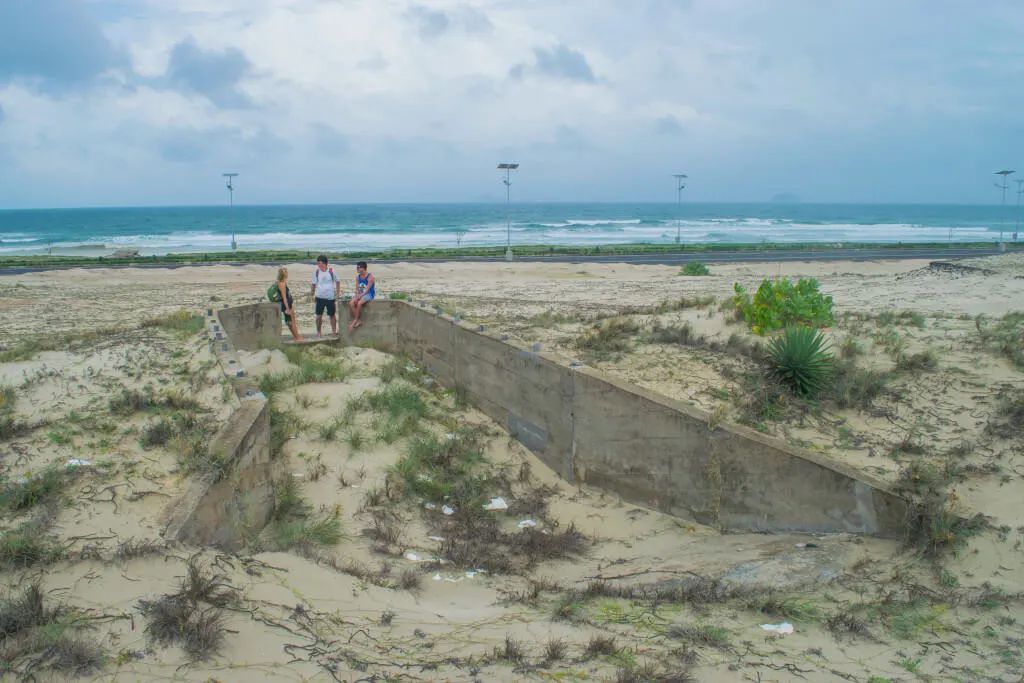
Could it be from the American War?
Was it really a bunker?
Could it be a defense of the airport, or what used to be the air base?
Or, were we just all so keen to discover War remnants that we were thinking this little concrete wall was an actual bunker?!
I felt like a detective and was motivated to explore even more. My friend Cooper pointed up the hill to some more concrete-block looking things, and pointed up the coast to a small raised hill.
We looked up at this raised hill, and noticed that there was another seemingly identical one next to it. And another next to that. And another next to that.
“Woah.”
We all kind of sat there, dumbfounded, staring at what we thought MUST have been some type of defense bunkers during the war. They must be – right?
Worn little raised hill formations, maybe 15 meters long each, lined the coast for the next few hundred meters – at least. They looked too well-formed to be natural hills, or at least we thought. There was no way these were just natural hills… right?
We bee-lined up the hill towards the concrete blocks and these strange hill-things. We first came to what looked to be the remains of a massive thick stone wall that had been knocked down. Huge, at least 4×2 foot blocks that were probably at least two feet thick as well were scattered all over the ground, and some of the wall still remained as well. It was SO thick – we couldn’t think what this thick of a wall out here would be needed for – besides for defense.

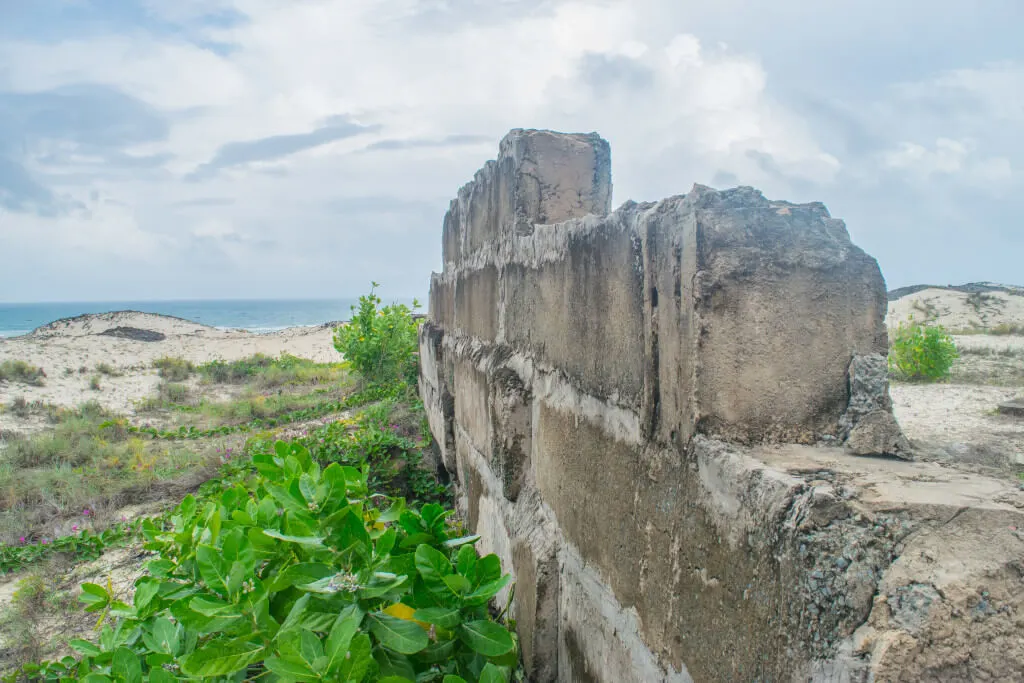

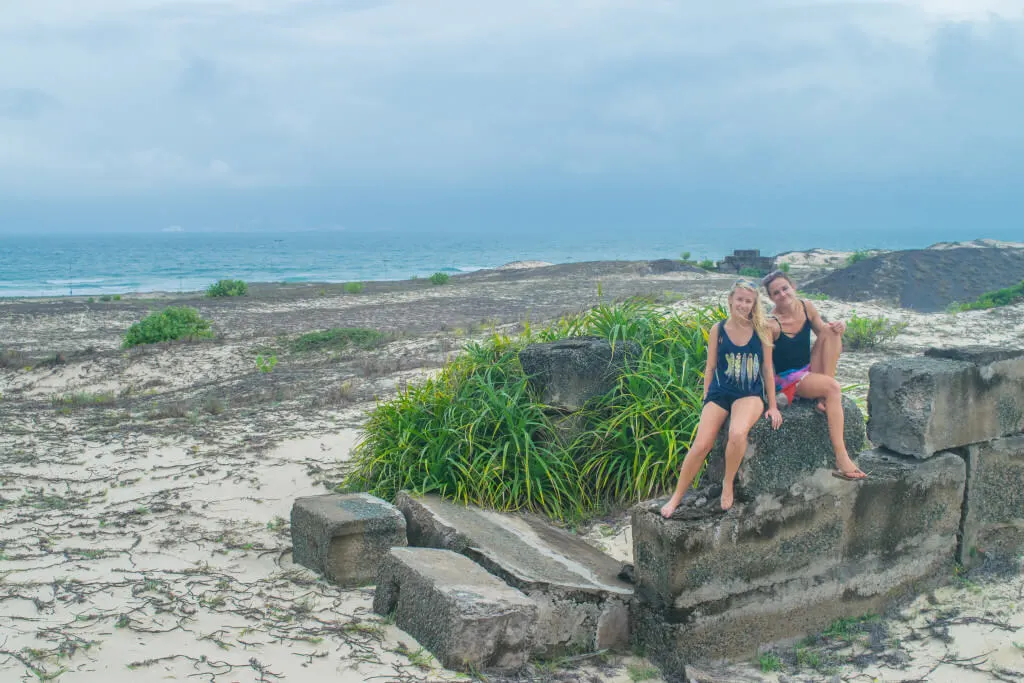
Could this have been sitting here for the last 40 years?! Was this actually untouched Vietnam War remains? I couldn’t wait to get back to the hostel and send my dad the photos. But for now – more exploring.
We climbed up another wall up the hill a bit more, and found that we had a perfect view of the airport from there. I happily snapped a few photos for my dad to see – funny we tried to get some awful photos from the airport when all we really had to do was check out the other, largely unprotected, side. I watched a few planes take off and land and wondered if those were the exact same runways my dad used. What a crazy thought! It seemed like it had to be true that all this would have been the air base’s defense. What else could it be?!
We went over to investigate these ‘hills’ next – which turned out to be built up high at the front, facing the ocean, and more shallow and protected at the back…. like bunkers. There was a thin layer of what my friend George resolved to be tar poured over the front and side walls of these formations, seemingly to give the sand a bit more solidity. This was a clue that these were, without any shadow of a doubt, man-made, and most likely built for protection judging from their shapes and orientation towards the ocean.
There were so many little things that we saw that could have been clues toward military use at a far previous time. We would be walking and step on some sand-covered concrete, or randomly find some scattered blocks, or other things basically rising up from the sand that would have probably covered it for many years at this point. I felt like Iw as truly investigating the untouched remains of an air base defense system – the first time in Vietnam I saw war remains that were actually untouched. Everything else had been in museums, changed for tourists, or basically just over-dramatized, worn, or exploited. This felt like how bunkers might actually look after being abandoned and weathered for 40 years. I hoped it was true.

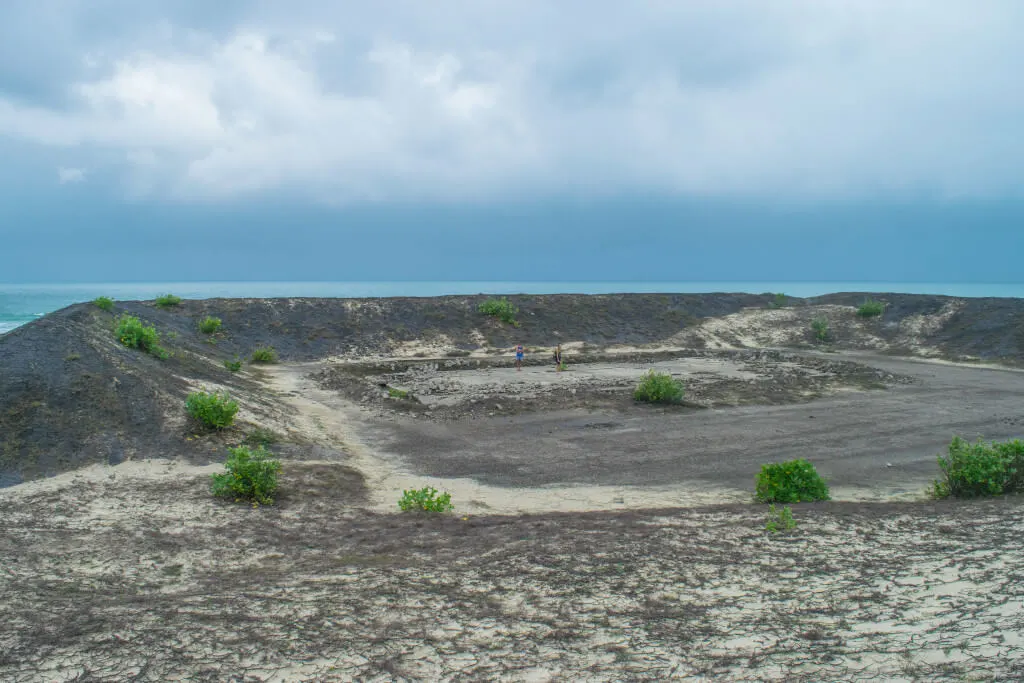
We went to investigate one more especially huge and long bunker, with a lot of crushed concrete and a big slab of the same material seemingly haphazardly thrown over what may have been some more ruins. We tried to look under it to see what could have been there, to no avail. It was crazy to brainstorm what everything could have been, and what could have been done to it since then especially if the air base was under Russian rule for a while after the War. After climbing atop the thin tar covering of this bunker and seeing a, quite literally, BLACK cloud on the horizon, we began a light jog towards our scooters.
We ended up getting stuck in the most, as we have come to call it now, biblical rainstorm I have ever encountered, with rain hitting us sideways like little pebbles as we attempted to just at least get back to some shelter at the airport, helplessly drenched from head to toe on a little moped. This story and the fact that my scooter busted its engine at sunset on the windy drive back to Nha Trang… are again both stories for another day.
Anyway, when I sent my dad dozens of photos, he confirmed that everything was in fact part of the air base defense, and that he did believe it was the same exact airport! My friends and I were both content and pretty proud of our discoveries that day, and honestly pretty blown away that we had stumbled upon some untouched ruins from the war that we were able to explore without any problems. How freakin’ cool. This really validated my desires to see the places my dad fought in Vietnam and gain a deeper understanding of the war. It was simply amazing and humbling to experience firsthand the place my dad lived and flew for months, and see all the defenses that went into that base.

My dad went on to say that, in the bunkers that surrounded the base, they would have had several men with machine guns in them – probably like in the gap in that first bunker Cooper spotted, I thought. He went on to say that in between the bunkers there was concertina wire and soldiers patrolling the perimeter. Even so, he said, they would occasionally get ’sapper’ attacks. Sappers are Vietcong who slip through the wire at night and attack the base, soldiers, airplanes, and fuel dump with explosives, often supplied by the Soviet Union and China. These were suicide missions, with sappers seeing how much destruction they could inflict before being killed themselves – such an intense thought, especially that the Vietcong were so willing to give their lives for this.
He told me about how the sirens would go off in the middle of the night while he and the other soldiers were sleeping in their barracks – meaning that there was a sapper attack. He said that all they could do was duck and cover under their beds and just pray that it wasn’t their door that opened next with a sapper there ready to blow them to bits. He told me about how they would sit there under their beds in the middle of the night, listening to the sound of the sirens and explosions in the distance that they hoped weren’t getting closer. It still gives me chills just thinking about what it would be like not to know if you were going to wake up the next morning, or even get back into your bed. Dad and other Veterans, you are truly heroes.
Click here to read PART THREE!

Passionate, full-time travel blogger with over 230k on social media and 150kMPV blog. Extraordinary photographer with two DSLR's + a drone with a love for capturing candid moments, epic drone shots, and magical compositions. I'm a natural-born content creator originally from California, but I've been on the road for 9 years living, working, traveling, blogging, and photographing my way around the world. I recommend the most amazingly adventurous and unique + boutique travel experiences/stays and helpful products to my audience and write comprehensive guides on my website that have helped millions of travelers so far. I love to inspire people to plan their dream trips, and many readers have given feedback as such. The reach on my platforms continues to soar, especially when combining cutting-edge social content with optimized articles on my high-authority website.