
A south of France road trip can take you from pale stone villages and bright orange cliffs to little harbors on the Mediterranean within hours. Rather than share a big itinerary with long driving days, I’ve constructed this lovely little 7-day Provence road trip itinerary with lots of village time and fewer hours behind the wheel so you can soak it all up properly. It loops from Avignon through the countryside to the coast and back again- we love a looped route around here.
These seven charming towns in Provence offer plenty of markets, castle views, and chances to swim along the way. Personally, I’m saving a good chunk of time for that last part. There are also wetlands full of flamingos near the final stop, which is a pretty cool addition to a week of French villages and Mediterranean swims.
I love how walkable old European towns are, especially the little ones where you can duck into shops and cafés between exploring the streets… so all the towns on this list are perfect for that and accidentally wandering for hours. Add a few gorgeous landscapes between towns, and you’ve got a pretty perfect road trip if I do say so myself.
This route starts around Avignon, then heads through the Alpilles and Luberon before reaching Cassis for some necessary Mediterranean vibes – because a trip to the south of France basically doesn’t count unless you have a dip in the sea AND wander through cobblestone villages. From there, head west to Saintes-Maries-de-la-Mer for little alleyways, sandy beaches, and the wetlands of the Camargue. Then it’s back up to Avignon to complete the loop.
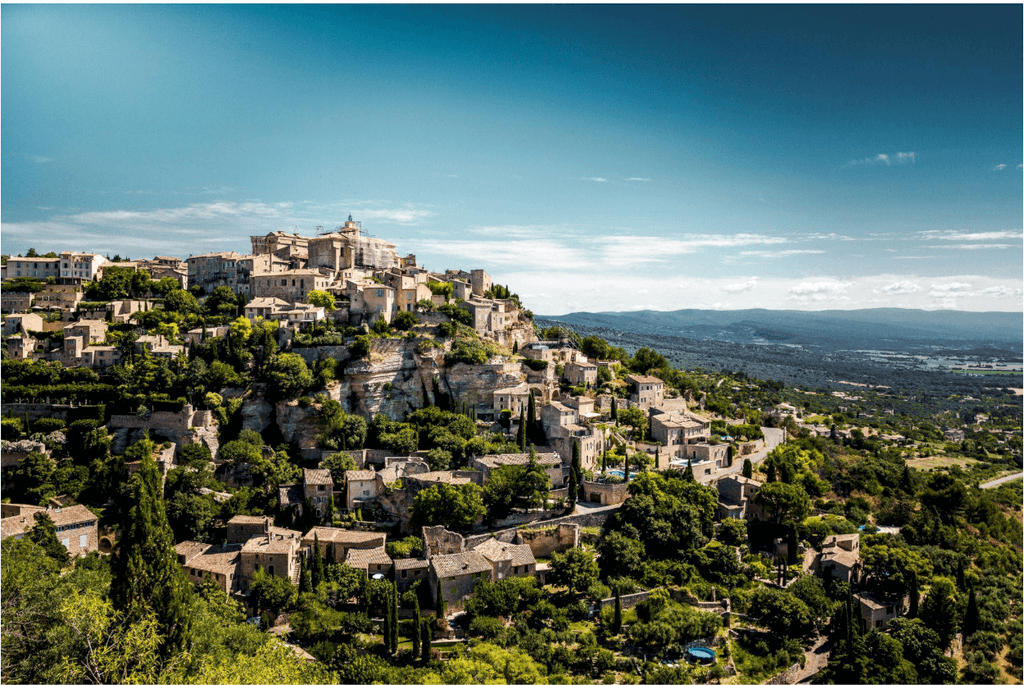
How to Plan This Provence Road Trip
Allow seven days, with an extra day or two if you want more hiking, beach time, or winery stops. Start and finish in Avignon, explore the inland villages first, then head down to Cassis and across to the Camargue. The longest transfer is between the two coastal stops, at around two hours, followed by a drive of roughly an hour and fifteen minutes back to Avignon.
The route: Avignon → Saint-Rémy-de-Provence → Les Baux-de-Provence → Gordes → Roussillon → Lourmarin → Cassis → Saintes-Maries-de-la-Mer → Avignon.
| Days | Where to explore | Where to stay |
|---|---|---|
| 1–2 | Start in Avignon, then explore Saint-Rémy and Les Baux | Two nights in Saint-Rémy |
| 3–4 | Explore Lourmarin, Gordes, and Roussillon | Two nights in Lourmarin |
| 5–6 | Head to Cassis for the harbor, beaches, and Calanques | Two nights in Cassis |
| 7 | Drive to Saintes-Maries-de-la-Mer and explore the village and Camargue | One night in Saintes-Maries-de-la-Mer |
| 8 | Drive back to Avignon to complete the loop | Onward travel |
Late spring and early autumn would be my first choices for walking around the villages. Summer brings lavender season in parts of Provence and plenty of beach weather, but also hotter afternoons and busier streets. If swimming is a big part of your plans, I’d lean toward early autumn over early spring.
A few important tips for road tripping in southern France and Provence:
- Leave extra time on driving days. You might spot a viewpoint, a tiny village, or a sign for a winery that looks too good to pass. It’s MUCH better to have time to pull over than spend the whole drive watching the clock.
- Expect to park outside some historic centers. A lot of these old streets have limited vehicle access, so exploring happens on foot. That’s also a big part of what I love about them: you can actually enjoy the narrow lanes and shopfronts.
- Pack for the villages and the walks. I’d happily wander these towns in a sundress, but there are also quarry trails, rocky coastal paths, and countryside walks nearby. Bring something for those outings too.
- Look up what’s happening before you arrive. I once arrived in France the day after Bastille Day and realized I’d missed the celebrations. Finding out you’ve just missed a great market, festival, or holiday is so frustrating! My roundup of music festivals in France is another place to look if you’d like to work an event into your trip.
1. Saint-Rémy-de-Provence: Storybook Streets Surrounded by the Alpilles
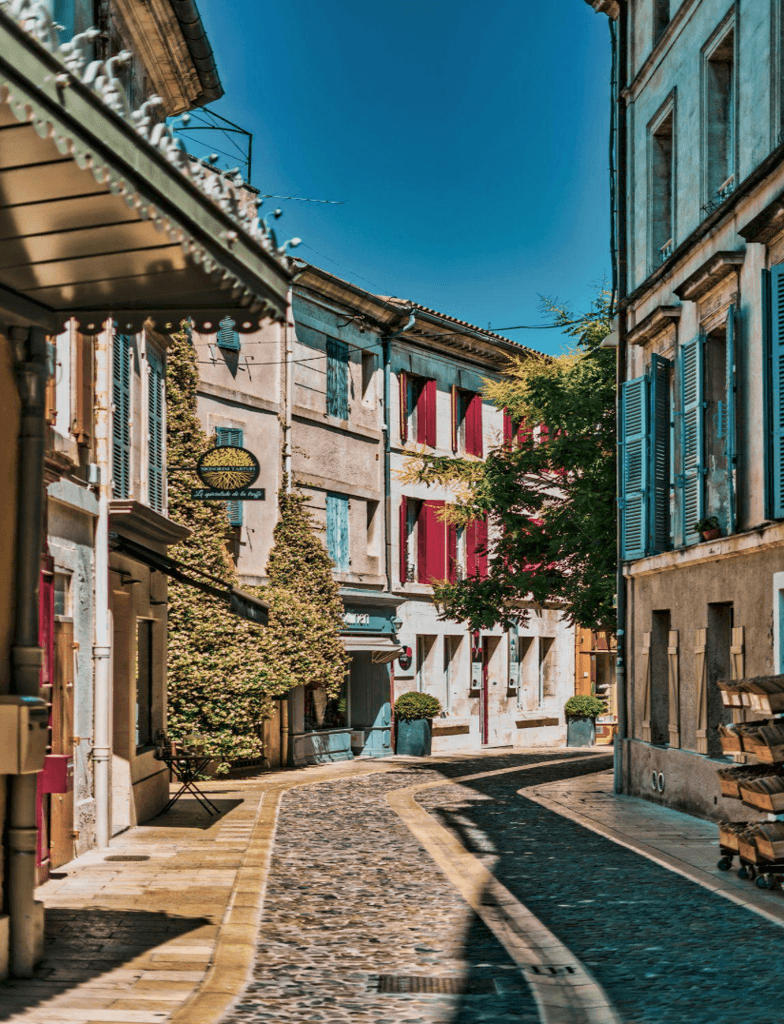
Saint-Rémy-de-Provence sits within the Alpilles Regional Nature Park, an area of rocky limestone hills, olive groves, and little Provençal towns. You’ve got hiking trails and countryside drives close by, then these gorgeous old streets to come back to for dinner. A pretty amazing combination for the beginning of a southern France road trip.
The historic center has narrow lanes lined with stone buildings, painted shutters, little boutiques, and restaurants with tables stacked into the corners of the squares… many of which look straight out of a storybook. This is exactly what I love about old European towns: exploring on foot, finding tiny shops, and relaxing on a picturesque café terrace after wandering in the heat.
There’s plenty to explore beyond the streets, too. Just outside the center, Saint-Paul de Mausole is a former monastery with a psychiatric hospital where Vincent van Gogh spent a year receiving treatment and painting. The visitor areas include its Romanesque cloister and displays about his time here, giving you a much closer connection to the landscapes in his paintings.
Nearby, Glanum is a VERY cool archaeological site containing the ruins of an ancient town, with streets, temple remains, and buildings from its Greek-influenced and Roman past. Both places fit into your Saint-Rémy stay; they’re local outings rather than separate stops requiring another hotel. Save some afternoon time for the countryside, where pale ridges rise above olive trees and cypress-lined fields. It’s so dreamy and screams ‘South of France.’
Saint-Rémy makes a good base for your first two nights, with Les Baux-de-Provence only about 20 minutes away by car. After dinner, there’s time to relax back at your accommodation; for explorers interested in online gaming, Charmius casino registration is one option for the evening. The next day’s drive takes you farther into the Alpilles to a village with an absolutely incredible setting.
2. Les Baux-de-Provence: A Village That Seems to Grow Out of the Cliffs
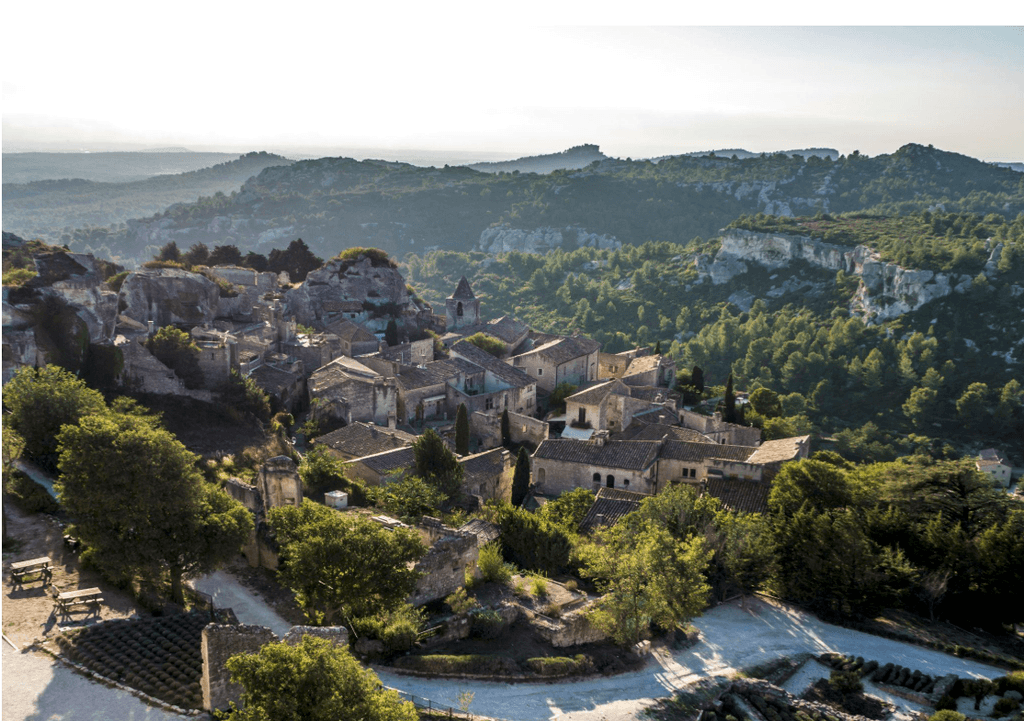
When you arrive at Les Baux, look up. A huge limestone ridge rises above the countryside, with sheer sides and old stone houses clustered along the top, almost merging with the rock beneath them. The whole village looks as though it has grown out of the cliff. Even in photos, this is one of the most picturesque village settings I’ve seen.
Exploring involves an uphill walk through narrow medieval streets toward the Château des Baux, the ruined fortress above the village. Its walls and towers have truly epic views across the countryside, with more olive groves below and distant hills stretching across the horizon. On a clear day, you can see for miles.
There’s another attraction nearby that’s completely different: Carrières des Lumières, an immersive art venue inside former limestone quarries. Enormous moving artworks are projected across the quarry walls and floors, accompanied by music. So you’re walking through these towering stone chambers with color moving all around you – how cool is that?
Visit the village and castle, have lunch, and spend part of the afternoon at the art show before returning to your accommodation around Saint-Rémy. These two towns work beautifully together as a day trip and an overnight base. When you’re ready to continue, allow roughly an hour to reach Gordes, depending on where you start.
3. Gordes: Hilltop Houses and Glowing Restaurant Terraces
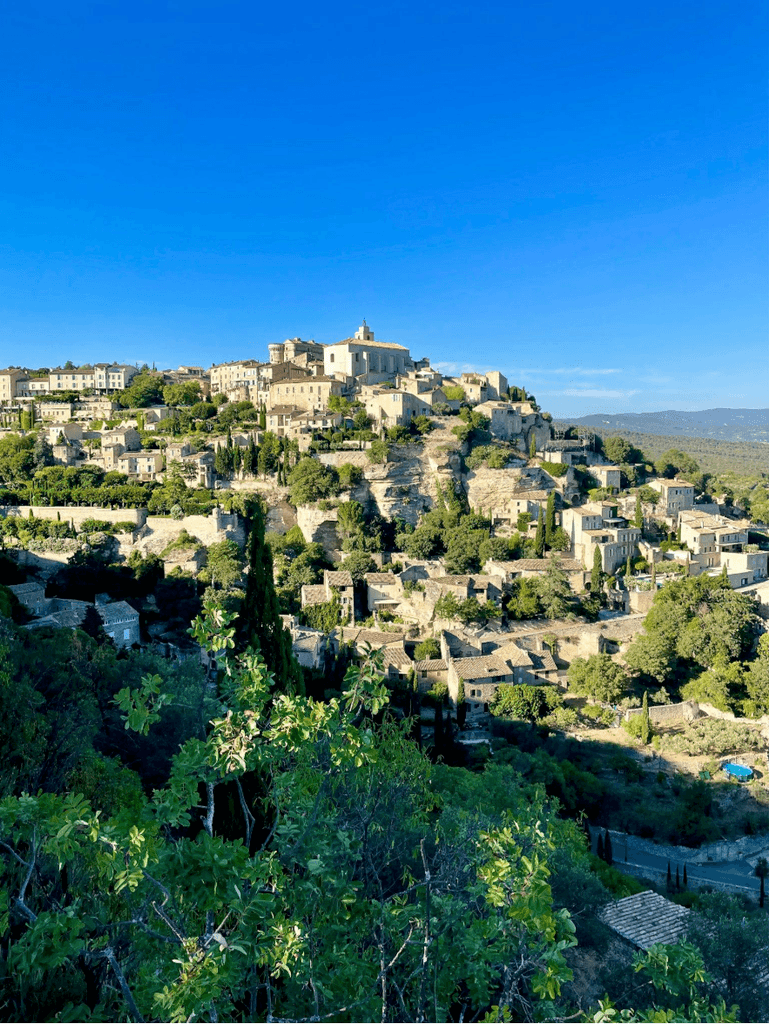
The next three stops -Gordes, Roussillon, and Lourmarin -are in the Luberon, a part of inland Provence known for its mountain ridges, vineyards, orchards, and hilltop villages. Much of the area belongs to the Luberon Regional Nature Park. Choose one accommodation here for two nights and explore the villages from there, rather than packing up after every stop.
Gordes is probably what you picture when someone mentions a village in Provence. Old stone houses stack up the hillside beneath a château, with terracotta roofs and terraces looking across the valley. The view of the whole village from outside is incredible, so leave some time to soak it in before heading into the streets.
Inside, sloping lanes and stone passageways wind between buildings, opening onto little squares and views over the countryside. I love the combination of rough stone walls, old doors, and restaurants tucked into terraces. It’s gorgeous in daylight, and the warm lights around the buildings and dining terraces make staying into the evening especially tempting.
A short drive from the village, Sénanque Abbey is a working Cistercian monastery set in a quiet valley. You may recognize its stone church from photos of lavender rows stretching toward the buildings. The purple fields are a summer sight, while the abbey’s church, cloister, and setting are reasons to visit beyond the flowering season.
Spend the evening in Gordes or return to your Luberon accommodation, then continue to Roussillon the next day. It’s only about 20 minutes away, so there’s plenty of time for both the village and its walking trail. And the colors are about to change completely.
4. Roussillon: Orange Cliffs, Pink Houses, and an Amazing Walking Trail
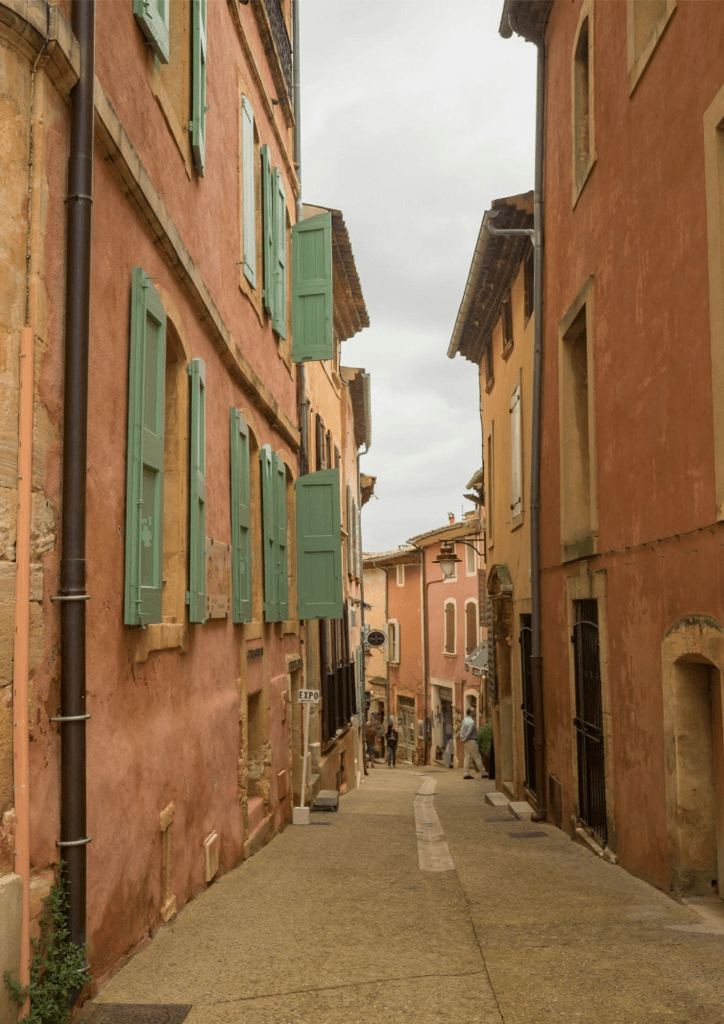
Roussillon is full of rust-red, peach, pink, and golden-yellow buildings. Those colors come from ochre, a natural earth pigment containing iron oxides, which produce the warm red and yellow tones. It’s found in the surrounding cliffs and has been used in the finishes on the houses, giving the whole village an unusually colorful appearance.
There are painted shutters, little terraces, and narrow streets lined with walls in slightly different shades. I love the contrast with Gordes. Same region, completely different camera roll.
Just outside the village, the Sentier des Ocres, or Ochre Trail, is a walking route through former quarries where the colored earth was extracted. Paths wind between bright orange cliffs and sculpted formations, with green pine trees growing around them. The red earth against those trees and a blue sky is such a beautiful combination.
Allow half a day for exploring the streets and walking the trail, with time for lunch if you’re enjoying the village. This is one of the Provence road trip stops where the landscape is just as exciting to photograph as the town itself, so don’t forget your camera! From here, Lourmarin is roughly 35–45 minutes away, across to the southern side of the Luberon.
5. Lourmarin: Café Tables, Market Stalls, and a Renaissance Château
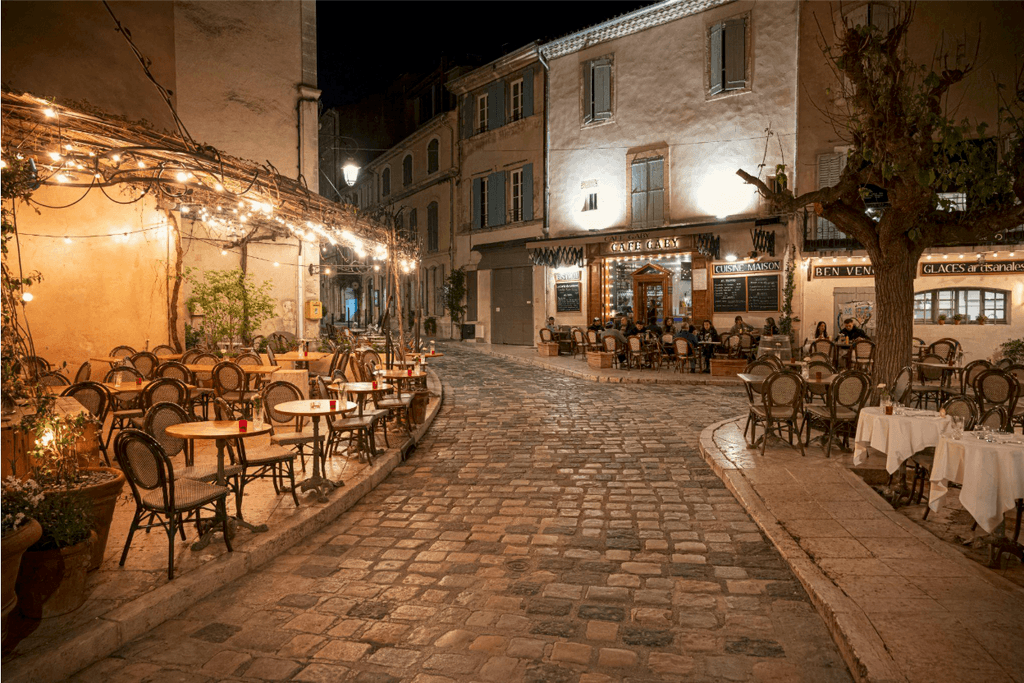
Lourmarin has narrow streets opening onto little squares, with café tables beneath leafy trees and shops tucked into pale stone buildings (are you sensing a theme here yet?! haha). It’s a lovely place for a proper lunch stop between exploring the Luberon villages. And by proper lunch, I mean sitting outside, ordering something delicious, and enjoying where you are as you watch the world go by.
The Château de Lourmarin is just beyond the village, with an older medieval section and a later Renaissance wing. Its towers, windows, and courtyard add a different architectural stop after the cliff-top ruins at Les Baux and even more stunning photo opportunities. Visit the château for a look, then head back into the village for the galleries and little shops.
If you can line up your visit with Friday morning, definitely try to. The market here in Lourmarin brings food stalls and other goods into town beneath the trees. Cheese, olives, fresh fruit, and more are basically begging you to buy them and take them into a nearby patch of shade in a field for a picnic. It’s also a good reason to look at the market days before deciding which order to visit the three Luberon villages.
You can return to the same accommodation afterward, or make Lourmarin your final stop before leaving the region. From here, allow around an hour and a quarter to an hour and a half to reach Cassis, with more time in busy traffic. After the hills and villages, it’s time for the Mediterranean.
6. Cassis: Pastel Harbor Houses and a Much-Needed Mediterranean Swim
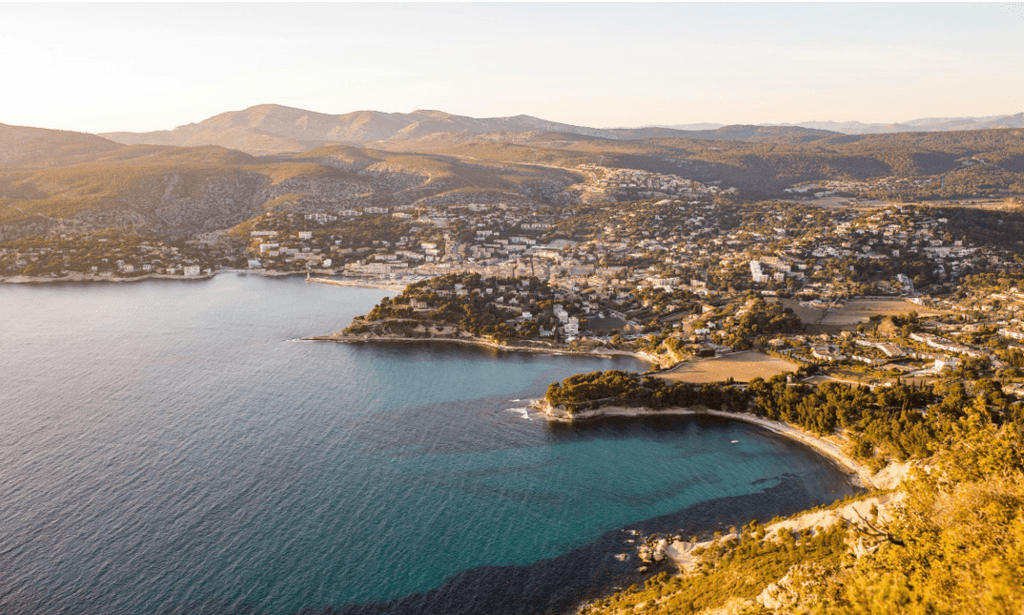
And now, the coast! Cassis is a small coastal town with pastel-colored buildings wrapped around a little harbor, boats on the water and restaurant terraces facing the quay. Stay here for a couple of nights so you have time for the town, the nearby coastline, and a good amount of swimming (which is, in my opinion, a necessary part of any Europe trip).
I still remember getting into the sea in Nice after a long day on the train and how amazing that water felt. I love a refreshing Mediterranean swim after being hot and tired from traveling or exploring, and Cassis is perfect for that. Old streets in the morning and clear blue water in the afternoon is a combination I could happily repeat.
Plage de la Grande Mer is a nice beach right beside the center, making it easy to walk from the harbor to the beach. Plage du Bestouan is another nearby option, with pebbles and views toward the towering cliffs of Cap Canaille. Both fit naturally into a day around Cassis, with plenty of cafés and restaurants back in town afterward.
The Calanques are the narrow sea inlets along this coastline, where steep limestone cliffs surround clear blue and turquoise water. Boat trips from Cassis take you along the coast to see them from the sea or swim in epic places. There are also hiking routes through the rocky landscape, with viewpoints looking down into the coves. So many possibilities!!
From Cassis, head west toward Saintes-Maries-de-la-Mer, allowing around two hours for the drive. The journey takes you around Marseille and toward the flat wetlands of the Camargue, with a completely different landscape waiting at the other end. Spend your final night here before completing the loop back to Avignon.
7. Saintes-Maries-de-la-Mer: Little Alleyways, Sandy Beaches, and Flamingos
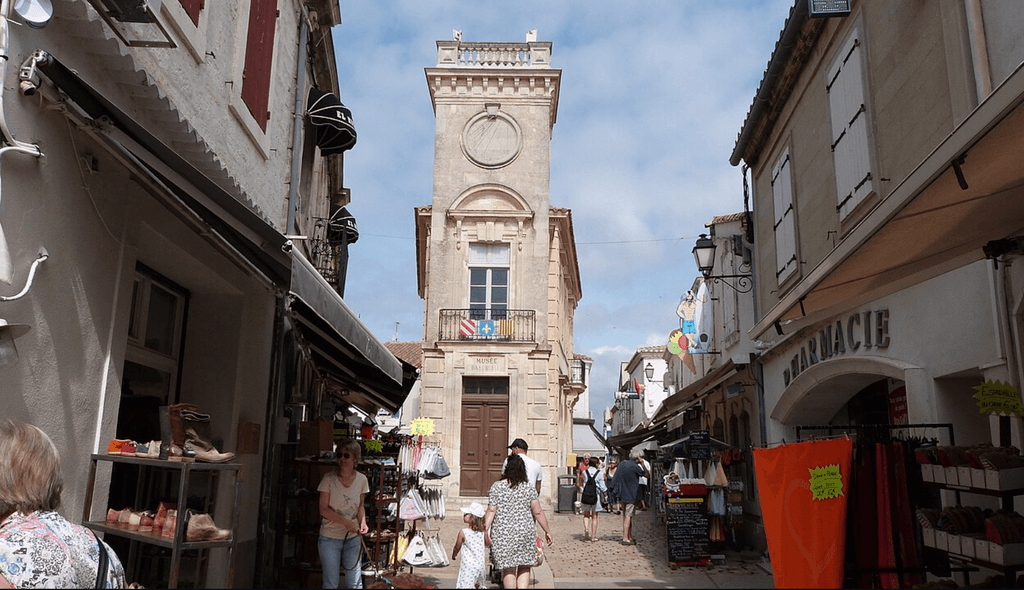
Saintes-Maries-de-la-Mer is a little coastal village between the Mediterranean and the wetlands of the Camargue Regional Nature Park, where the Rhône River spreads out toward the sea. After the rocky hills and perched villages earlier in the trip, everything opens out into lagoons, reed beds, and huge skies. It’s such a different side of Provence.
Back in the village, little lanes and squares surround whitewashed buildings, shops, and restaurant terraces. There’s a harbor and a seafront to wander along, but those smaller streets are what tie this stop in with the rest of the trip. I love the combination of an old village, the beach, and all that nature close by.
The Church of Notre-Dame-de-la-Mer rises above the rooftops and looks more like a small fortress than your usual village church. You can climb to its rooftop terrace for views over the houses, sea, and surrounding wetlands. It’s a lovely way to see just how much water there is around this little town.
For the wildlife, head to nearby Pont de Gau bird park, where walking trails lead through marshes and lagoons with flamingos and other wetland birds. Flamingos on a Provence road trip? Yes, please. Who knew? There are sandy swimming beaches back at the village too, so you can fit in another dip before leaving the coast… it just won;t be quite the same as Cassis.
Stay overnight to enjoy the village and give the wetlands some time the next morning. From Saintes-Maries-de-la-Mer, it’s roughly an hour and fifteen minutes back to Avignon, completing your Provence road trip loop. Seven towns, hilltop views, Mediterranean swims, and flamingos is a pretty good Southern France week in my book.
For another trip full of old streets and beautiful little towns, take a look at my hidden gems in central Italy to explore by train. That route swaps the rental car for train journeys between stops. I love having both options for exploring more of Europe beyond its big cities.
I hope this helps you plan your Provence road trip! Let me know which towns you make it to in the comments—and where you end up staying an extra night.

Passionate, full-time travel blogger with over 230k on social media and 150kMPV blog. Extraordinary photographer with two DSLR's + a drone with a love for capturing candid moments, epic drone shots, and magical compositions. I'm a natural-born content creator originally from California, but I've been on the road for 9 years living, working, traveling, blogging, and photographing my way around the world. I recommend the most amazingly adventurous and unique + boutique travel experiences/stays and helpful products to my audience and write comprehensive guides on my website that have helped millions of travelers so far. I love to inspire people to plan their dream trips, and many readers have given feedback as such. The reach on my platforms continues to soar, especially when combining cutting-edge social content with optimized articles on my high-authority website.