
Christmas in Tokyo is not what most Europeans or Americans expect. It is not a public holiday, almost nobody goes to church, and families do not sit together around a big dinner. Instead, the whole city turns into a giant light show. Streets, parks, office towers, temples and even an amusement park get covered in millions of LEDs, and from mid November until late December people go out in the evening just to walk under the lights, drink mulled wine and take far too many photos.
I lived in Tokyo for three years and studied at Waseda University, and I spent several Decembers walking from one illumination to the next. I am Swiss, so I grew up with quiet Christmas markets, snow and long family dinners. Tokyo was a shock at first, and then it became one of my favourite times of the year. The quality of the Tokyo Christmas lights is honestly at a level I have rarely seen in Europe.
This guide covers the light displays I would recommend to a friend visiting Tokyo in winter, the ones I went back to every year and the ones I would skip, with real tips on timing, costs, photo spots and how to combine them into great evenings. Exact dates and themes change every season, so I focus on what stays the same each year.
Tokyo Christmas Lights at a Glance
If you only have a few evenings, this quick overview helps you choose. Most of the city illuminations are free. You only pay for the theme park, the Christmas markets and whatever you eat and drink along the way.
| Light display | Area | Cost | Best for |
|---|---|---|---|
| Keyakizaka illumination | Roppongi | Free | Tokyo Tower photos, first timers |
| Shinjuku Neo Walk | West Shinjuku | Free | Big city Christmas, the tree |
| Tokyo Night and Light | Shinjuku | Free | Projection mapping, anime fans |
| Yomiuriland Jewellumination | Hills west of Tokyo | Paid admission | Families, the biggest display |
| Asakusa Culture and Lights | Asakusa | Free | Traditional Tokyo, small crowds |
| Tokyo Christmas Market | Meiji Jingu Gaien | Ticket needed | European market feeling |
| Red Brick Warehouse and Yorunoyo | Yokohama | Market paid, Yorunoyo free | Harbour views, a full evening |
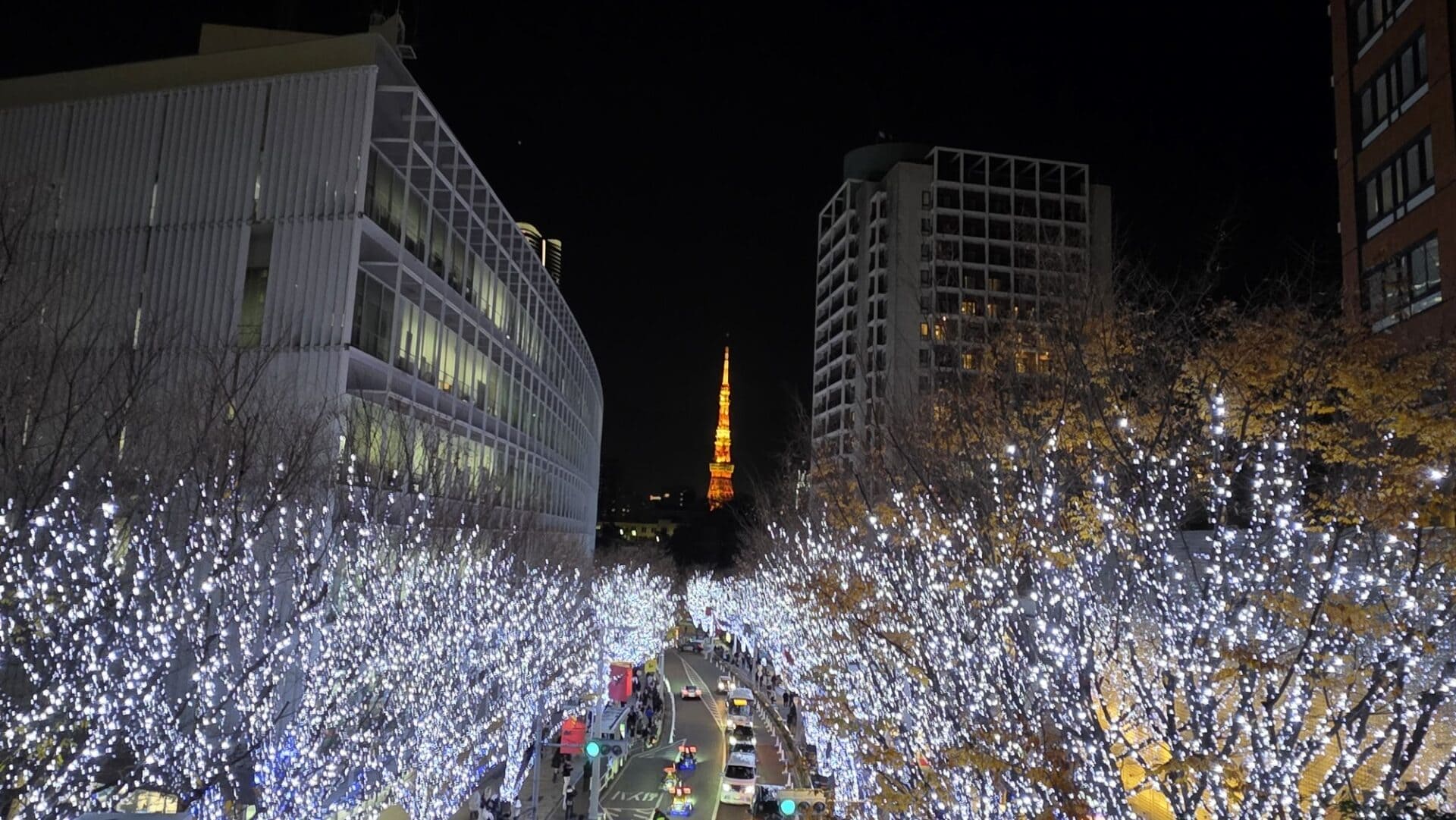
1. Roppongi Hills and Keyakizaka Street
When someone asks me where to see Christmas lights in Tokyo for the first time, I always send them to Roppongi Hills. When my brother visited me one December, this is exactly where I took him first. He only knew the Christmas markets in Switzerland and Germany, and he was genuinely impressed.
The centrepiece is Keyakizaka Street, which runs downhill from Roppongi Hills. Every winter the trees on both sides are covered in thousands of LEDs, and they form a perfect corridor leading your eye straight to Tokyo Tower at the end of the street. It is one of the most photographed winter scenes in Japan, and it really looks like a film set. You stop, you look up, and you understand why people love Tokyo in winter.
What I like most is that Roppongi changes every year. Some winters the lights are cool, crisp white, which fits the luxury shops and modern architecture. Other years they use warmer tones that feel more festive. I went back several years in a row, and it never felt like the same display twice.
Best photo spots in Roppongi
- The Keyakizaka crosswalk: the classic shot, with the illuminated trees lined up and Tokyo Tower in the middle. Come shortly after sunset if you want some colour left in the sky.
- The pedestrian bridge: one of the walkways of the Roppongi Hills complex crosses above the avenue. From up there you get the whole street and the tower in one frame, without the traffic in your way.
The Roppongi Christmas market and the Grand Hyatt
Right next to the lights, inside Roppongi Hills, there is a small Christmas market. It is much smaller than the ones in Germany or Switzerland, and since it sits in the middle of a mall it does not feel very traditional. But the food and drinks are the best of any Christmas market I tried in the Tokyo area. The sausages were really tasty, the butter pretzels surprisingly authentic, and the mulled wine tasted the way it should, not too sweet and without that artificial flavour. Prices are high, but you pay for quality.
If you get cold, walk into the lobby of the Grand Hyatt Tokyo, which is part of Roppongi Hills. It usually has beautiful Christmas trees and seasonal decorations, and the softer indoor light is much better for portraits than the bright LEDs outside.
Look out for the locals, too. On one visit we saw several dogs dressed as Santa and reindeer being pushed through Roppongi Hills in luxury pet strollers. It sounds strange, but it is very Roppongi.
Good to know
- The street illumination is free. You need only 15 to 30 minutes for the main highlights, so it is easy to fit in after dinner.
- The sidewalks are wide, so even on busy December evenings you can stop and take photos without being pushed along.
- After about 9 pm the crowds get noticeably smaller, which is the best time for tripods and video.
- For dinner, Gonpachi Nishi Azabu is about a 10 minute walk away. It is famous as the restaurant that inspired the big fight scene setting in Kill Bill, with a dramatic wooden interior and charcoal grilled skewers. Book a few days ahead in December.
You may have seen the Blue Cave illumination in Shibuya on social media. It gets a lot of attention, but it also draws bigger crowds. If you have to choose one, I would pick Roppongi for the space, the Tokyo Tower view and the easy combination with dinner.
2. Shinjuku: Neo Walk and the Big Christmas Tree
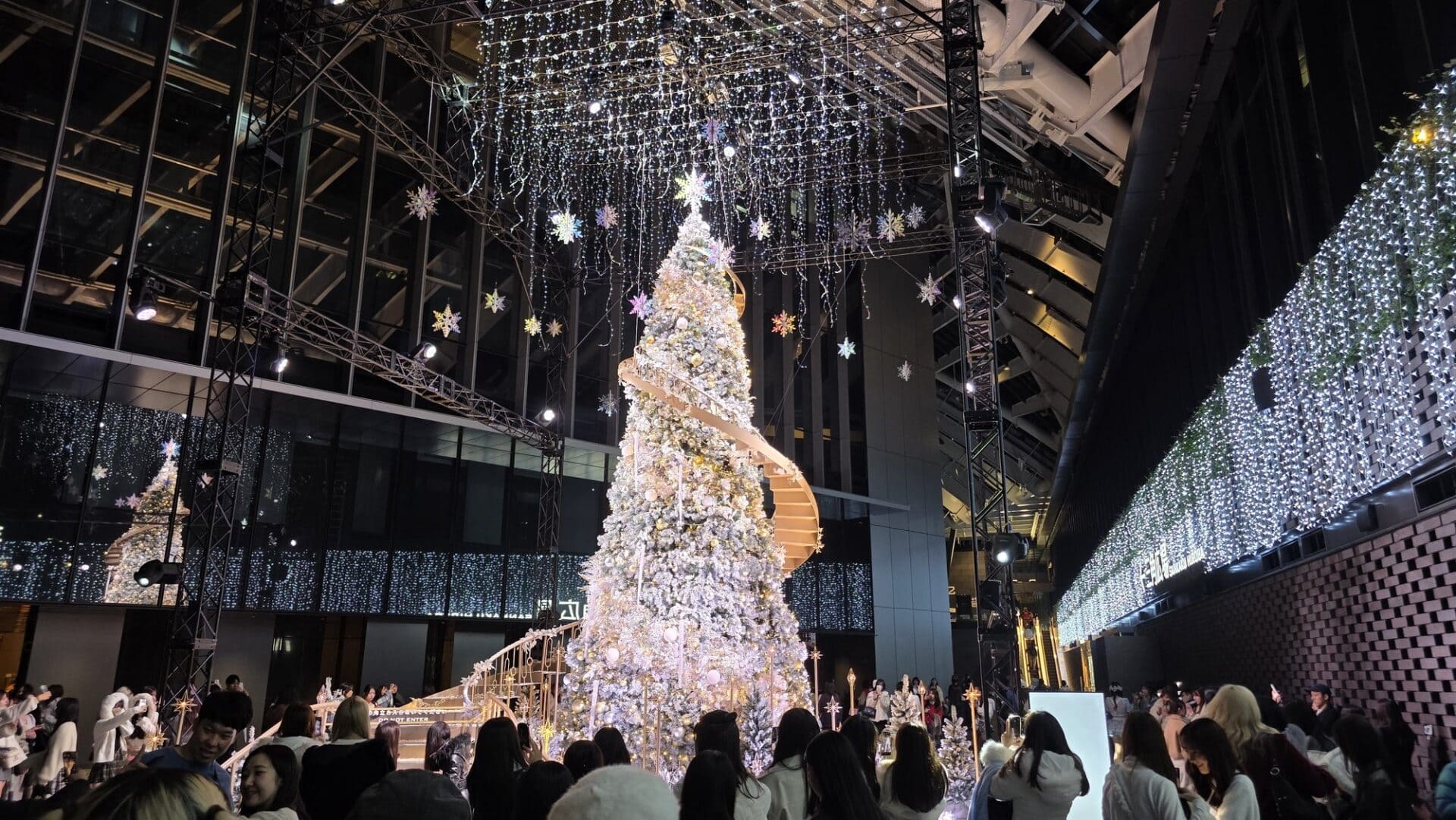
Shinjuku is the exact opposite of a cosy Christmas. While Europe slows down in December, Shinjuku seems to speed up: neon signs, giant screens, crowded streets and music coming from everywhere. That is exactly why I love it as part of a Tokyo Christmas. It is not romantic in the classic sense, but it is a very real Tokyo experience.
In West Shinjuku, near the Tokyo Metropolitan Government Building, the Shinjuku Neo Walk illumination winds through the office district. It usually runs from late November until early January, every evening from around 4:30 pm to 10 pm, but check the dates for the current season before you go.
The real highlight for me is the Christmas tree in one of the office buildings along Neo Walk. It is huge and elegant and fits perfectly into the modern skyline around it. You cannot miss it, and almost everybody slows down there to take a photo. And from Neo Walk it is only about five minutes on foot to the next display on this list, so plan both for the same evening.
3. Tokyo Night and Light at the Metropolitan Government Building
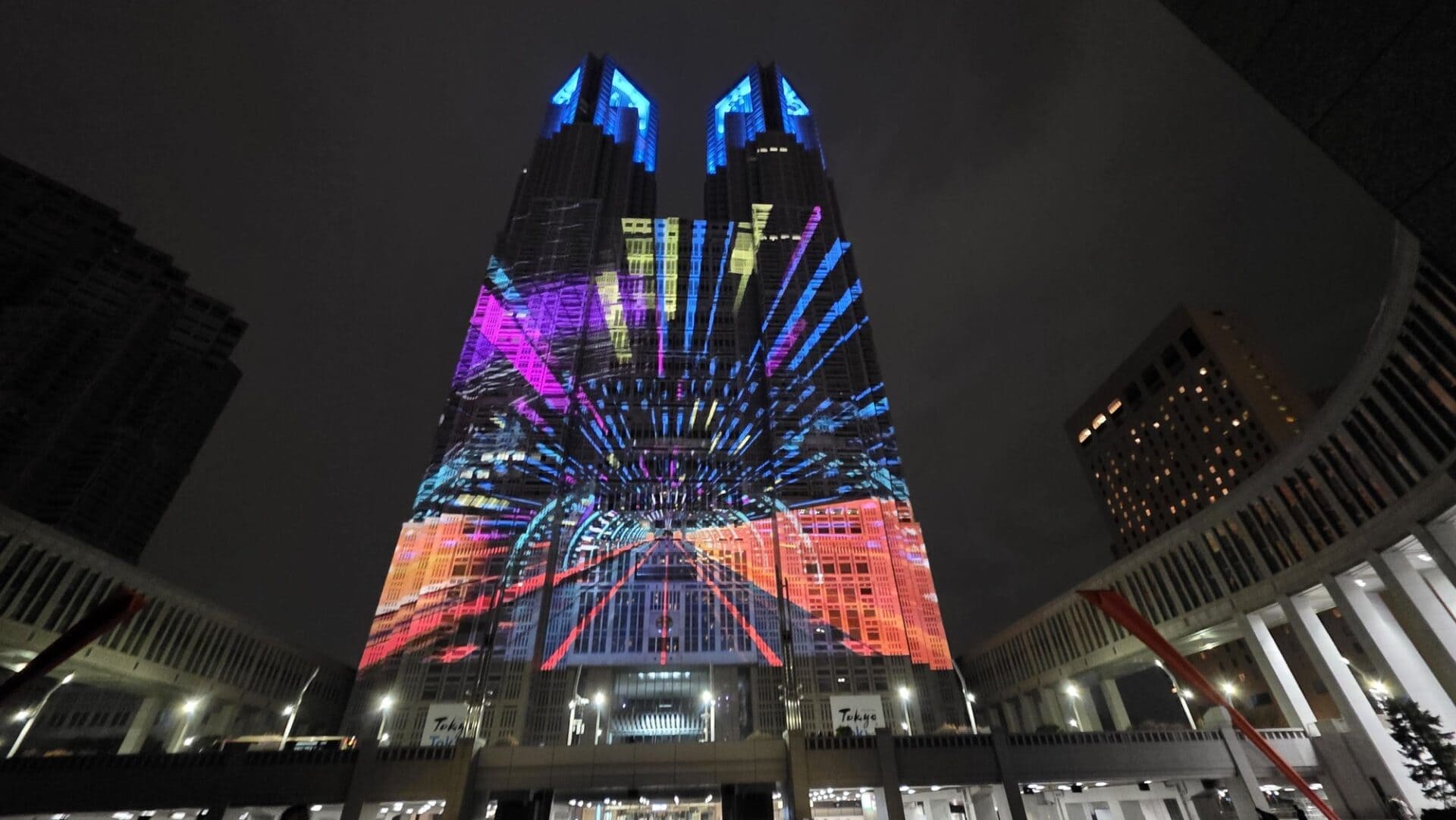
Strictly speaking, Tokyo Night and Light is not a Christmas display. It runs all year. But in December it is one of the best things to do after the Neo Walk, and the winter programme is usually one of the strongest.
The show is projected onto the twin towers of the Tokyo Metropolitan Government Building, and it holds the Guinness World Record for the largest permanent architectural projection mapping display, covering 13,905 square metres of the eastern facade. I saw it once when it had just opened and again a year later, and the second time the projections were clearly sharper and the stories better. The animation does not just sit on the building, it follows the windows and vertical lines, so it looks like the towers themselves are moving. On my last visit the programme had anime collaborations and a huge Godzilla climbing the tower, which looked surprisingly real.
How to watch it
- It is completely free, with no tickets and no booths.
- Shows run in the evening in 30 minute slots, roughly from 5:30 pm to 9:30 pm, and each one lasts about 15 minutes. The programme rotates with the seasons, and around New Year the schedule changes, so check the current timetable.
- Do not stand right at the base, because the tower is so tall that the images look distorted from below. The far end of the Citizens Plaza or the overpass towards Shinjuku Chuo Park give a much better view.
- You can take the Oedo Line to Tochomae Station, which exits right below the towers, but I prefer the underground passage from the west exit of Shinjuku Station.
What I like most is how normal it feels. Office workers stop for five minutes on their way home, watch the towers light up and then walk on.
4. Yomiuriland Jewellumination
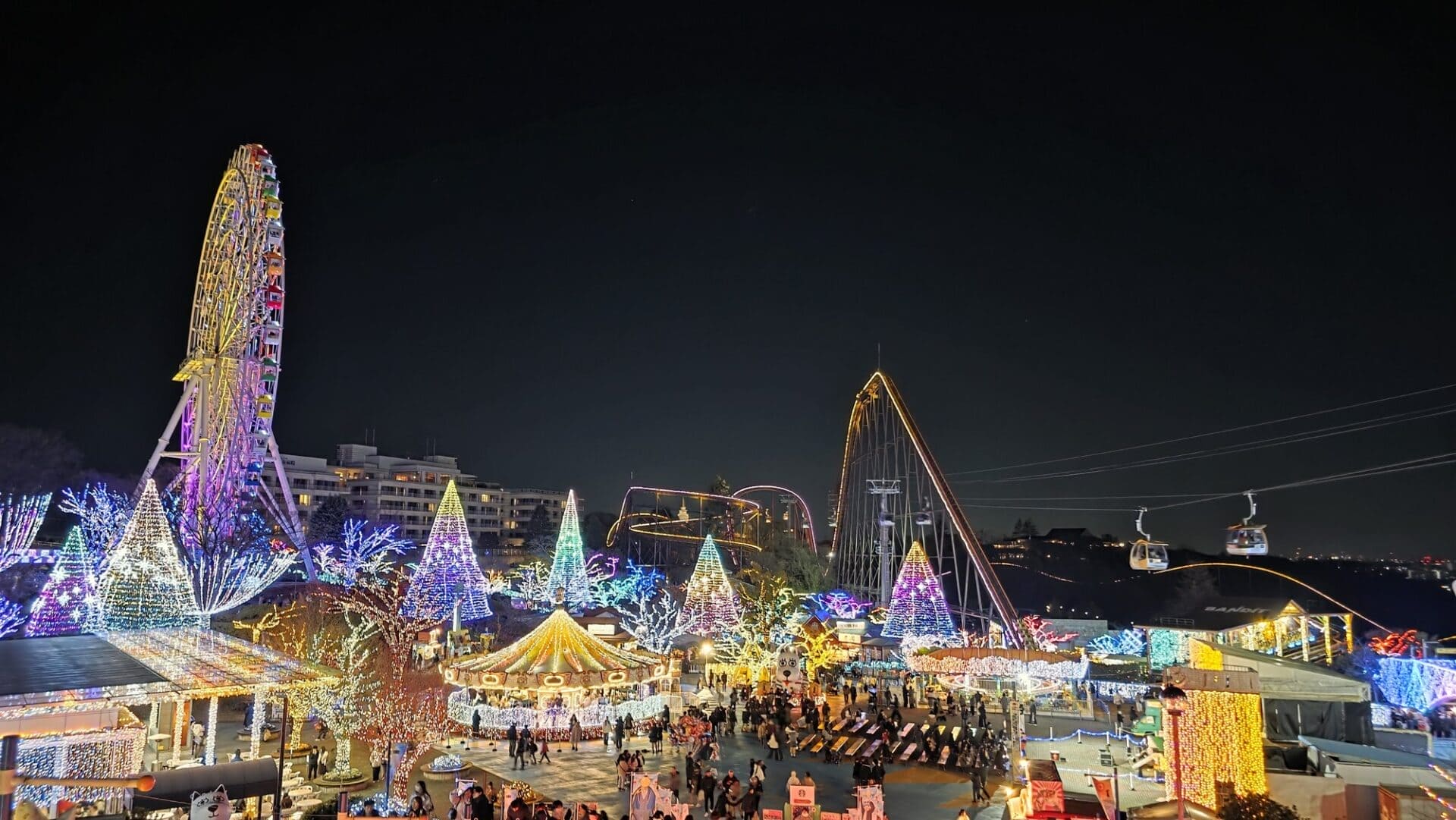
If you want the single most spectacular Christmas illumination around Tokyo, go to Yomiuriland. It is a theme park in the hills west of the city, and in winter it turns into a huge sea of lights. On my visit it had around 6.5 million LEDs, choreographed with colours, shapes and music. You walk through light tunnels and look down from the hills over a glittering valley.
The LEDs are special too. Yomiuriland uses jewel coloured lights developed with Motoko Ishii, the lighting designer known for her work on Tokyo Tower. That is where the name Jewellumination comes from. It never looks tacky. It feels more like light art than a theme park.
Honestly, the first time I went, I had my doubts. Christmas lights in an amusement park sounded like something for kids. I was wrong. There were lots of adults, couples and serious photographers. The last time I went with my wife, her sister and her two young nieces, and that is when I understood why it is the best Christmas illumination for families. The kids were not just running around, they were amazed.
How to get there
Yomiuriland is about 52 minutes from Shinjuku Station and about 1 hour 10 minutes from Shibuya. Take the Keio Line to Keio Yomiuri Land Station. Most map apps then send you onto a local bus, which we did on the way in, and it was so full that our group got split across two buses. Instead, take the Sky Shuttle, a gondola right outside the station that floats over the hills to the main gate. At the time of my visit it cost 300 yen one way or 500 yen return, not much more than the bus. On the way back you get a beautiful view over the whole park glowing in the dark.
Tickets
- Admission only: around 1,800 yen for adults when I went. Enough if you are there for the lights.
- One day pass: around 5,900 yen for adults, including unlimited rides. Worth it only if you plan to do more than four or five big attractions.
- The gondola is not included in the pass.
- If you buy single ride tickets inside the park, buy several at once. The queue at the central ticket booth gets very long during peak illumination hours.
My tip is to arrive in the afternoon. The park is a full theme park, so there is plenty to do before dark, and when the sun goes down everything switches on. You get almost a whole winter day out of it instead of just an evening. Dress warmly, go on a weekday if you can, and plan more time than you think. The illumination usually runs much longer than the city displays, from around mid October into spring, so it is also an option if you visit Tokyo in January or February.
5. Asakusa Culture and Lights
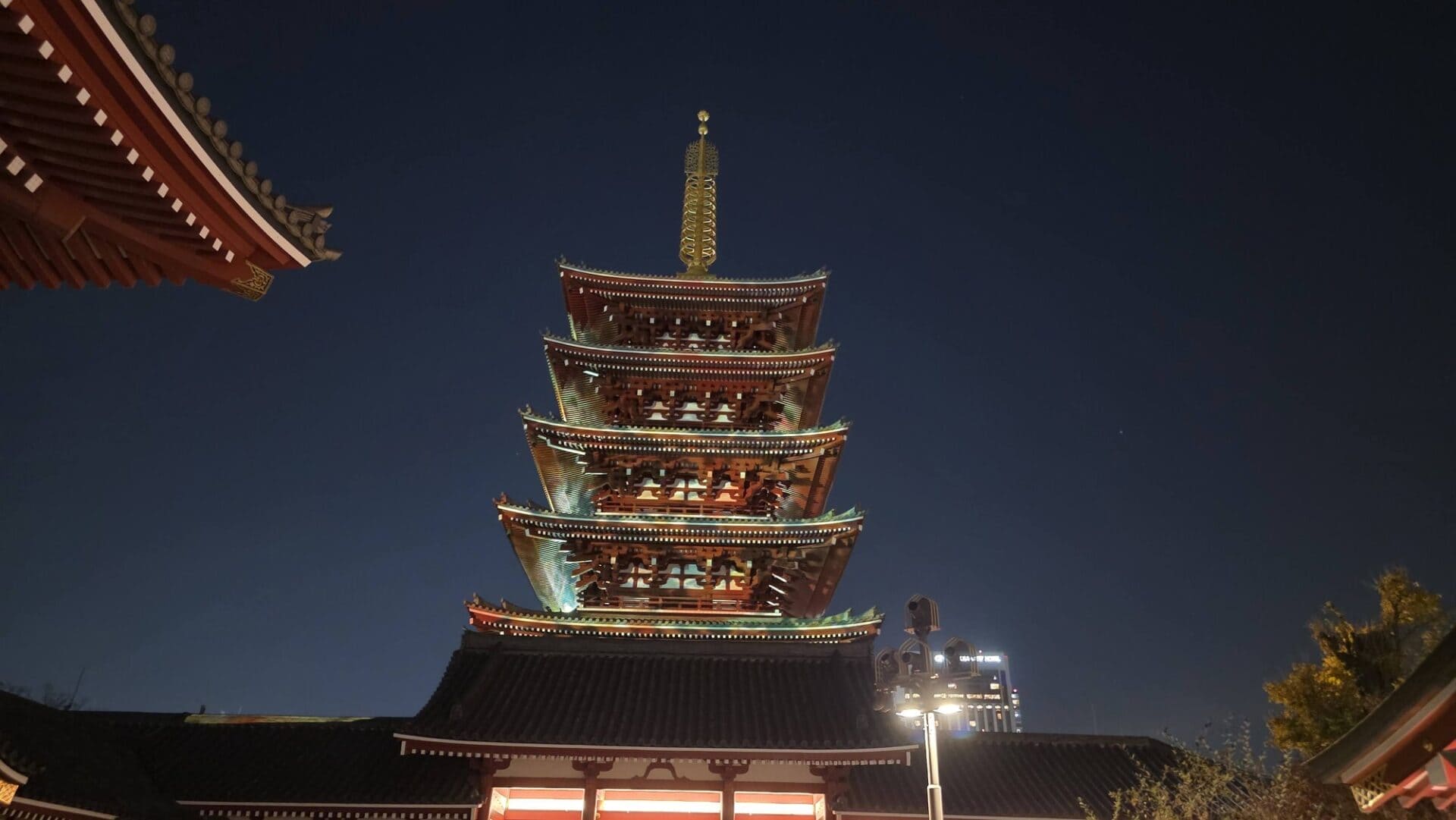
If the big displays feel like too much, Asakusa is the calm alternative. The Asakusa Culture and Lights event usually runs for a couple of weeks in early December around Sensoji Temple and Nakamise Street. Instead of bright LEDs everywhere, it uses soft, warm lighting on the temple buildings, the pagoda and the old shopfronts, plus small installations with traditional Japanese patterns. It reminded me a lot of the light show on the Federal Palace in Bern, which I used to visit every winter in Switzerland.
Keep your expectations right: it is small. The main projection and light show happens in one area and lasts about six minutes, followed by a two-minute break. That break is actually great. When the lights go dark, most people walk on, so you have two minutes to move to the front for the next round. We watched the first cycle from a bad spot, waited, and saw the second one from a much better angle. During the pause, the temple grounds also go quiet, and you can hear the wind in the roofs.
We went on a Friday evening, the second to last day of the event, and still had plenty of space. Go between 7 pm and 8 pm. By then the daytime crowds are gone, the Nakamise shops are closed, and the lanterns and pagoda stand out much better against the dark.
Warm up like a local
- Yaki imo: roasted sweet potato is the winter snack in Asakusa. I usually find them too dry, but we found a vendor with a sign showing three championship wins in a row, and it was the best I have ever had. Look near the side gates of Sensoji rather than on the main Nakamise strip.
- Hoppy Street: just west of the temple, small eateries spill out onto the street. In winter they hang plastic curtains and run kerosene heaters, and sitting there with steam rising from your food is pure Tokyo winter.
6. Tokyo Christmas Market at Meiji Jingu Gaien
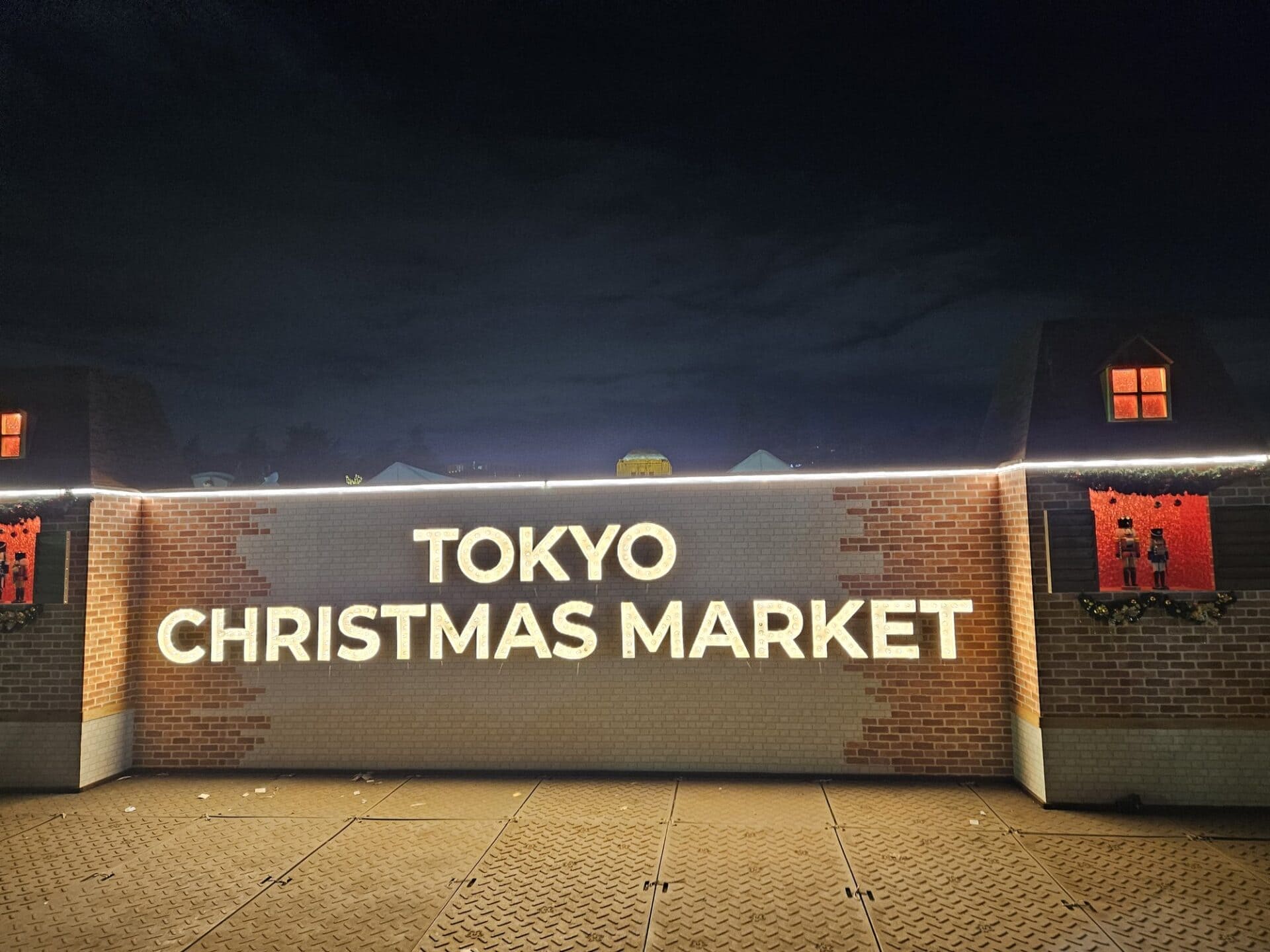
If you miss a real European Christmas market, this is the closest you will get inside Tokyo. The Tokyo Christmas Market takes place in the Meiji Jingu Gaien area, a short walk from Gaienmae or Aoyama Itchome stations, usually from late November until 25 December. There are wooden stalls, a big decorated Christmas tree in the middle and fairy lights all around, so at night it feels like a small winter village.
It is a German tradition with Japanese attention to detail. You get bratwurst, big German beers including weissbier, and several mulled wine stands. A word of warning about the mulled wine: some stands nailed it, warm and spicy and balanced, while a few were so bad we poured them away. Try a small cup first and switch stands if needed. My favourite detail was St. Nicholas walking around the market, not the usual Santa but a Japanese version with an Asian twist. It is moments like this that show how Japan does Christmas: not copied, but reinterpreted.
Important: you need a ticket, and it is best to buy it online in advance, especially for weekends and the days just before Christmas. You cannot always just walk in. It takes away a bit of spontaneity, but for a classic Christmas market experience in Tokyo, this is still my favourite.
7. Yokohama: Red Brick Warehouse and Yorunoyo
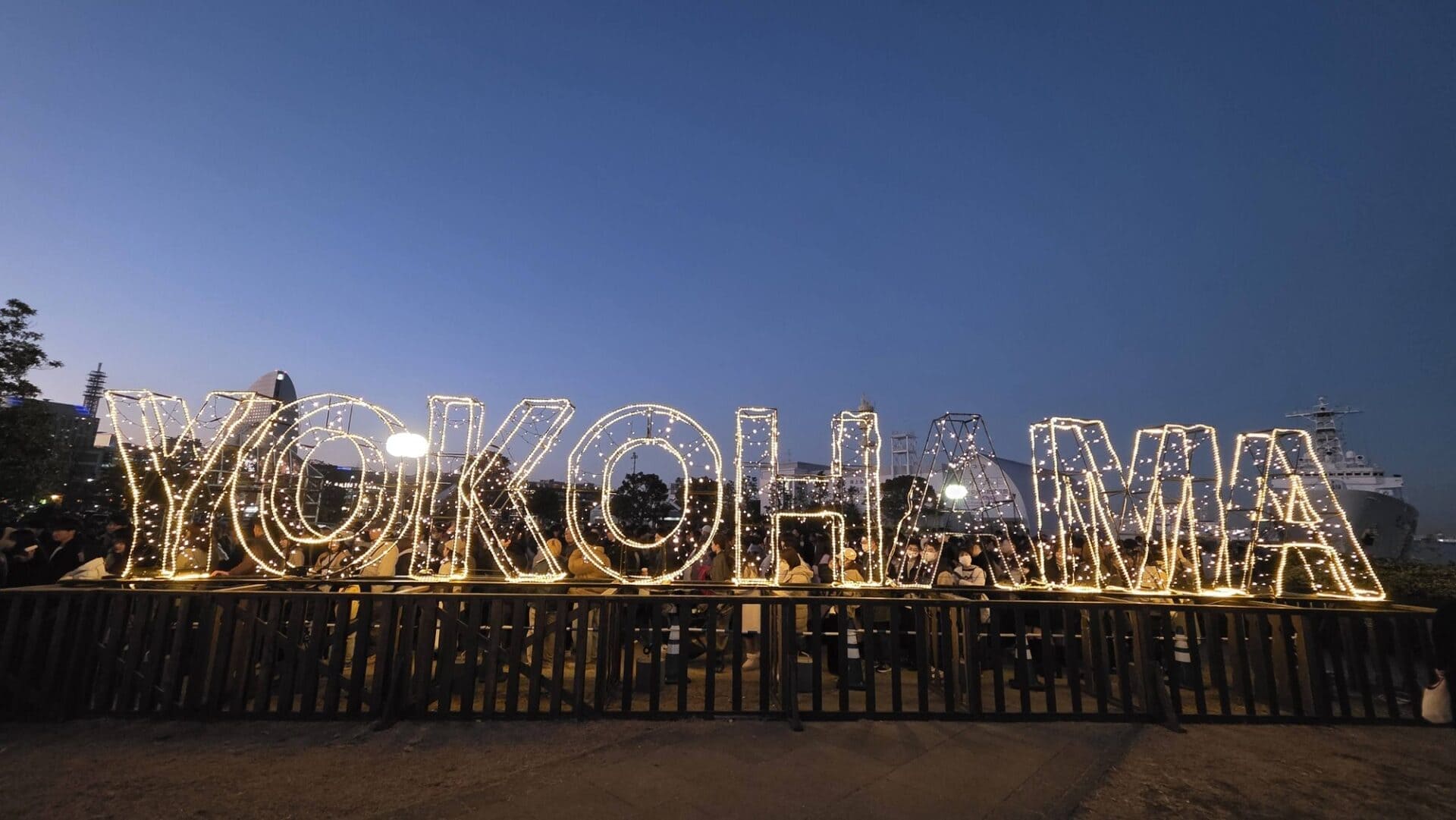
Yokohama is not Tokyo, but it is so close that I always count it in. From Asakusa it took us roughly an hour by train, and it makes a perfect full evening.
The Christmas market at the Red Brick Warehouse is bigger than the one in Roppongi, with more stalls and a more European feeling. The walk from the station past the harbour is already part of the fun, and inside there are string lights, a Christmas tree that slowly changes colour and a big illuminated Yokohama sign that everyone queues to take photos with. The mulled wine surprised me, it was very close to the European version.
But be honest with yourself about the queue. The market is ticketed, and on our visit we waited almost an hour to get in. Next to the long line there was a fast entry option for about three times the price, 1,500 yen instead of 500 yen at the time. The food inside was also quite similar from stall to stall, mostly sausages, pretzels and grilled meat. Right outside the paid area there were free food stalls, sometimes with more interesting dishes. Go on a weekday and arrive early if you can.
The real highlight for me is what comes after. Yorunoyo is a free light and projection display along the Yokohama waterfront, right after the market. Gone are the huts and queues. Instead, you walk along the water past light installations, and on our visit there was a huge blue whale made of animated light that seemed to swim through the night sky. It reminded me of teamLab, but without tickets or time slots. For me it is one of the most beautiful winter walks in the whole Tokyo area.
End the night in Yokohama Chinatown, the largest of Japan’s three Chinatowns. After hours in the cold, we chose a hotpot restaurant, which was exactly what we needed.
How to Combine the Lights: 4 Perfect Evenings
The Tokyo Christmas lights are spread across the city, so it helps to plan by area. These are the combinations I would do again.
- Roppongi evening: start at Roppongi Station, walk through Roppongi Hills and the small Christmas market, warm up in the Grand Hyatt lobby, take your photos on Keyakizaka Street and finish with dinner at Gonpachi Nishi Azabu. Come back to Keyakizaka after 9 pm for quieter photos.
- Shinjuku evening: walk the Neo Walk and see the big tree, then walk about five minutes to the Metropolitan Government Building and catch one or two Tokyo Night and Light shows. Afterwards, Shinjuku at night is right there.
- Yomiuriland day: take the Keio Line in the early afternoon, ride the gondola up, enjoy the park while it is light, and stay until the Jewellumination is fully on. Take the gondola back for the view.
- Asakusa and Yokohama weekend: one evening in Asakusa between 7 pm and 8 pm with yaki imo and Hoppy Street, then the next day to Yokohama for the Red Brick Warehouse market, Yorunoyo and hotpot in Chinatown. We did exactly this, and the contrast between the quiet temple and the busy harbour was the best part.
Add the Tokyo Christmas Market on any evening when you want a European style market without travelling to Yokohama. I wrote about all of my favourite spots in more detail in my guide to Christmas in Tokyo, including what to expect from the Japanese way of celebrating.
Practical Tips for Tokyo Christmas Lights
- When to go: most Tokyo Christmas lights run from around mid November until 25 December. Some, like Shinjuku Neo Walk, stay until early January, and Yomiuriland runs from autumn into spring. Asakusa is only a couple of weeks in early December. Dates shift slightly every year, so always check the official dates before you go.
- Go on weekdays: weekends and the days just before Christmas are by far the busiest, especially at the ticketed markets.
- Christmas Eve is for couples: in Japan, Christmas Eve is more like Valentine’s Day. Expect the popular spots and restaurants to be full of couples, and book dinner early.
- Go late for photos: the lights look strongest after full dark, and in places like Roppongi the crowds thin out after about 9 pm.
- Dress warm: Tokyo winters are usually dry and sunny, but evenings get cold, especially when you stand still for a show or wait in a market queue.
- Buy tickets early: the Tokyo Christmas Market and the Yokohama market are ticketed, and Yomiuriland needs an admission ticket. Everything in the city centre is free.
- Try the local Christmas food: Japanese families famously eat KFC fried chicken for Christmas, and many people order it weeks in advance. As a Swiss person I find it funny, but then again many Swiss families eat fondue chinoise at Christmas, which is basically a Chinese style hotpot. Every country has its own version.
FAQ
When are the Christmas lights on in Tokyo?
Most illuminations run from around mid-November until 25 December and switch on after sunset, usually until about 10 pm or later. Some displays stay on into January, and Yomiuriland runs into spring.
What are the best Christmas lights in Tokyo?
For a first visit, Roppongi Hills and Keyakizaka Street with the Tokyo Tower view. For the biggest display, Yomiuriland Jewellumination. For something quieter and more traditional, Asakusa Culture and Lights.
Are the Tokyo Christmas lights free?
Yes, most city illuminations, including Roppongi, Shinjuku Neo Walk, Tokyo Night and Light, Asakusa and Yorunoyo in Yokohama, are free. Yomiuriland and the Christmas markets at Meiji Jingu Gaien and the Red Brick Warehouse need a ticket.
Is Christmas a holiday in Japan?
No. Christmas is not a public holiday in Japan. It is a festive and often romantic time, with illuminations, markets and dates rather than family or religious traditions.
Is Yomiuriland worth it for the Christmas lights?
Yes, especially with kids. It is the largest illumination in the Tokyo area, and admission only is enough if you are there just for the lights. Take the Sky Shuttle gondola from Keio Yomiuri Land Station.
What is the best time to see the Christmas lights in Tokyo?
Weekday evenings after full dark are best. In Roppongi the crowds get smaller after about 9 pm, and in Asakusa the best time is between 7 pm and 8 pm, after the shops have closed.
Final Thoughts
Christmas in Tokyo does not replace a European Christmas. It is something completely different: less tradition and family, more light, design and evenings out with friends or a partner. I spent several Decembers there, with family visiting from Switzerland, with friends and sometimes alone, and walking under the lights with a mulled wine never once felt empty. If you visit Tokyo in December, plan your evenings around these displays. You will see a side of the city that most travellers never get to know.
About the author: Max is a Swiss travel writer who lived in Tokyo for three years and studied at Waseda University. He writes about Japan, Korea and Switzerland on Max on the Move.
—
Continuing your trip beyond Japan? Check out our 10-day South Korea itinerary, covering Seoul, Jeonju, Gyeongju, and Busan.
